
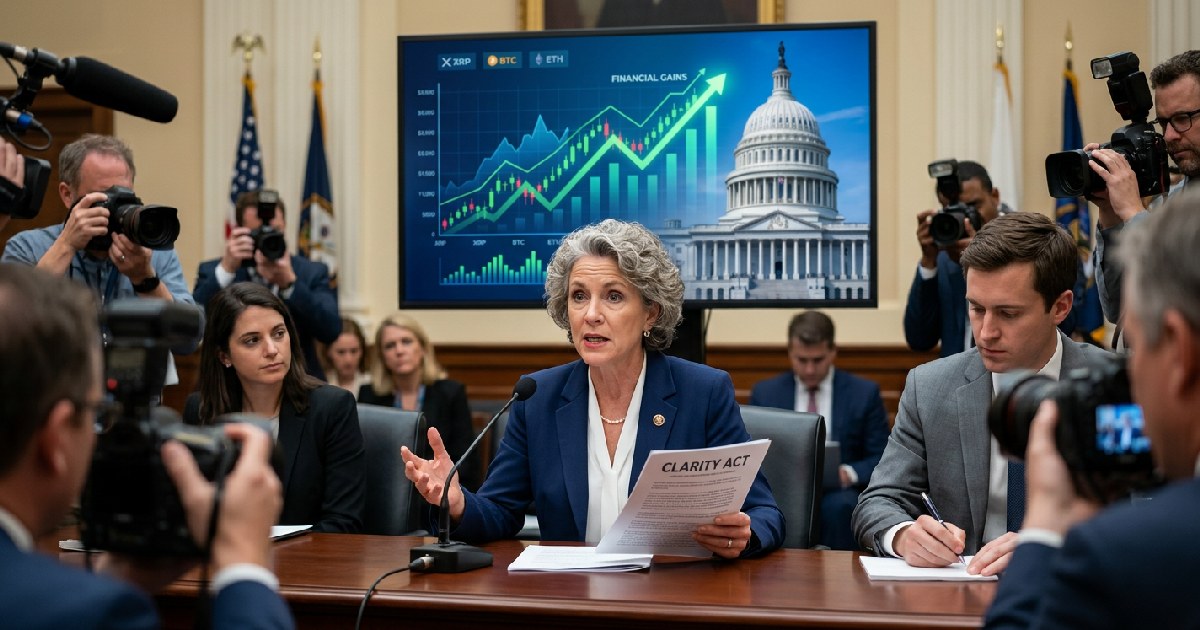

Legislative movement on the CLARITY Act has reportedly sparked a shift in market dynamics as digital asset investors weigh the potential for a new regulatory framework in the United States. While the broader cryptocurrency market often follows the trajectory of the largest assets, current sentiment suggests that specific policy developments are beginning to drive independent price action. The progress of the proposal, officially known as the Clarity for Payment Stablecoins Act, appears to be acting as a catalyst for tokens closely tied to the payments sector.
The advancement of this legislation is being closely monitored by participants in the Ripple ecosystem, as the token is frequently positioned as a bridge for institutional settlements. Market observers suggest that any move toward a legal structure for payment tokens could benefit projects that have historically operated in a state of regulatory uncertainty. With XRP speculative activity reportedly increasing as buyers test key resistance levels, the industry is looking to Washington for a definitive signal on the future of digital commerce.
Policy Shifts Create Market Divergence
The current environment highlights a growing trend where specific legislative milestones allow certain assets to decouple from the general market trend. While Bitcoin often dictates the pace of the industry, the momentum behind the House Financial Services Committee’s work has provided a unique focal point for ledger-based payment technologies. For years, the lack of a clear mandate has been cited as a primary obstacle to institutional adoption, making any movement toward federal oversight a significant event for traders.
This shift in interest may reflect a broader rotation of capital. As Bitcoin exchange supply remains at historically low levels, professional investors appear to be looking for assets with pending regulatory catalysts. If federal law eventually provides a clear “safe harbor” for tokens used in settlements, it could change the way professional desks allocate capital across the digital asset landscape. But the current optimism is tempered by the reality that legislative success is never guaranteed in a divided Congress.
The Congressional Path and Global Competition
Major hurdles remain before any crypto-related bill reaches the president’s desk. The CLARITY Act must navigate a complex committee process and a full floor vote, all while competing with other legislative priorities during a busy session. Some lawmakers continue to express reservations about the risks private stablecoins might pose to financial stability, suggesting that the final version of any law may include strict consumer protection requirements.
And the pressure on domestic lawmakers is only increasing as other global powers move forward with their own rules. Reports that Russia lawmakers push to legalize P2P crypto trade and expand asset whitelists serve as a reminder that the U.S. is operating in a competitive global market. If Congress fails to establish a comprehensive framework soon, there is a risk that innovation and capital could migrate to jurisdictions that offer more predictable legal environments.
Requirements for a Broad Market Recovery
While the focus on the CLARITY Act is high, a sustainable and broad-based market recovery likely requires more than a single piece of legislation. Market analysts suggest that investors are seeking a cohesive strategy that addresses decentralized finance and the broader utility of various tokens. A bill focused primarily on stablecoins is a logical starting point, but it may not address the questions surrounding other types of digital assets that have been the subject of ongoing litigation.
The recent activity in the payments sector may serve as a leading indicator of how the market will respond to tangible political progress. If specific tokens can maintain momentum based on fundamental policy shifts, it would signal a more mature phase of the market. So, while the current reports are encouraging for supporters of the payments sector, the long-term outlook remains tied to the final decisions made on Capitol Hill. Until a comprehensive bill is signed into law, the market is expected to remain sensitive to every update from congressional committees.