
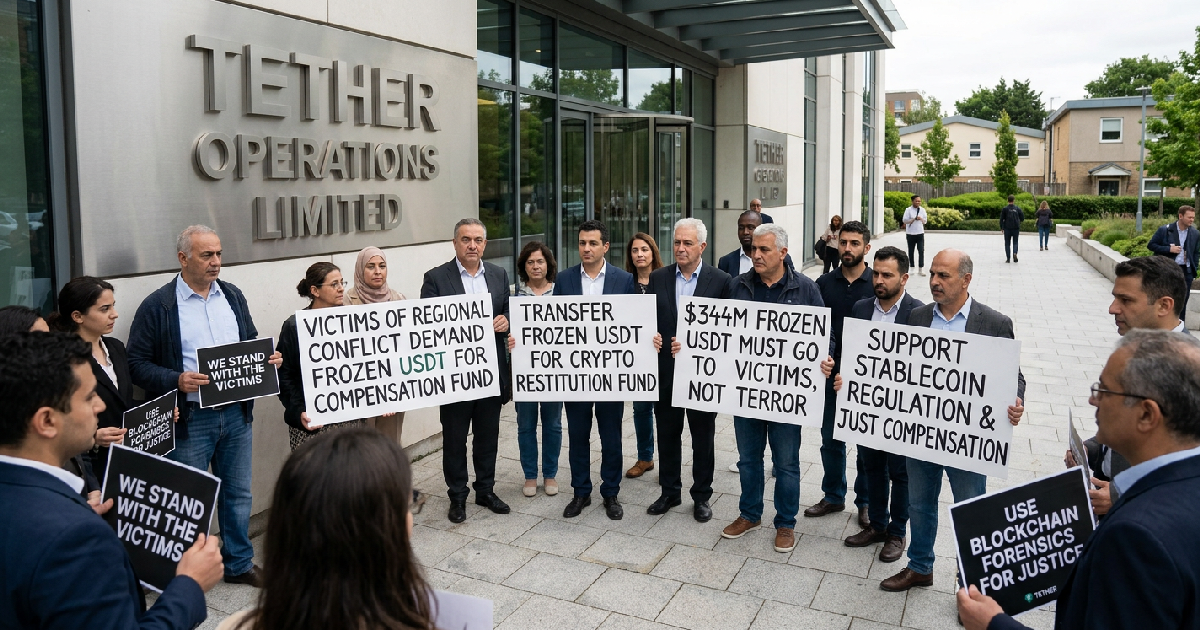

Legal advocates and victims of regional conflict are reportedly calling on Tether Operations Limited to release millions of dollars in frozen USDT linked to suspected terrorist financing. The demand seeks to have the stagnant stablecoin assets redirected to a compensation fund for individuals and families impacted by violence orchestrated by groups such as Hamas and Palestinian Islamic Jihad. The move would represent a significant shift in how frozen digital assets are handled by centralized issuers.
The campaign centers on the argument that once digital assets are blacklisted by a centralized issuer for illegal activity, the funds should not simply remain in a permanent state of limbo. Instead, proponents of the transfer suggest that the frozen USDT—currently sitting in inactive, blacklisted crypto wallets—should serve as a form of restitution. This push comes as global regulators intensify their oversight of how stablecoin providers manage illicit flows on their networks.
Legal Pressures Mount Over Frozen Stablecoin Reserves
The discussion surrounding these frozen funds highlights a growing tension between crypto intermediaries and international law enforcement. While Tether Operations Limited has historically cooperated with agencies like the Federal Bureau of Investigation (FBI) and the Department of Justice (DOJ) to lock wallets associated with sanctioned entities, the final destination of those assets remains a complex legal hurdle. Unlike traditional bank seizures, where funds can be forfeited to the state, the decentralized nature of the underlying blockchain often leaves the assets inaccessible without specific intervention from the issuer.
Advocates for the victims argue that Tether has the technical capability to remint or transfer the value of these frozen tokens to a court-ordered escrow. This movement is part of a broader shift in investor and regulatory sentiment regarding the accountability of major crypto players. For instance, market sentiment shifts as CLARITY Act advances through Congressional Committees, signaling that lawmakers are increasingly focused on defining the legal responsibilities of digital asset companies during periods of geopolitical instability.
The Role of Traceability in Identifying Terrorist Funds
Blockchain forensic firms have reportedly played a vital role in identifying the specific wallets that contain the assets in question. By tracking the flow of USDT through various exchanges and mixers, investigators have linked these specific holdings to accounts allegedly used to fund recruitment, weapons procurement, and operational costs for militant groups. Tether has previously stated that it works closely with dozens of law enforcement agencies globally to maintain the integrity of its platform.
However, the current demand is distinct from a standard freeze. It asks for the proactive seizure and redistribution of private wealth on a scale rarely seen in the crypto industry. The legal precedent for such a move is currently under debate, as it would require the stablecoin issuer to effectively override the digital property rights of the wallet holders, even if those holders are designated terrorists by international governments.
Industry Transparency and Operational Realities
The outcome of this request could set a precedent for the entire stablecoin market. If Tether Operations Limited complies, other issuers of fiat-pegged tokens may face similar pressure to liquidate frozen assets linked to criminal activity. This development occurs as the industry is already moving toward more rigorous standards. Many analysts point out that Stake.com and Fairspin lead top crypto casinos as market shifts toward transparency, illustrating a wider trend where platforms are being forced to prove their adherence to anti-money laundering (AML) and know-your-customer (KYC) protocols.
Critics of the proposed transfer warn that such actions could lead to jurisdictional overreach or centralized points of failure that undermine the censorship-resistant nature of blockchain technology. They argue that once a private company begins redistributing funds based on ethical grounds—regardless of how justified the cause—it may open the door for future seizures that are less clearly defined. This creates a friction point between the original ethos of crypto and the push for greater corporate accountability.
Compliance Requirements and Future Outlook
Tether Operations Limited has not yet confirmed whether it will follow through with the redistribution of the frozen tokens. The company typically maintains that it acts only upon direct legal orders from recognized governmental authorities or courts with appropriate jurisdiction. Without a specific court order from a United States or international tribunal, a voluntary transfer of significant reserves remains unlikely from a corporate compliance standpoint.
Regardless of the immediate result, the pressure reflects a new era for stablecoins where they are no longer viewed merely as trading tools but as components of the global financial system subject to the same pressures as traditional institutions. As VanEck and Grayscale move toward potential spot BNB ETF launch opportunities, the focus on clean, compliant liquidity will likely only sharpen. For the victims seeking compensation, the frozen assets represent more than just digital code; they are a potential path toward justice in an increasingly digital world.