
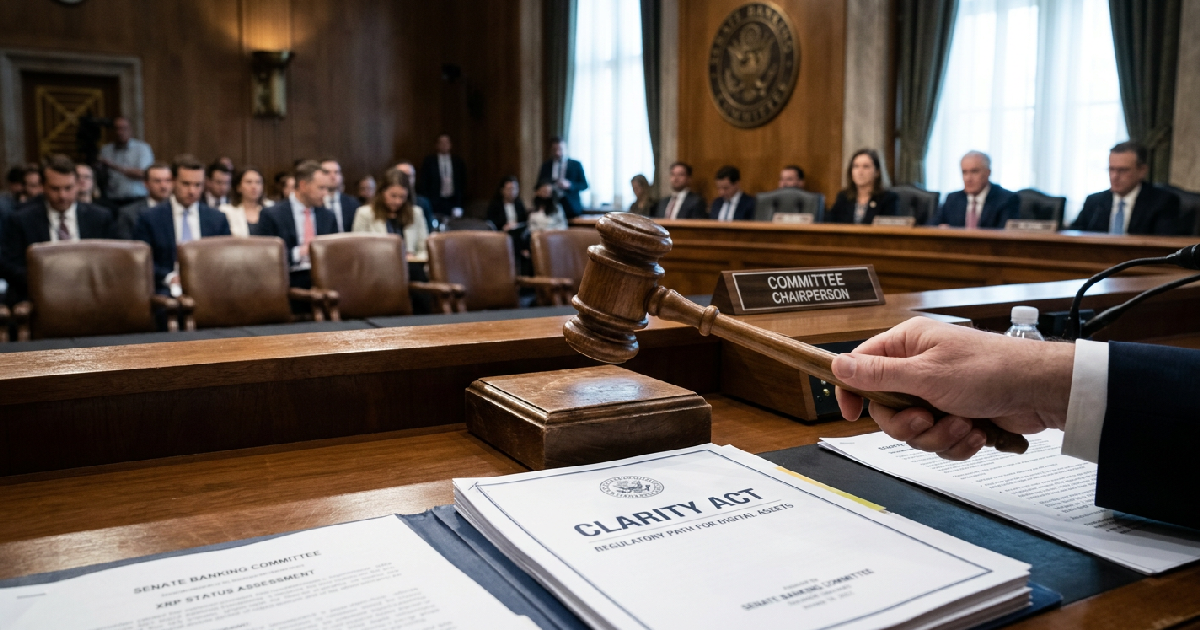

United States lawmakers have released updated text for the CLARITY Act, a central legislative proposal designed to define the regulatory status of digital assets, prompting a wave of analysis regarding the future of the XRP token. Sources monitoring the legislative process indicate that the revised language appears to provide a specialized pathway that could potentially shield established digital assets from being categorized as securities. Legal experts reviewing the documentation suggest that Ripple Labs and the broader XRP ecosystem may stand to benefit from specific provisions that address tokens with a history of litigation.
The CLARITY Act serves as a focal point for the Senate Banking Committee as it attempts to establish a definitive regulatory framework for the industry. By drafting clearer definitions for “restricted” versus “decentralized” assets, the bill aims to move the sector away from its reliance on court-based precedents. For XRP, which has faced a long-standing legal challenge from the Securities and Exchange Commission (SEC), the new text offers the potential for long-term operational stability. Much of the optimism from analysts hinges on how the bill treats secondary market sales and the specific criteria used to determine when a network is sufficiently decentralized.
Regulatory Pathways and Potential Exemptions for XRP
A primary feature of the updated CLARITY Act involves the distinction between an investment contract and the underlying digital asset. Experts suggest the bill seeks to codify the idea that an asset is not inherently a security simply because it was involved in an initial investment contract. This distinction is critical for XRP, as its primary utility in cross-border settlements relies on a fluid and clear regulatory status for global trading. The legislation is expected to create a “safe harbor” for assets that can demonstrate they are not under the control of a single governing body.
And the impact of this bill reaches far beyond a single token. The wider cryptocurrency market is tracking these developments to gauge how they might influence other major digital assets. As ETH traders wait for a lead from Washington, the CLARITY Act is being viewed as a potential catalyst for renewed institutional interest. The goal of the legislation is to eliminate the legal ambiguities that have historically restricted the growth of digital finance within the United States.
Assessing Decentralization and Network Utility
Under the revised text, the CLARITY Act reportedly explores thresholds for network control and how tokens are distributed among holders. While the exact requirements remain subject to final verification, an asset is generally expected to be classified as decentralized if no single entity exercises unilateral control over the protocol or holds a dominant, non-escrowed share of the total supply. Although Ripple Labs maintains a large amount of XRP in escrow, the decentralized network of validators on the XRP Ledger may help the asset qualify under these emerging standards.
This legislative progress coincides with a period of heightened interest in regulated financial products. Market data shows that Bitcoin leads crypto fund inflows as expectations for a formal regulatory breakthrough grow. If the act successfully navigates the legislative process, it could lead to a reassessment of tokens that have previously operated under a cloud of administrative or legal uncertainty. Analysts believe the emphasis on functional utility rather than initial distribution methods could favor XRP’s current role in the global financial system.
Ongoing Negotiations Within the Senate Banking Committee
Despite the positive reception from some legal circles, the bill faces various hurdles before it can reach the President’s desk. The Senate Banking Committee is currently working through amendments concerning stablecoin regulation and broader consumer protection measures. Reports indicate that while the sections pertaining to digital assets like XRP are becoming more defined, the total legislative package is still the subject of intense negotiation among lawmakers who harbor concerns about market volatility and risk.
The progress of the CLARITY Act is not happening in a vacuum. It is being weighed alongside other significant financial bills that could alter its trajectory. For instance, the Senate Banking Committee’s stablecoin bill vote faces its own set of challenges, and any delays there could potentially stall the CLARITY Act if the two are bundled together. The final outcome remains tied to whether a bipartisan consensus can be reached on the balance between fostering innovation and maintaining strict financial oversight.
Future Implications for the Crypto Sector
The release of the latest CLARITY Act text represents a significant step for an industry that has sought a formal rulebook for more than a decade. If the current interpretations of the bill are accurate, XRP might transition into a phase where its adoption is dictated by its technical performance rather than developments in an ongoing court case. The focus on transparency and mandatory disclosures would likely separate legitimate, established networks from smaller, high-risk projects.
The coming weeks are expected to be vital as the bill heads toward formal committee votes. Industry participants are watching for any adjustments to the decentralization criteria, as even minor changes in wording could shift the outlook for XRP and similar assets. For the time being, the sentiment among legal observers is guardedly optimistic, suggesting that a clear regulatory end-point for the industry may finally be approaching.