
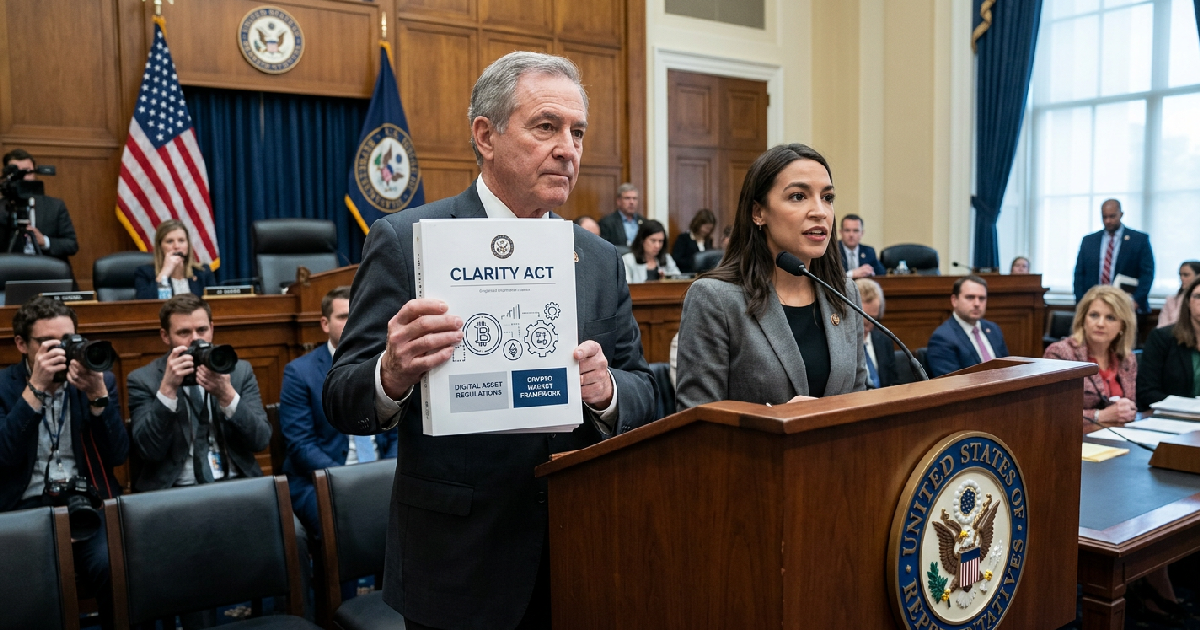

United States lawmakers have reportedly unveiled a comprehensive legislative proposal known as the Clarity Act, a significant effort aimed at overhauling the regulatory framework for the digital asset industry. The document, which recently entered the public domain, represents a major attempt to define the legal status of cryptocurrencies and redistribute oversight responsibilities between the Securities and Exchange Commission (SEC) and the Commodity Futures Trading Commission (CFTC). By establishing a formal structure for token issuance and decentralized finance, the bill seeks to address long-standing jurisdictional disputes between federal agencies.
The legislation arrives as market participants seek a more standardized legal code to replace what many have described as “regulation by enforcement.” For years, the industry has operated in a complex environment where legal boundaries were often established through litigation rather than clear statutes. The proposal aims to replace this approach with a system that would categorize assets based on their functional utility and level of decentralization. This move is being closely watched by the market, as Bitcoin leads crypto fund inflows amid rising expectations for a more predictable regulatory environment.
Establishing a New Framework for Digital Assets
At the center of the proposal is a classification system designed to distinguish between securities and commodities. The bill reportedly details which digital assets should fall under the purview of the SEC and which should be managed by the CFTC. This distinction is expected to provide relief to exchange operators who have faced difficulties in determining which tokens they can legally list without risking enforcement actions. By clarifying these roles, the act attempts to create a more stable environment for both retail and institutional participants.
The act also introduces criteria that could allow certain digital assets to be reclassified over time. This pathway is particularly relevant for projects that may have started with centralized fundraising but have since transitioned into community-governed protocols. Analysts suggest this framework could be a determining factor in the one-year outlook for tokens like XRP, which have been part of extensive debates regarding their regulatory status. Providing a clear roadmap for reclassification remains one of the most anticipated aspects of the proposed legislation.
Increased Disclosure and Custody Standards
The Clarity Act is expected to impose more rigorous disclosure requirements on entities looking to launch digital assets in the U.S. market. Potential mandates could include providing detailed information regarding a project’s underlying code, the distribution of tokens among early stakeholders, and development roadmaps. These measures are designed to increase transparency for investors and ensure that tokens claiming specific utility are being used for their intended technological purpose in a manner that protects the broader market.
Furthermore, the bill addresses the critical role of custody. It reportedly sets new standards for how exchanges and third-party custodians must hold client assets, with a focus on preventing the commingling of funds. These provisions aim to adapt traditional banking safeguards to the technical realities of blockchain and private key management. As these rules take shape, Ethereum Foundation protocol leads and other development groups will likely monitor how technical trajectories must adjust to remain aligned with emerging standards.
The Impact on Decentralized Finance and Stablecoins
While the bill offers more certainty for centralized entities, it introduces new considerations for the Decentralized Finance (DeFi) sector. The legislative draft reportedly contains language concerning “unhosted wallets” and decentralized protocols, suggesting that platforms offering financial services may need to find ways to incorporate certain compliance protocols. This represents a significant shift for permissionless systems that have historically operated without central intermediaries or traditional compliance structures.
Lawmakers have also included provisions that could impact protocol developers and significant participants. This part of the proposal has already generated discussion within the developer community, particularly regarding the technical feasibility of applying traditional oversight to decentralized smart contracts. Additionally, the bill tasks regulators with monitoring stablecoin issuers, ensuring that dollar-pegged assets are backed by appropriate reserves and are subject to regular audits to maintain financial stability.
Next Steps in the Legislative Process
The release of this extensive document marks the beginning of a legislative process that will likely involve significant debate. The bill is currently under review by members of the Senate Banking Committee, who must scrutinize the language before it can progress toward a floor vote. Industry groups have generally expressed interest in the “clarity” the bill promises, though some have raised questions about how the requirements might affect smaller startups and non-traditional financial innovators.
If passed, the Clarity Act would effectively transition the United States into a post-ambiguity era for digital assets. It would grant the CFTC expanded authority over spot markets for commodities while maintaining the SEC’s role in overseeing investment contracts. For institutional investors, this transition toward a codified legal system is frequently cited as a necessary step for broader market participation, potentially bringing in capital that has remained on the sidelines during the period of legal uncertainty.