
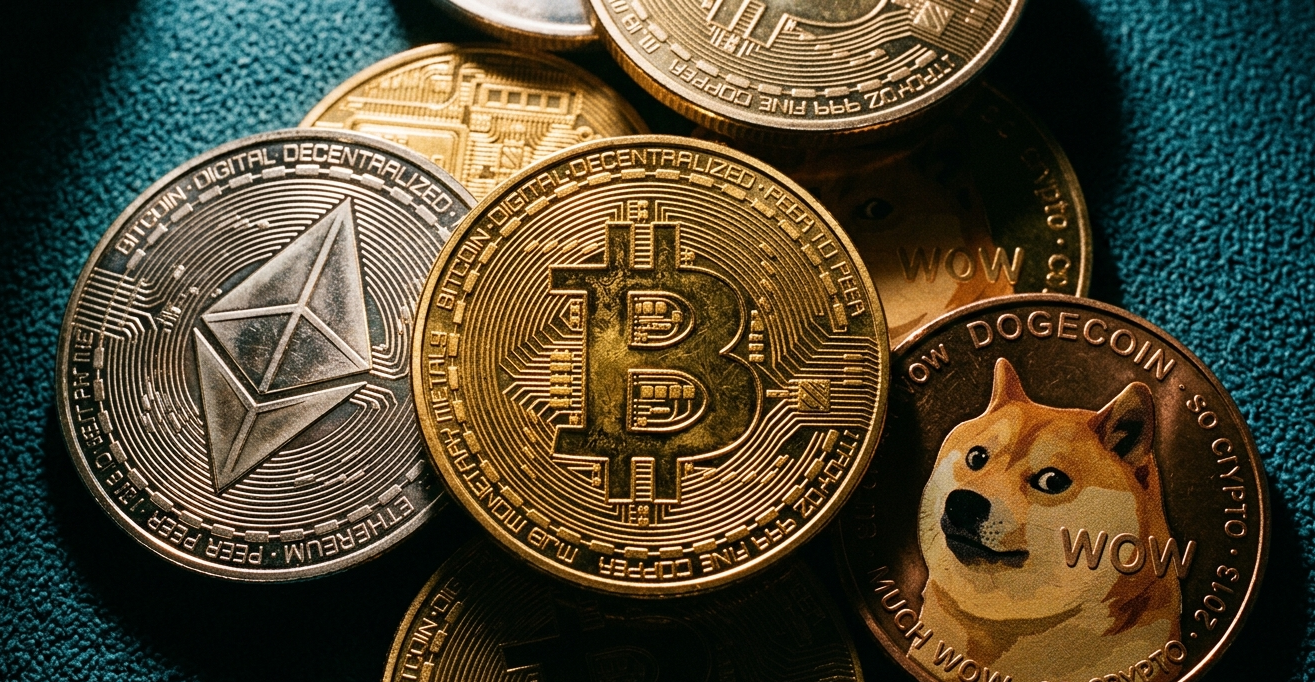

The digital assets have undergone a profound transformation, evolving from a niche experimental playground into a cornerstone of modern institutional finance. For the contemporary investor, identifying the best cryptocurrencies to invest in is no longer about chasing viral trends or “memecoins” in hopes of overnight riches. Instead, it is about understanding a fundamental shift in the global monetary architecture.
Today, major financial institutions from Wall Street to London have integrated Bitcoin and Ethereum into their treasuries, signaling that crypto has matured into a legitimate asset class. This guide provides a sophisticated, analytical framework to help you navigate this complex market with the clarity of a seasoned professional, focusing on long-term value, technical robustness, and strategic risk management.
What is Crypto Investing?
Investing in cryptocurrencies is the act of allocating capital into decentralized digital protocols that leverage blockchain technology to solve specific economic or computational problems. Unlike traditional equity investing, where you own a share of a corporation’s future cash flows, crypto investing often involves participating in the growth of a network’s utility.
To the uninitiated, the market can look like a monolithic block of “digital money.” However, professional investors categorize assets by their function. There are “Store of Value” assets like Bitcoin, “Smart Contract Platforms” like Ethereum and Solana, and “Utility Tokens” that power specific applications. Understanding this distinction is the first step in moving from a speculative mindset to a value-driven investment strategy. The objective is to identify networks that exhibit strong “network effects” where the value of the protocol increases exponentially as more users, developers, and capital join the ecosystem.
Why Does It Matter?
In an era of unprecedented global debt and fluctuating fiat currency values, the “hard money” properties of digital assets have never been more relevant. Traditional portfolios, historically balanced between stocks and bonds, are increasingly underperforming in real terms when adjusted for monetary inflation. This has led to a “search for yield” and a “flight to quality” within the digital realm.
Cryptocurrency matters today because it represents the first time in history that individuals can hold a globally liquid, scarce, and borderless asset without relying on a centralized intermediary. For institutional players, the launch of Spot Bitcoin and Ethereum ETFs in the United States has provided a regulated “on-ramp,” bringing trillions of dollars in potential liquidity. For the individual investor, crypto offers an asymmetric risk-reward profile: while the volatility is high, the potential for these protocols to become the backbone of the “Internet of Value” provides a growth opportunity rarely seen in mature markets.
How It Works: The Mechanics of Value
At its core, a cryptocurrency’s value is derived from its underlying blockchain—a distributed ledger that records transactions across a network of computers. This technology ensures transparency, security, and immutability.
When you invest in a protocol, you are essentially betting on its “Consensus Mechanism.” For example, Bitcoin uses Proof of Work (PoW), where miners expend energy to secure the network, creating a physical link between the digital and material worlds. Ethereum and many others use Proof of Stake (PoS), where holders “stake” their tokens to validate transactions, earning a yield in return.
Furthermore, the “Tokenomics” of a project—its supply cap, issuance rate, and burn mechanisms—dictate its long-term purchasing power. A project with an infinite supply and high inflation is a poor investment vehicle, regardless of its technology. Conversely, assets with fixed or “ultrasound” (deflationary) supply models are designed to appreciate as demand grows against a stagnant or shrinking pool of tokens.
Advantages and Risks: A Balanced Analysis
A professional approach requires an objective look at both the transformative potential and the inherent dangers of this asset class.
The Advantages:
- 24/7 Global Liquidity: Unlike traditional stock exchanges that close on weekends and holidays, crypto markets never sleep, allowing for instant capital reallocation.
- Programmable Scarcity: Bitcoin’s 21 million supply cap is enforced by math, not by the whims of central bankers.
- Innovation at the Edge: DeFi (Decentralized Finance) allows for lending, borrowing, and trading without the heavy overhead of traditional banks, often offering better rates for participants.
- Transparency: Every transaction is viewable on-chain, allowing for forensic-level auditing of a network’s health.
The Risks:
- Extreme Volatility: It is common for even the best cryptocurrencies to experience 20-30% drawdowns within a single week.
- Regulatory Uncertainty: While the US and Europe (through MiCA) are providing more clarity, sudden shifts in government policy can impact market sentiment and liquidity.
- Technical & Custodial Risk: If you manage your own keys and lose them, your funds are gone forever. There is no “forgot password” button in a decentralized system.
- Smart Contract Vulnerabilities: Even well-audited protocols can be subject to hacks if a bug is found in the code.
The Pillars of a Modern Portfolio
When searching for the best cryptocurrencies to invest in, your portfolio should be structured like a pyramid, with the most secure assets forming the base.
1. The Foundation: Bitcoin (BTC)
Bitcoin is the undisputed “Digital Gold.” Its primary role is a hedge against the debasement of traditional currencies. Because of its limited supply and the massive computational power securing it, Bitcoin is the lowest-risk asset in the crypto space. It should be the first entry point for any beginner and the largest holding for most intermediate investors. In a macro environment where USD, EUR, and JPY are losing purchasing power, Bitcoin stands as a neutral, non-sovereign reserve asset.
2. The Infrastructure: Ethereum (ETH)
If Bitcoin is gold, Ethereum is the digital oil and the programmable “World Computer.” It is the leading platform for Smart Contracts, hosting thousands of applications from stablecoins to NFT marketplaces. With its shift to Proof of Stake, Ethereum has become more environmentally friendly and offers a “staking yield,” making it attractive for those seeking passive income alongside capital appreciation.
3. The Scalability Frontier: Layer 2s & Alternative L1s
To support global adoption, networks must be fast and cheap. Solutions like Arbitrum, Optimism, and Polygon (Layer 2s) sit on top of Ethereum to handle massive transaction volumes. Meanwhile, Alternative Layer 1s like Solana offer high-speed, low-cost environments for high-frequency trading and consumer applications. These carry higher risk but offer significant growth potential as they vie for market share in the “Blockchain Wars.”
4. Real World Assets (RWA) and DePIN
The next frontier for the best cryptocurrencies to invest in involves bridging digital protocols with physical assets. RWA (Real World Assets) protocols are tokenizing everything from US Treasury bills to real estate, bringing trillions of dollars of traditional value onto the blockchain. Simultaneously, DePIN (Decentralized Physical Infrastructure Networks) projects are using tokens to incentivize the building of real-world wireless networks, maps, and energy grids.
How to Get Started in Practice
Transitioning from theory to practice requires a disciplined, step-by-step approach to ensure the safety of your capital.
- Choose a Regulated Exchange: For those in the US and Europe, platforms like Coinbase, Kraken, and Gemini offer the highest levels of regulatory compliance and insurance. Avoid obscure exchanges with no proven track record.
- Verify Your Identity (KYC): Be prepared to provide documentation. This is a standard requirement for regulated platforms to prevent fraud and money laundering.
- Fund with USD: Deposit your capital via bank transfer (ACH or SEPA). Start small, only invest what you can afford to lose while you learn the ropes.
- Prioritize Security: Never leave large amounts of capital on an exchange for the long term. Purchase a hardware wallet (like Ledger or Trezor) to take “self-custody” of your assets. Remember the industry mantra: Not your keys, not your coins.
- Implement DCA (Dollar Cost Averaging): Instead of trying to “time the bottom,” invest a fixed amount of USD every week or month. This smooths out the volatility and removes the emotional stress of price fluctuations.
Conclusion
Investing in the best cryptocurrencies to invest in requires a shift in perspective. It is not a lottery; it is a strategic participation in the future of financial technology. Focusing on the “Blue Chips” like Bitcoin and Ethereum, diversifying into high-utility infrastructure, and maintaining rigorous self-custody standards, you can build a portfolio that thrives across market cycles.
The most successful investors in this space are not those who trade the most, but those who study the most. Patience, discipline, and a commitment to “DYOR” (Do Your Own Research) are your most valuable assets. The digital revolution is still in its early chapters—positioning yourself intelligently today is the best way to ensure you are part of the financial landscape of tomorrow.
This content is for informational and educational purposes only and does not constitute financial, investment, or legal advice. Cryptocurrency investments are volatile and involve significant risk.