
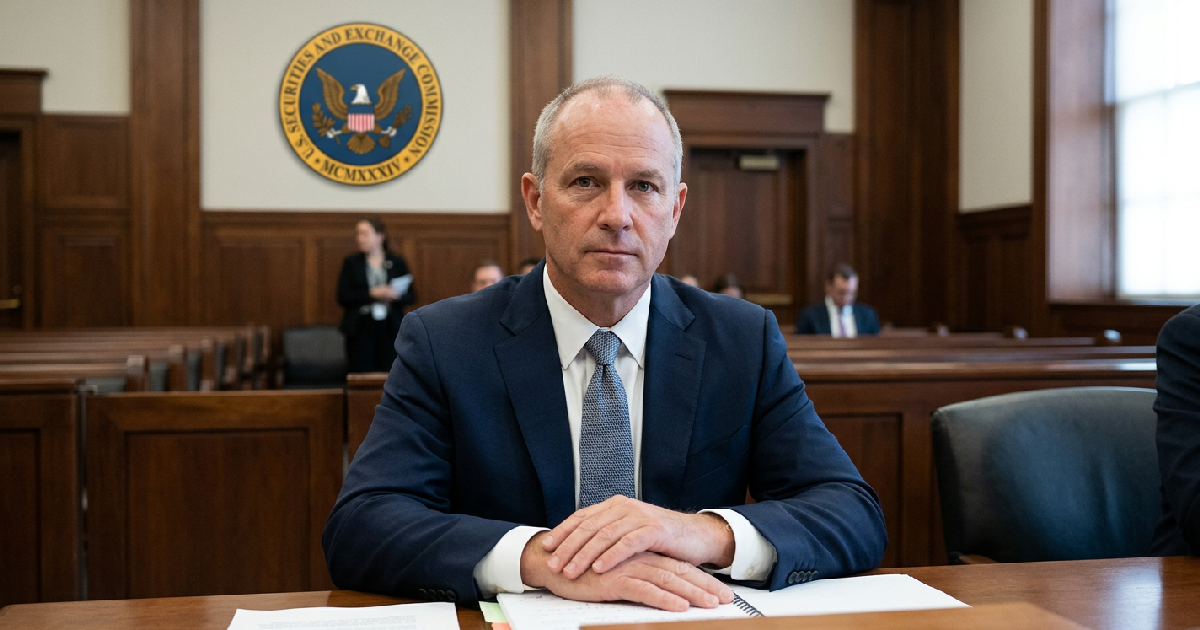

John Deaton credits 75,000 XRP holders for providing crucial support to Ripple executives Brad Garlinghouse and Chris Larsen against the SEC’s multi-year legal offensive. In a detailed social media statement on July 12, 2026, the U.S.
Senate candidate and prominent crypto advocate characterized the SEC’s original enforcement action as a calculated attempt to force a settlement through personal and financial intimidation.
John Deaton criticizes SEC tactical maneuvers against Ripple
The discussion resurfaced after Ripple CEO Brad Garlinghouse revisited the company’s legal history, admitting that the blockchain firm faced a point where it was nearly forced to wind down operations.
John Deaton, who rose to prominence within the crypto community for filing an amicus brief on behalf of token holders, argued that the agency’s lawyers engaged in ethically questionable tactics by naming individual executives in the lawsuit—a move he claims was intended to break their resolve rather than seek justice.
According to John Deaton, the decision by the Securities and Exchange Commission (SEC) to target Ripple CEO Brad Garlinghouse and Executive Chairman Chris Larsen personally represented a strategic pivot designed to create maximum leverage.
By suing the individuals alongside the corporation, the agency allegedly hoped to trigger a quick settlement to avoid the crushing personal costs of federal litigation. This sentiment was echoed by Ripple CTO Emeritus David Schwartz, who recently confirmed that legal advisors originally told the executives to abandon the company, labeling it “unsavable.”
John Deaton expressed full agreement with Schwartz’s assessment of the situation, noting that the pressure applied by the SEC was immense. He specifically referenced past comments from former SEC Chairman Jay Clayton regarding the “benefits” of naming individual executives in enforcement actions.
According to Deaton, this approach is often used even in cases where no fraud is alleged, simply to increase the likelihood of a settlement by putting the personal wealth and reputations of leadership at risk.
The resilience shown by the leadership was not merely a matter of corporate pride, but a defensive stand against what many in the industry viewed as regulatory overreach. While XRP speculative activity often fluctuates based on market trends, the legal proceedings provided a rare instance where retail investors directly influenced a high-stakes courtroom battle.
Deaton noted that without the vocal and organized support of the 75,000-strong “XRP Army,” the outcome might have been significantly different.
The role of 75,000 XRP holders in the legal defense
One of the most unique aspects of the Ripple case was the intervention of retail token holders who felt their interests were not being represented by the government agency claiming to protect them.
John Deaton spearheaded this movement, bringing together 75,000 individuals who commonized their legal standing to argue that XRP itself was not a security. Their participation transformed the case from a standard corporate dispute into a broader referendum on how digital assets should be classified under U.S. law.
John Deaton praised these holders for their tenacity, suggesting that their collective voice provided the Ripple executives with the “moral and legal air cover” needed to reject the SEC’s settlement offers.
By maintaining a united front, the community helped disprove the narrative that Ripple was a centralized scheme to enrich a few individuals at the expense of many. This grassroots involvement has since become a blueprint for other crypto communities facing similar regulatory challenges.
The impact of this community support reached far beyond the courtroom, affecting public perception and legislative discourse. As market sentiment shifts toward seeking clearer regulatory frameworks, the Ripple case stands as a primary example of why current laws may be ill-suited for the digital age.
Deaton’s commentary serves as a reminder that the “protection” offered by regulators is sometimes viewed by the protected as a direct threat to their financial well-being.
Intimidation tactics and the Gary Gensler era
While the Ripple lawsuit began under Jay Clayton, it continued and intensified under SEC Chairman Gary Gensler. John Deaton’s recent remarks highlight a deep-seated frustration within the crypto sector regarding how these cases are litigated.
He argued that the SEC often relies on the “stochastic terrorism” of legal fees, where the cost of a defense is so high that only the wealthiest entities can afford to fight for their rights.
Deaton pointed out that even in the absence of fraud, the SEC’s lawyers have been accused of being “ethically challenged” in their pursuit of wins. The Ripple executives, by refusing to cut a deal that would have likely compromised the future of the XRP Ledger, provided a rare victory for the industry.
This victory was validated when a federal court eventually ruled that XRP was not, in and of itself, a security when sold on public exchanges.
This legal clarity has allowed for further development on the network, even as David Schwartz continues to lead adoption efforts through the XRPL Foundation. The case proved that the SEC could be defeated if a company has the capital—and the community backing—to see the process through to a final judgment. For Deaton, the 75,000 holders were the decisive factor in that equation.
Implications for future crypto enforcement actions
The strategy employed by Ripple and its supporters has set a high bar for future crypto-related litigation. No longer can the SEC assume that retail holders will remain silent while their assets are devalued by regulatory announcements. The Ripple case demonstrated that an organized community can provide legal evidence, expert testimony, and public relations support that complicates the government’s narrative.
John Deaton’s transition into the political arena as a Senate candidate further underscores the shift from legal defense to active policy influence. He continues to use the Ripple case as a cautionary tale of what happens when regulators operate without clear legislative mandates. His criticisms suggest that the current “regulation by enforcement” model is failing both the industry and the investors it claims to serve.
As the industry moves toward 2027, the lessons from the Ripple battle remain highly relevant. Other projects currently under the SEC’s microscope are looking to the Ripple playbook, focusing on community engagement and demanding transparency in how evidence is presented. The legacy of the 75,000 holders is not just in a court victory, but in the permanent change they forced upon the American regulatory landscape.
The fight for XRP was never just about a single token; it was about the right of a nascent industry to exist without being squeezed out by legacy systems.
John Deaton’s recent comments remind the market that while the SEC has the power of the federal government, it does not have the power of a committed, informed, and organized public. The Ripple executives may have signed the checks, but the 75,000 holders provided the backbone for the fight.