

For much of crypto’s history, blockchain networks have been primarily associated with digital-native assets.
Bitcoin emerged as an alternative monetary system, Ethereum introduced programmable smart contracts, and decentralized finance built an ecosystem around cryptocurrencies and stablecoins.
A new trend is beginning to reshape that landscape.
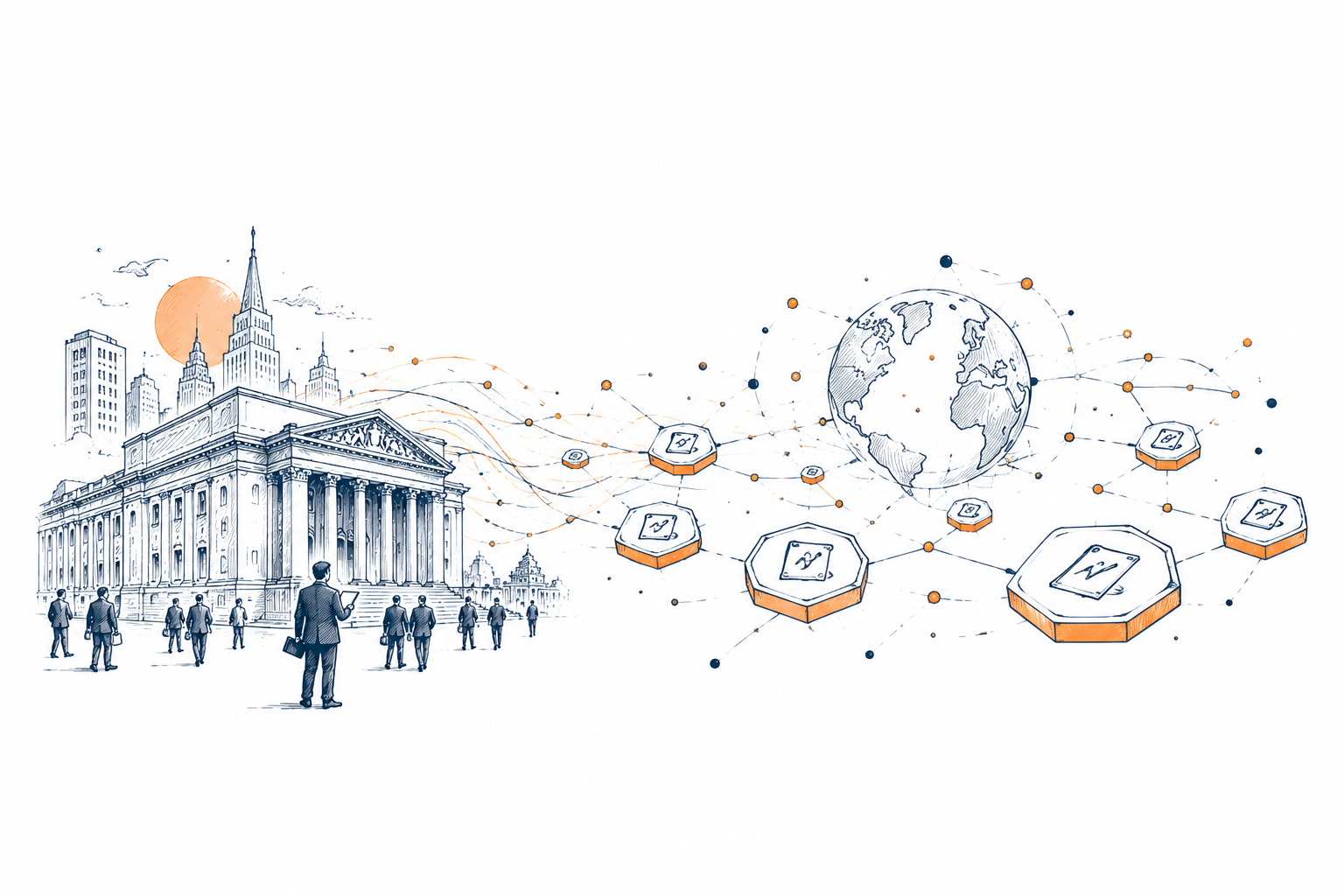
As tokenized stocks, ETFs and other real-world assets gain momentum, blockchain is evolving beyond its role as infrastructure for crypto trading. It is increasingly becoming a platform where traditional capital markets can operate in a digital-native environment.
The shift suggests that blockchain’s next phase may be driven less by creating new cryptocurrencies and more by transforming how financial assets are issued, traded and managed.
Tokenization is moving beyond simple digital representations
The first generation of tokenized assets focused on bringing existing financial instruments onto blockchain networks.
Stocks, bonds and investment funds could be represented as digital tokens, allowing investors to benefit from faster settlement, broader accessibility and continuous trading.
Those advantages remain important.
But the industry is beginning to realize that tokenization offers something far more significant than efficiency alone.
Once financial assets become programmable, they can interact with lending protocols, derivatives, automated trading systems and other blockchain applications in ways that traditional financial infrastructure cannot easily replicate.
The innovation is no longer the token itself.
It is everything that can be built around it.
Capital is finding new destinations onchain
For years, most onchain liquidity flowed into familiar sectors such as Bitcoin, Ethereum, stablecoins and decentralized finance.
That pattern is gradually changing.
Investors are increasingly using blockchain infrastructure to gain exposure to traditional financial assets rather than exclusively digital-native ones.
This represents an important evolution.
Instead of serving only as an ecosystem for cryptocurrencies, blockchain networks are beginning to function as financial infrastructure capable of supporting multiple asset classes within a single programmable environment.
The distinction may become one of the defining characteristics of the industry’s next cycle.
Infrastructure is becoming the real competitive advantage
The growth of tokenized assets has shifted attention away from the assets themselves and toward the systems supporting them.
Projects are now building lending markets, derivatives, collateral frameworks and settlement networks around tokenized securities, creating financial services that extend well beyond simple ownership.
As a result, competition is no longer centered on which platform offers the largest number of tokenized stocks.
It increasingly depends on which ecosystem provides the most complete financial infrastructure around those assets.
That transition mirrors the evolution of traditional capital markets, where exchanges eventually became only one component of much broader financial ecosystems.
Blockchain is entering a different stage of financial development
Tokenized stocks are unlikely to replace traditional exchanges anytime soon.
Major financial centers continue to offer unmatched liquidity, regulatory certainty and institutional participation.
However, blockchain networks are beginning to develop capabilities that complement rather than replicate existing markets.
Continuous trading, programmable assets, near-instant settlement and composable financial products create possibilities that conventional market infrastructure was never designed to support.
If that trajectory continues, blockchain’s greatest long-term contribution may not be the creation of digital currencies.
It may be the emergence of an entirely new capital market infrastructure, where traditional financial assets become programmable building blocks for products and services that do not yet exist in today’s financial system.