
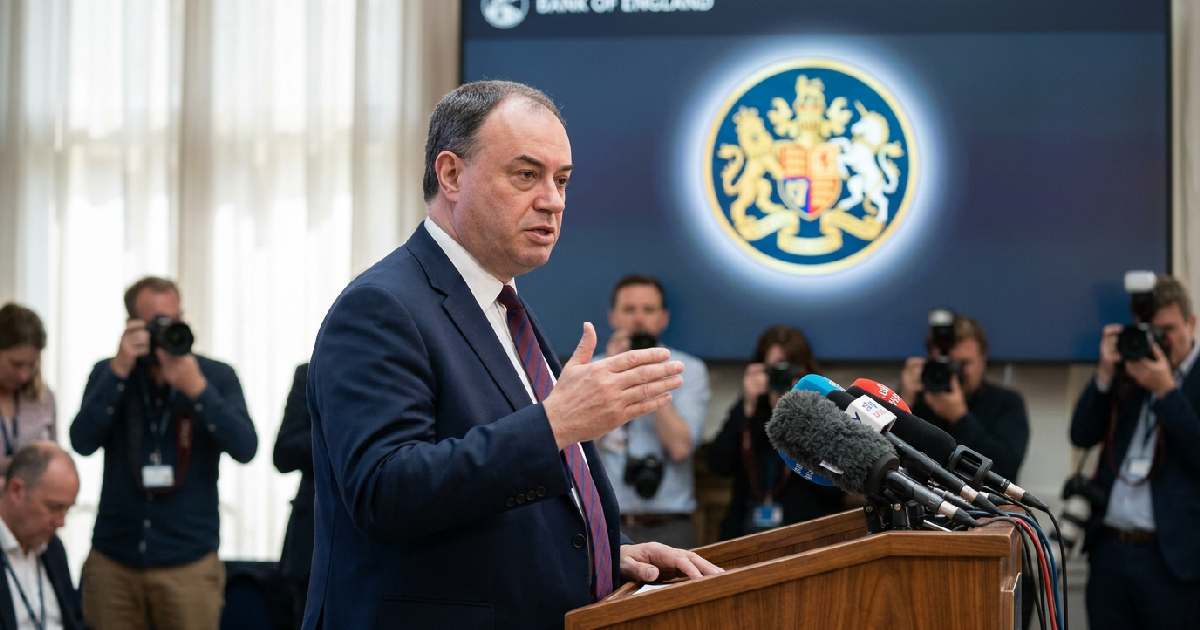

Bank of England Governor Andrew Bailey has reportedly denied that lobbying efforts from Nigel Farage influenced the central bank’s ongoing development of a central bank digital currency (CBDC).
The clarification follows a private meeting between the two figures where discussions regarding the future of British monetary policy and the role of digital assets took center stage. Despite the high-profile nature of the encounter, Governor Andrew Bailey maintained that the institution’s decision-making process remains shielded from political pressure or outside advocacy.
Independence of the Bank of England under scrutiny
The interaction between the central bank chief and the prominent political figure comes at a sensitive time for the United Kingdom’s financial strategy. As the British government and the Bank of England (BoE) explore the feasibility of a digital pound, critics have grown increasingly vocal about privacy concerns and the potential for government intervention.
Nigel Farage, a longtime critic of centralized financial control, has been a leading voice in movements questioning the motives behind a transition to digital-only formats. However, the bank is framing the meeting as part of its standard engagement with various public stakeholders rather than a shift in its technical roadmap.
The central bank’s mandate requires it to operate independently of the Westminster political machine, a boundary that Governor Andrew Bailey is eager to defend. Reports suggest that during his talks with Nigel Farage, the governor reiterated that move toward a CBDC would be based on economic stability and technological readiness rather than political whims.
This stance is crucial as the BoE attempts to maintain public trust while modernizing the nation’s payment infrastructure. For many investors, this independence is the bedrock of the UK’s financial reputation, especially as macro warning signs emerge across the global economy.
Skeptics have pointed to the timing of the meeting as a potential sign of populist influence on technical policy. Nigel Farage has reportedly mobilized opposition against the digital pound, frequently citing concerns regarding state surveillance and personal financial freedom.
By engaging directly with such a vocal opponent, Governor Andrew Bailey may be attempting to de-escalate public anxiety. Yet, the governor’s firm denial of any swayed policy suggests the bank is prioritizing its internal research and consultation results, which have been underway for several years.
Digital pound debates and the role of private assets
While the Bank of England focuses on a state-backed digital currency, the broader conversation often drifts toward how such a system would coexist with private cryptocurrencies like Bitcoin. The meeting reportedly touched on the wider digital asset environment, a topic that Nigel Farage has explored in his recent media ventures.
The governor’s refusal to let lobbying dictate terms ensures that the BoE doesn’t prematurely favor or handicap specific technologies based on the political climate. This impartial approach mirrors how global institutions are handling shifting investor sentiment and the decline of exchange-side liquidity.
Balancing privacy with financial innovation
A primary friction point in the CBDC discussion is the balance between anonymity and security. Nigel Farage has consistently argued that a digital pound could lead to a crisis for individual banking access, citing his own public disputes with financial institutions.
Governor Andrew Bailey, however, is reported to have expressed that a UK CBDC would prioritize privacy and aim to avoid monitoring individual spending habits. The bank’s ability to convince the public of these safeguards will be a greater hurdle than any single meeting with a political leader.
Technical roadmap for the digital pound
- Completion of the design phase to assess technical requirements.
- Extensive public consultation to gauge social acceptance of digital currency.
- Experimental testing to evaluate the integration of a digital pound with existing banks.
- A scheduled assessment to decide whether to proceed with a full-scale launch.
Global precedent and political pressure on central banks
The Bank of England is not the only central bank facing heat from political figures. Across the Atlantic and throughout Europe, the rise of digital assets has forced central bankers into the political crosshairs. For Governor Andrew Bailey, the challenge is to navigate these waters without appearing out of touch.
The current climate requires a delicate touch; as market sentiment shifts following legislative movements in other jurisdictions, the UK is keen to present a stable front to international markets.
The reported denial of Nigel Farage’s influence serves as a signal to both the public and the financial sector. It suggests that while the bank is willing to listen to various viewpoints, its core mission—maintaining monetary and financial stability—is not up for negotiation.
As the UK moves closer to a decision on the digital pound, the tension between populist concerns and institutional objectives is likely to tighten. For now, the governor is holding the line, ensuring that the bank’s digital future is led by economic and technical data.