
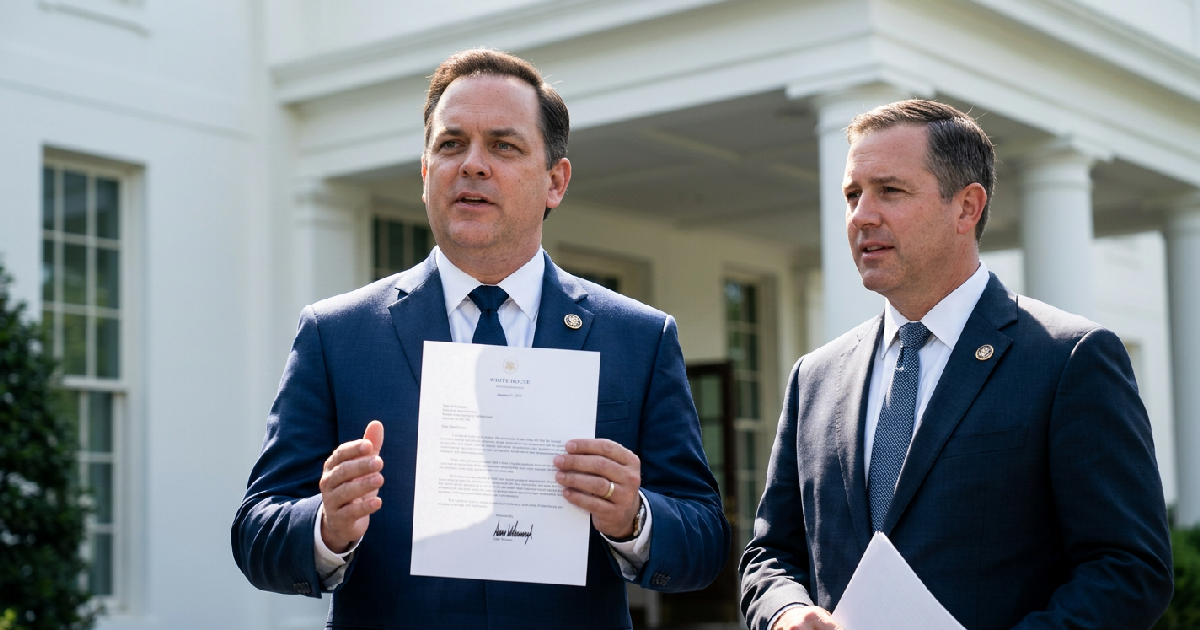

The White House has moved to “set the record straight” regarding President Donald Trump’s regulatory picks as a dispute over agency vacancies threatens the momentum of major cryptocurrency legislation. In a letter sent Thursday, July 9, 2026, White House officials Dan Scavino and James Braid rejected claims from Senate Democrats that the administration is responsible for a staffing crisis at key financial watchdogs.
The stalemate is particularly acute at the Commodity Futures Trading Commission (CFTC), which currently has four out of its five commissioner seats vacant. Republican Chair Michael S. Selig is the agency’s sole sitting commissioner. This leadership vacuum has become a central point of contention as lawmakers push for a vote on the CLARITY Act, a market structure bill that would grant the CFTC primary oversight over digital commodities like Bitcoin.
In the letter addressed to Senate Majority Leader John Thune and Senate Minority Leader Charles Schumer, the White House argued that Democrats have obstructed civilian nominees. The officials claimed they requested recommendations from the minority party for vacancies at both the Securities and Exchange Commission (SEC) and the CFTC but received no names in response.
CFTC vacancies complicate the push for CLARITY Act legislation
The absence of a full commission at the CFTC is more than a procedural headache. Michael S. Selig has signaled that Congress is nearing the final stages of federal crypto legislation, but the lack of a bipartisan board could undermine the durability of any new rules. Without a quorum of five commissioners, critics fear that regulations may lack the stakeholder “buy-in” necessary to survive future administrative changes.
According to research into the matter, agency leaders have previously noted that rules passed under a diminished commission are easier for future opponents to target or roll back. They argue that policy is more robust when it is debated thoroughly by a full, diverse panel. This administrative uncertainty is playing out just as the legislative progress of the CLARITY Act enters a critical window, with the Senate expected to return from recess on July 14.
Industry observers note that the CFTC is also dealing with internal resource issues. Data indicates that staffing at the agency declined by more than 20% between September 2024 and March 2026. This technical “brain drain” raises concerns about whether the regulator can effectively handle the complex oversight duties required by the proposed framework.
Supreme Court ruling expands executive power over agency heads
The White House letter explicitly linked the current staffing dispute to a recent legal victory for the executive branch. Officials cited the Supreme Court’s ruling in *Trump v. Slaughter*, handed down last week, which expanded the president’s authority to remove leaders of independent federal agencies. The administration argued that this decision essentially answers the criticisms voiced by Senate Democrats regarding how regulators are staffed and managed.
James Braid and Dan Scavino, the Director of Legislative Affairs and Director of Presidential Personnel respectively, pointed out that President Trump has nominated Democrats to other key roles, such as the International Trade Commission. They maintain that the White House is acting in good faith while the Senate uses revised procedures to confirm 301 civilian nominees in bulk slates rather than individually.
This expansion of presidential power comes at a time when administrative shifts can have a rapid impact on market participants. For instance, as Ethereum navigates technical breakdowns and ETF outflows, the clarity of and permanence of U.S. rulemaking becomes a primary concern for institutional investors seeking a stable environment.
Tight legislative calendar for digital asset framework
The Senate faces a compressed timeline to address both the vacancies and the CLARITY Act before the August 7 recess. Senator Cynthia Lummis (R-WY) has been vocal about the urgency, warning on social media that this period represents a “last chance” to secure digital asset legislation for years to come. She has also sparred with critics like Senator Elizabeth Warren, arguing that a lack of action only preserves an unworkable status quo.
While the CLARITY Act seeks to end the jurisdictional “tussle” between the SEC and CFTC, the current vacancy crisis creates a practical bottleneck. If the Senate does not move on confirmations, the CFTC may be forced to implement an entirely new oversight regime with only a single sitting commissioner.
Key figures and developments in the regulatory standoff:
* **Michael S. Selig:** The sitting Republican Chair and currently the only commissioner at the CFTC.
* **Dan Scavino and James Braid:** The White House officials who issued the formal defense of the administration’s appointment strategy.
* **CLARITY Act:** The proposed legislation that would give the CFTC lead jurisdiction over digital commodities.
* **Trump v. Slaughter:** The 2026 Supreme Court case cited by the White House to support executive authority over independent agencies.
* **Senate Deadlines:** The chamber returns on July 14, with a goal to move on the CLARITY Act before the August 7 break.
The outcome of this dispute will likely dictate how the U.S. regulates the shifting altcoin market and investor demands throughout 2026. If the White House and Senate leadership cannot resolve the vacancy issue, the largest digital asset market in the world may continue to operate under a “skeleton crew” regulatory regime.