
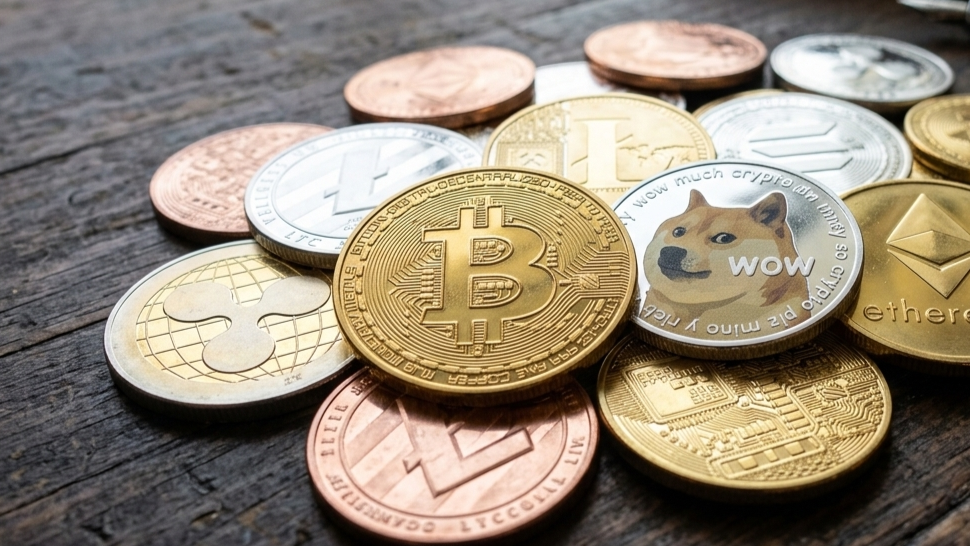

If you have spent more than five minutes in the digital asset space, you have likely realized that while Bitcoin opened the door, it is certainly not the only room in the house. Understanding what are altcoins is the definitive first step for any investor who wants to move beyond the surface of “digital gold” and into the engine room of the new internet.
In the early days, the distinction was simple: there was Bitcoin, and then there was everything else. Today, that “everything else” has evolved into a multi-trillion-dollar economy comprising thousands of unique projects. To help you navigate this, we have crafted a guide that balances the storytelling of a tech pioneer with the cold, hard rigor of institutional wealth management.
Beyond the “Alternative” Label: What You Need to Know
To grasp the altcoin meaning, we have to look at the name itself: “Alternative Coin.” Historically, this referred to any cryptocurrency that wasn’t Bitcoin. When Namecoin launched in 2011, it was a ripple in a small pond. Fast forward to 2026, and calling a powerhouse like Ethereum or a specialized network like Chainlink a mere “alternative” feels a bit like calling Amazon an “alternative” to a local bookstore.
The primary reason for the existence of altcoins is specialization. Bitcoin was designed to do one thing perfectly: be a decentralized, censorship-resistant store of value. It is slow and rigid by design. Altcoins, conversely, are the laboratories of the blockchain world. They experiment with transaction speed, complex smart contracts (self-executing digital agreements), and enhanced privacy features.
Before you consider investing in altcoins, you must understand the difference between a “coin” and a “token.” A coin, like Ether (ETH) or SOL, is the native currency of its own independent blockchain. A token is a guest; it is an asset created on top of an existing blockchain (like a specialized utility token living on Ethereum). Knowing which is which helps you assess the underlying security and infrastructure of your investment.
The 2026 Altcoin Taxonomy: Mapping the Ecosystem
The days of buying a coin just because it has a catchy name or a viral meme are behind us. Professional investors now categorize the market by utility. If you are looking for cryptos beyond bitcoin, these are the pillars that hold up the modern digital economy.
Smart Contract Platforms (Layer 1s)
These are the “Sovereign Foundations.” Think of them as the operating systems of the decentralized world, similar to how iOS or Android support millions of apps.
- Ethereum: The undisputed leader in terms of developer activity and security.
- Solana: Known for high-speed performance and low costs, attracting a massive retail and gaming audience.
- The Utility Factor: The value of these altcoins is directly tied to the “Network Effect.” The more people building apps on them, the higher the demand for the native coin to pay for transaction fees.
Scaling Solutions (Layer 2s)
The “High-Speed Expressways.” As main networks like Ethereum became crowded, Layer 2 networks like Arbitrum, Optimism, and Base emerged. They bundle thousands of transactions together and settle them on the main chain. They solve the “scalability trilemma”—maintaining security while increasing speed and lowering costs for the average user.
DePIN and AI Agents
This is the newest insight: DePIN (Decentralized Physical Infrastructure Networks) projects use tokens to incentivize people to build real-world hardware networks, such as decentralized Wi-Fi or GPU rendering farms. Simultaneously, altcoins are now being used as the “currency” for AI agents to trade data and compute power autonomously. This moves crypto from a purely financial tool to a fundamental part of the global industrial stack.
Real-World Assets (RWA)
Perhaps the most significant institutional bridge. RWA projects take traditional assets—like U.S. Treasuries, gold bars, or commercial real estate—and put them on the blockchain. This allows for 24/7 trading, instant settlement, and fractional ownership. For a wealth manager, this is where “old money” meets “new tech.”
Altcoins vs Bitcoin: Rivals or Partners?
A common question for beginners is the altcoin vs bitcoin debate. Is one going to kill the other? In a professional portfolio, they are not competitors; they are complementary assets with different “jobs.”
- Bitcoin is your defensive anchor. It is the “Digital Gold” you hold to protect against the long-term devaluation of fiat currencies (like the USD). It has the lowest volatility in the crypto sector and the highest regulatory clarity.
- Altcoins are your offensive growth engine. They are “Digital Tech Stocks.” They carry higher risk but offer the potential for exponential gains as the technology they power becomes indispensable.
Historically, the market moves in cycles. Bitcoin usually leads a bull market, and once it stabilizes, capital “rotates” into altcoins as investors seek higher returns. Understanding this “capital flow” is vital to avoid the mistake of buying into an altcoin after it has already spiked.
The Wealth Manager’s Checklist: How to Analyze Value
When investing in altcoins, you are essentially a venture capitalist. You aren’t just buying a ticker symbol; you are backing a tech startup. Here is how to separate the innovators from the “ghost chains.”
- Tokenomics (Supply and Demand): Check the total supply. Is the coin inflationary (more are printed every year) or deflationary (some are “burned” or destroyed)? A project with an infinite supply is a hard sell for long-term value preservation.
- The Lindy Effect: This is a favorite concept at Bitcoin Suisse. It suggests that the longer a technology has survived, the more likely it is to survive into the future. An altcoin that has stayed in the Top 20 for two market cycles is significantly safer than a “hot new project” that launched last week.
- Active Development: Use tools like GitHub to see if developers are actually writing code. A project with no technical updates is a “zombie” project, regardless of its social media hype.
- Real Revenue: In 2026, we look at “Protocol Revenue.” Is the project making money from user fees, or is the price only going up because of speculation? Real utility leads to sustainable value.
Is Investing in Altcoins Worth the Risk?
Let’s be direct: investing in altcoins is high-risk, high-reward. While the “blue chip” altcoins (like Ethereum) have become relatively stable, many smaller projects will go to zero.
The Pros:
- Asymmetric Upside: You won’t see a 50x return on a bank savings account or a traditional stock index in a single year. In altcoins, for better or worse, that volatility exists.
- Passive Income: Through “Staking,” you can lock up your altcoins to support the network and earn a “yield” or interest, often paid in more of that coin.
The Cons:
- Regulatory Uncertainty: Different countries have different rules. A sudden change in SEC (USA) or MiCA (EU) regulations can cause temporary price crashes.
- Security Risks: Smart contracts can have bugs. Unlike a bank, if a decentralized app is hacked, there is often no “undo” button.
For the beginner, the safest path is diversification. Most professional advisors suggest keeping 50-70% of a crypto portfolio in Bitcoin, with the remainder spread across 3-5 high-conviction altcoins in different sectors (e.g., one Smart Contract platform, one Scaling solution, and one Oracle/Data project).
Conclusion
Understanding what are altcoins is about more than just finding the next big winner; it is about recognizing the shift from a centralized world to an open, programmable one. Bitcoin proved that we don’t need a central bank to have money. Altcoins are proving that we don’t need a central authority to have finance, insurance, or even the internet itself.
As you begin your journey on platforms like Coinbase, Kraken, or Binance, remember to stay curious but skeptical. Focus on projects that solve real problems, have transparent teams, and show consistent growth in users. The future of the global economy is being written in code, and altcoins are the alphabet.
This content is for informational purposes only and does not constitute financial advice.