
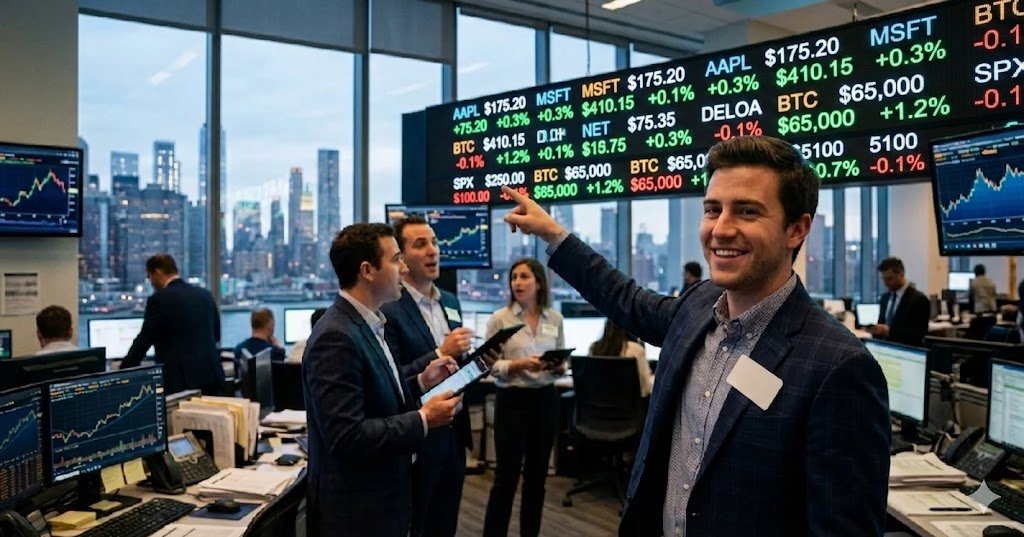

For a long time, Wall Street viewed decentralized exchanges as an experiment limited to the cryptocurrency industry.
Over the past few months, however, major financial institutions have started paying closer attention to the growth of so-called DEXs — blockchain-based platforms that allow users to trade assets without relying on traditional intermediaries.
The growing interest shows that part of the financial market is beginning to consider decentralized finance infrastructure as a potential component of the future of global trading.
Decentralized exchanges allow users to trade digital assets directly from their own wallets without depending on banks, brokers, or centralized companies for custody. This model reduces intermediaries, automates financial processes, and increases transparency through blockchain technology.
In the early years of the sector, DEXs suffered from major technical limitations. Slow transaction speeds, high fees, and low operational capacity prevented these platforms from being viewed as real alternatives to the traditional financial system.
Today, that scenario has started to change.
The evolution of blockchain networks and scaling solutions has made decentralized exchanges significantly more efficient. The overall trading experience is becoming increasingly similar to the infrastructure used by traditional brokerage firms, something that has started attracting the attention of banks, hedge funds, and major asset managers.
Financial market starts seeing strategic potential
Part of this institutional interest is linked to the potential for reducing operational costs. Since transactions occur directly on the blockchain through smart contracts, some traditional intermediaries become unnecessary.
In addition, DEXs operate almost continuously, functioning globally 24 hours a day. Another important factor is the growing discussion surrounding the tokenization of real-world assets.
Financial institutions have started exploring the possibility of trading bonds, stocks, funds, and other financial instruments directly on blockchain networks.
Experts believe the market may eventually move toward a hybrid model in which elements of traditional exchanges coexist alongside decentralized blockchain-based systems.
Changing perception after crypto industry crises
Bankruptcies, liquidity crises, and custody-related problems within the crypto industry reignited the debate surrounding the risks of centralization in digital asset markets.
Decentralized exchanges gained strength precisely because they allow investors to maintain direct control over their own assets without depending on third-party custody. Even so, the sector still faces major challenges. Regulatory concerns, smart contract security, user experience, and scalability remain significant obstacles for broader DEX adoption.
In addition, large financial institutions still operate under strict compliance and regulatory supervision, which makes the integration process slower.
Despite this, Wall Street appears increasingly interested in understanding how decentralized finance could influence the future of the global financial system. The discussion is no longer limited to speculative cryptocurrencies. The market has started debating whether part of the financial infrastructure of the future could be built directly on blockchain networks.