
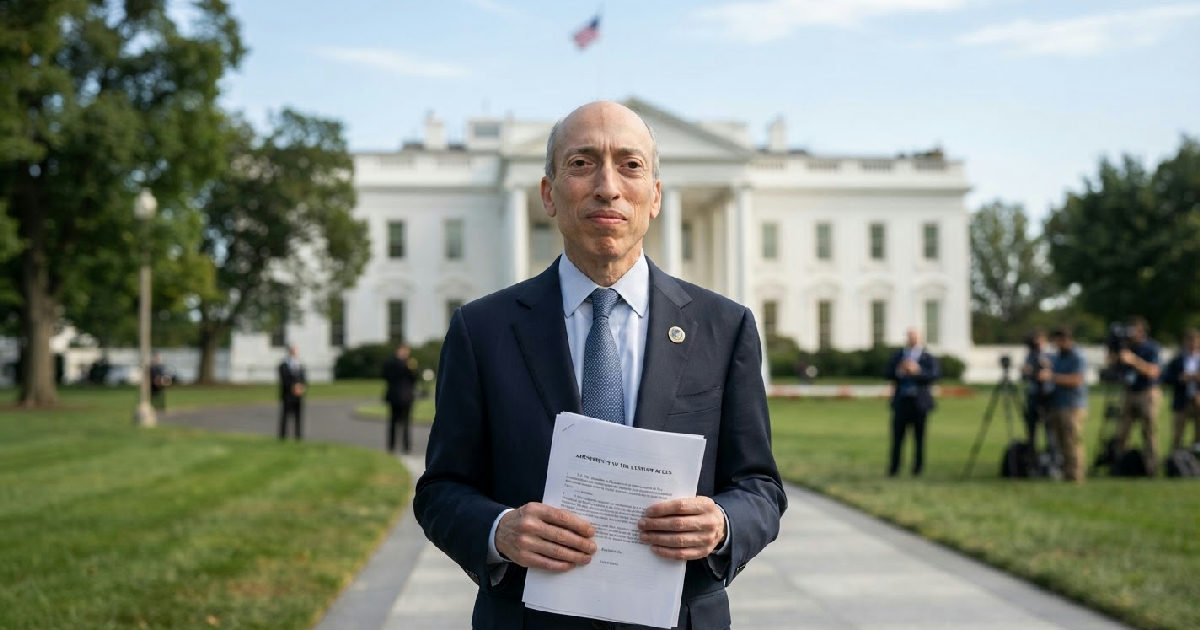

The U.S. Securities and Exchange Commission (SEC) has formally submitted proposed SEC crypto custody rules to the White House for review, aiming to clarify digital asset holding requirements. S.
Securities and Exchange Commission (SEC) has formally submitted its proposed rewrite of SEC crypto custody rules to the White House for review, a critical step towards establishing a clearer regulatory framework for digital assets.
Designated “Amendments to the Custody Rules” (RIN 3235-AN46), this proposal aims to clarify how investment advisers and investment companies can hold crypto assets in compliance with SEC requirements.
This development, which occurred on August 25, 2026, marks a significant shift in the agency’s approach to digital asset oversight. It follows the formal withdrawal of a previous, more contentious safeguarding proposal from 2023. The new submission is now under consideration by the White House’s Office of Information and Regulatory Affairs (OIRA), part of the Office of Management and Budget (OMB).
Understanding the SEC crypto custody rules
The SEC’s latest initiative seeks to modernize existing regulations that were not originally designed for the nuances of crypto assets. It specifically addresses questions raised by investment advisers and companies regarding compliant custody practices.
The previous 2023 proposal, which focused exclusively on registered investment advisers, drew considerable industry concern. It would have significantly expanded the custody rule to encompass all client assets, including crypto, and introduced additional protections related to asset segregation and custodian insolvency.
Critics argued that the definition of a “qualified custodian” was too narrow for the nascent digital asset space, potentially stifling innovation and creating concentration risks.
SEC Chair Paul Atkins has publicly committed to moving the agency away from a “regulation through enforcement” approach, favoring formal rulemaking instead. This new proposal aligns with that commitment, suggesting a more collaborative and structured path forward for broader regulatory framework in the crypto sector.
Redrawing the Regulatory Landscape
This current proposal from the SEC is not merely a rehash of its withdrawn predecessor. It signals a move to remove what the agency considers outdated provisions, aiming to reduce burdens while still protecting investors. This aligns with the Trump administration’s broader agenda concerning digital assets, which has emphasized deregulation and clearer guidelines.
A key aspect of this new direction was the rescission of Staff Accounting Bulletin 121 (SAB 121) in January 2025. This bulletin had previously made crypto custody commercially impracticable for many banks by requiring them to treat custodied crypto assets as if they owned them on their balance sheets.
The “Amendments to the Custody Rules” filing itself is categorized as “deregulatory” under Executive Order 14192, signed by President Donald Trump in January 2025. This executive order instructs federal agencies to eliminate ten rules for every new one they write, underscoring a commitment to reducing regulatory overhead. This classification indicates the SEC sees this rewrite as reducing existing regulatory burdens or complexities.
OIRA Review and Economic Impact
The submission to OIRA initiates a crucial phase of the federal rulemaking process. OIRA’s role is to coordinate interagency review of significant regulations, ensuring they align with presidential policies and don’t conflict with other agencies’ objectives. While OIRA can take up to 90 days for its review, this period is standard and ensures thorough consideration.
The Office of Management and Budget (OMB) record for RIN 3235-AN46 labels the rule as “economically significant.” This designation means the proposed changes are expected to have an economic impact of at least $100 million annually. Such a substantial financial implication highlights the far-reaching effects these custody rules could have across the investment and crypto industries.
Interestingly, the public text of the proposed rule is not yet available, leaving some details to be revealed later. However, the SEC’s 2026 regulatory agenda indicates that the rule intends to cover both investment adviser client assets and investment-company fund assets, a broader scope than initially targeted by the previous withdrawn proposal.
Industry Engagement and Future Outlook
The move to clarify crypto custody rules comes after significant engagement from key players in the digital asset space. Venture firms like Andreessen Horowitz, and legal representatives from Delphi Ventures and Multicoin Capital, have actively engaged with the SEC on this issue.
For instance, Multicoin Capital submitted a custody framework in December 2025, advocating for the inclusion of multi-signature and multi-party computation (MPC) wallets as valid self-custody solutions. This input underscores the industry’s desire for flexible yet secure custody options that reflect the technological realities of crypto.
SEC Chair Paul Atkins also echoed sentiment for digital asset self-custody in June 2025, calling it a “foundational American value.”
After OIRA completes its review, the proposal will return to the SEC for a commission vote. If approved, it will then be released for a public comment period, which typically lasts a minimum of 60 days. This period allows interested parties, from institutional investors to individual crypto enthusiasts, to provide feedback on the proposed rules.
The SEC anticipates publishing the formal Notice of Proposed Rulemaking for public comment no later than October 2026, setting the stage for significant changes in crypto asset management.