
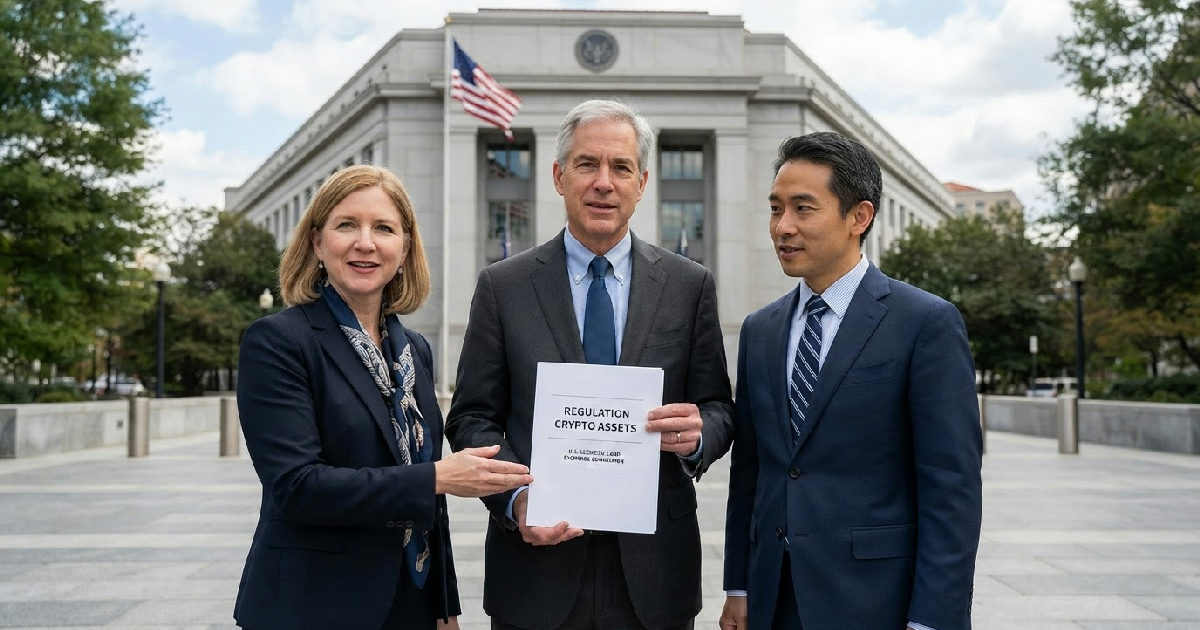

The U.S. Securities and Exchange Commission (SEC) proposed “Regulation Crypto Assets” on August 18, 2026, to clarify crypto capital raising and token classification. S. Securities and Exchange Commission (SEC) officially proposed “Regulation Crypto Assets” on August 18, 2026. This landmark framework aims to provide a clearer pathway for crypto projects to raise capital and eventually remove their tokens from classification as securities.
Supported by SEC Chairman Paul Atkins and Commissioners Hester Peirce and Mark Uyeda, the proposal introduces two key exemptions for fundraising and a conditional safe harbor from the term “investment contract.” It’s a significant shift, offering a structured approach to what has often been a contentious regulatory area within the federal regulatory framework.
Regulation crypto assets: capital raising
At the core of the SEC’s new proposal are distinct avenues for crypto projects to secure funding under specific rules. These exemptions aim to cater to different stages of project development, from nascent startups to more established ventures looking for substantial capital.
The framework includes a “Startup Exemption” which permits offerings of up to $5 million over a four-year period. Projects utilizing this route would need to make public filings at both the beginning and end of this specified timeframe. This ensures transparency, even at early stages.
For projects requiring more significant capital, the proposal outlines a “Fundraising Exemption” split into two tiers over a 12-month period. Tier 1 allows for raises of up to $20 million, while Tier 2 accommodates offerings up to $75 million. This reflects a graduated approach to regulatory oversight based on scale.
Conditional safe harbor for tokens
Perhaps the most transformative aspect of Regulation Crypto Assets is its conditional safe harbor provision. This mechanism allows a crypto asset to potentially shed its “investment contract” designation. Consequently, it could remove its status as a security under federal law.
For this to occur, an issuer must demonstrate they have either fully developed or permanently discontinued any essential development they represented or promised. They also need to have completed or permanently ceased all essential managerial efforts tied to the investment contract, and made no new commitments.
Crucially, decentralization isn’t a prerequisite for accessing this safe harbor. A centralized project can still qualify if it meets these criteria and submits a transition report. This flexibility acknowledges the diverse nature of crypto projects, moving beyond a one-size-fits-all approach to regulatory compliance.
The SEC estimates that around 475 issuers per year could utilize this investment contract safe harbor. This could potentially streamline regulatory burdens for a considerable portion of the market. It marks a critical evolution in how US regulators view and interact with digital assets.
Enhanced disclosure and investor protections
To balance capital formation with safeguarding investors, the new regulations mandate comprehensive disclosure and ongoing reporting. Issuers relying on these exemptions will provide principles-based narrative disclosures. These disclosures offer transparency into their operations and commitments.
The larger Tier 2 exemption, for instance, requires audited financial statements and ongoing reporting obligations. These mirror provisions found in Regulation A. This ensures that as projects scale their fundraising, the level of investor protection also escalates accordingly.
Companies will disclose token supply and release plans, minting and burning mechanisms, governance and smart contract permissions, source code, and project progress. For unaccredited investors, the proposal sets a limit. They can invest no more than 10% of their annual income or net worth, whichever amount is higher.
This cap aims to protect retail participants while still allowing them to engage in early-stage crypto projects under more regulated conditions. SEC Chairman Paul Atkins stated, “This is the most historic step yet to modernize federal securities regulations for crypto assets.”
Broader implications for the US crypto market
Regulation Crypto Assets signals a strategic move by the SEC to provide clarity and encourage innovation within the US. The framework explicitly aims to “onshore innovation in crypto asset markets.” This suggests a desire to keep cutting-edge projects developing within the country rather than pushing them offshore, a goal for many involved in crypto regulation hangs.
The proposal also tackles the complex issue of state-level regulation. It preempts state securities registration and qualification requirements for offerings made under the new exemptions. This could significantly reduce compliance burdens for projects seeking to operate nationally.
This replaces a patchwork of state regulations with a single federal route. It means eligible offerings could be treated as unrestricted securities. They would allow for immediate resale without contractual limitations—a notable departure from many private placements.
The proposal would also adjust its offering limits for inflation over time. This forward-thinking measure aims to ensure its relevance in a dynamic economic landscape. This is especially important for managing security concerns in evolving digital asset frameworks.
The SEC’s effort aligns with its earlier March 2026 interpretation. This clarified how federal securities laws apply to certain crypto assets and transactions. This consistency offers a degree of predictability, something crypto market participants have long sought.
While this proposal doesn’t cover all aspects of the market, such as exchanges or custody, it builds a foundational framework for how tokens can be launched and eventually mature. The public comment period for Regulation Crypto Assets is open for 60 days following its Federal Register publication.
This dialogue is crucial for ensuring the rules effectively foster innovation while maintaining robust investor protections. This comprehensive approach to the lifecycle of a token represents a significant step towards bringing a more defined legal structure to the digital asset space.