
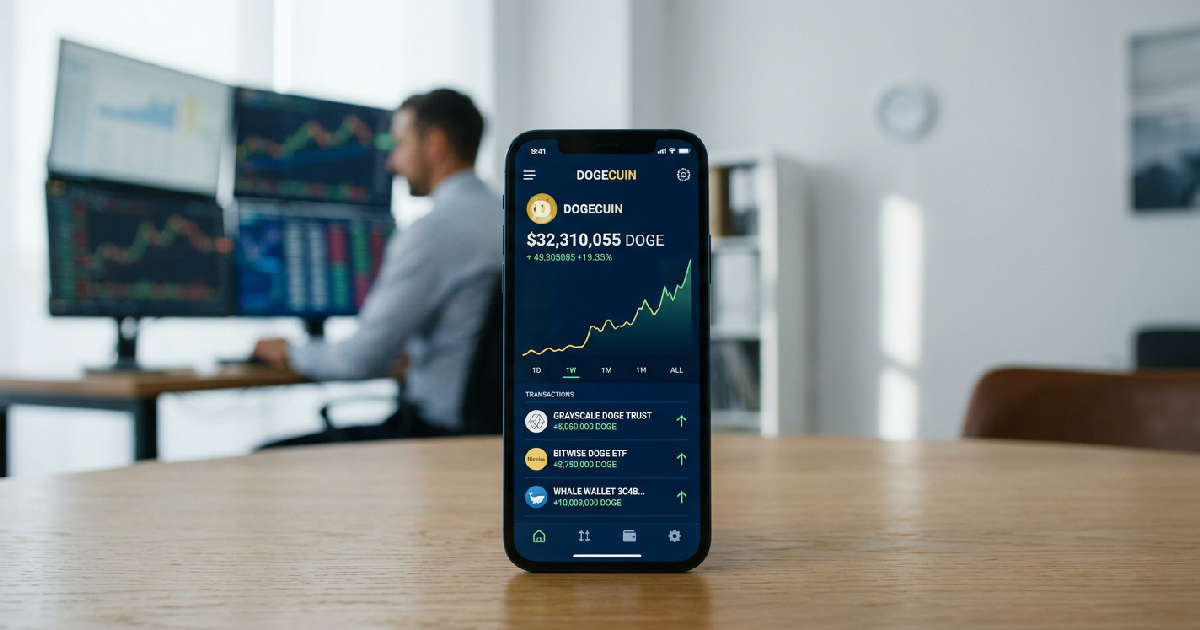

Dogecoin is showing signs of a potential price breakout as high-net-worth investors, often called whales, reportedly ramp up accumulation while institutional interest in digital asset investment products begins to resurface. Recent on-chain data suggests a steady uptick in transaction volume among large-scale holders, aligning with a broader recovery in risk appetite across the cryptocurrency sector during the current month.
The shift in momentum follows a period of consolidation where the Dogecoin network demonstrated resilience despite fluctuations in the wider market. Analysts suggest that the combination of retail interest and steady institutional capital flows is creating a technical setup that may challenge previous resistance levels. Current trends mirror recent forecasts regarding DOGE price movement, which indicated that network signals were maturing earlier this year.
Institutional Interest Supports Digital Asset Product Inflows
Unlike previous market cycles driven largely by social media trends, the current movement appears supported by a more developed financial infrastructure. Inflows into Dogecoin-linked investment vehicles have reportedly returned to positive territory, suggesting that professional traders may be viewing the asset as a proxy for speculative liquidity. These products provide traditional investors with a way to track price action without the complexities of managing digital wallets.
The stabilization of these inflows comes as the broader exchange environment experiences a tightening of available supply. Just as Bitcoin exchange supply maintains multi-year lows, a reduction in the liquid supply of major altcoins can lead to increased price sensitivity. When significant quantities of a token move into private storage or institutional funds, many analysts believe any sudden increase in demand could have a more pronounced impact on the market price.
Large-Scale Transactions Suggest Long-Term Strategy
Transactions involving substantial amounts of capital have reportedly seen a notable increase recently. Data from various blockchain analytics platforms indicates that these large-scale buyers are moving assets into cold storage rather than keeping them on exchanges. Such moves are often interpreted by market observers as a sign of long-term conviction, as they effectively reduce the immediate sell-side pressure on the market.
Technical Resistance and Shifting Market Sentiment
Technically, the token is approaching a critical psychological threshold. If it maintains its current trajectory, the next hurdle lies in a zone that has historically seen increased selling activity. But the current landscape differs from previous years, as the integration of digital assets into payment processors and the expansion of decentralized finance have provided a degree of utility that goes beyond the original meme-based origins of the token.
The broader market context is also a factor. As traders seek opportunities beyond the largest market-cap assets, capital often rotates back into high-liquidity altcoins. This trend is visible elsewhere in the sector, particularly as XRP speculative activity returns with buyers testing their own resistance levels. When multiple major tokens show similar accumulation patterns, it often signals a widespread shift in investor sentiment.
External Factors Impacting the Market Outlook
While many holders remain optimistic, several external factors could influence the direction of the market in the coming weeks. Macroeconomic indicators, such as central bank policy shifts and global liquidity trends, continue to impact the cryptocurrency space. High treasury yields have occasionally pressured speculative assets, though Dogecoin has recently shown an ability to decouple from some traditional market correlations.
Participation from retail investors remains a significant variable. While large-scale buyers often establish a price floor, retail volume typically provides the momentum needed for a full breakout. Social media engagement levels for the Dogecoin community have begun to trend upward again, though they remain more measured than the peaks seen in previous years. Many market veterans view this gradual growth as a sign of a more sustainable market environment than the volatile spikes of the past.