
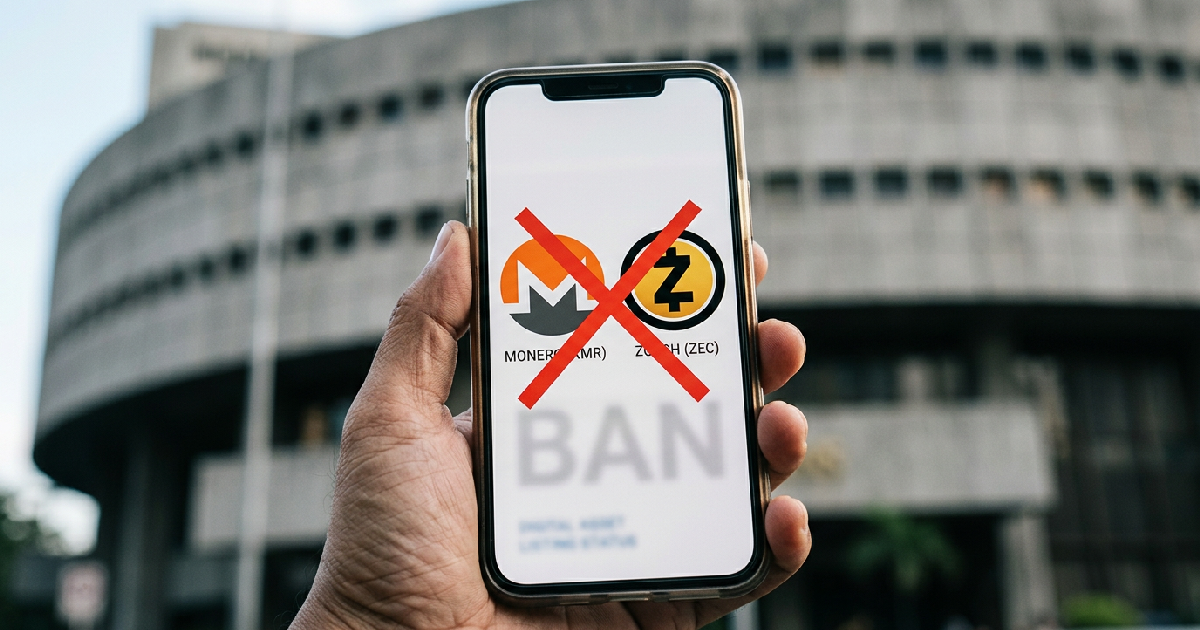

The Central Bank of the Philippines (BSP) has banned the listing and trading of privacy-focused cryptocurrencies on local exchanges, citing high money laundering risks. The regulator issued and immediately implemented new guidelines for virtual asset service providers (VASPs), effectively barring assets like Monero (XMR) and Zcash (ZEC) from regulated domestic platforms.
This move follows a similar comprehensive prohibition established by financial authorities in Dubai earlier this year.
Under the new framework, the BSP requires licensed cryptocurrency exchanges to establish a robust due diligence and certification process before listing any new digital asset. Firms must rigorously assess potential threats to financial stability and verify consumer protection frameworks.
These standards represent a significant tightening of oversight for the Philippine crypto market, which has seen increasing institutional interest over the last 24 months. While Binance recently explored a return to the Philippines via a sandbox partnership, all licensed entities must now adhere to these rigid listing rules.
The prohibition is specific to regulated virtual asset platforms and does not make individual ownership of privacy coins illegal. Filipinos remain free to hold these assets in self-custody or engage with decentralized networks.
However, the immediate implementation of the guidelines means that compliant exchanges must now continuously monitor listed assets and delist those that fall below specific safety thresholds, including lack of liquidity or involvement in fraud.
Dubai and Philippines align on privacy coin restrictions
The Philippine decision aligns with a growing international trend of restricting anonymizing technologies in the financial sector. On January 12, 2026, Dubai enforced a complete ban on privacy-focused cryptocurrencies within the Dubai International Financial Centre (DIFC) and onshore Dubai.
Regulators there, including the Virtual Assets Regulatory Authority (VARA), cited concerns that these tokens make it nearly impossible for firms to comply with Financial Action Task Force (FATF) requirements. While bitcoin supply on exchanges remains a primary focus for many traders, regulators are increasingly turning their attention toward assets that mask transaction tails.
In Dubai, the ban extends beyond trading to include issuing, advertising, or including privacy tokens in regulated investment products. The use of anonymizing tools like mixers or tumblers by regulated firms is also prohibited.
Violations under VARA’s jurisdiction carry heavy penalties, including fines reaching tens of millions of dollars and the potential revocation of commercial licenses. Both jurisdictions emphasize that the inherent design of tokens like Monero prevents the transparency necessary for modern anti-money laundering compliance.
This tightening of rules in the Philippines serves as the final phase of a broader regulatory overhaul. In June 2025, the Philippine Securities and Exchange Commission (SEC) mandated that crypto asset service providers (CASPs) register locally and hold at least 100 million pesos in paid-in capital.
The BSP’s latest guidelines ensure that the country’s listing standards are among the most stringent in Southeast Asia, aimed at protecting the national financial system from illicit activity.
Long-term outlook for privacy-focused altcoins
The cascading series of bans is putting structural pressure on the privacy coin market. Beyond Dubai and the Philippines, the European Union is preparing to implement an Anti-Money Laundering Regulation that will prohibit these assets on regulated exchanges by July 1, 2027. Some traders may find themselves looking for the best altcoin to buy now as liquidity for older privacy projects shifts toward decentralized venues.
For licensed exchanges, the responsibility for token approval has shifted from central authorities to the companies themselves. Firms must now evaluate and document whether the cryptocurrencies they offer are compliant with local laws. The BSP has identified specific triggers for delisting, such as issuer bankruptcy, major security breaches, or misleading disclosures.
As more nations adopt this proactive regulatory stance, the barrier between the traditional financial system and privacy-centric digital assets continues to widen.
Other nations maintain even stricter stances; as of April 2026, roughly 10 to 12 countries have absolute bans on all digital assets. China remains the most prominent example, while Bangladesh’s central bank maintains that crypto transactions violate existing foreign exchange laws. By focusing specifically on privacy-focused altcoins, the Philippines is carving out a path of regulated transparency that mirrors efforts in major global financial hubs.