
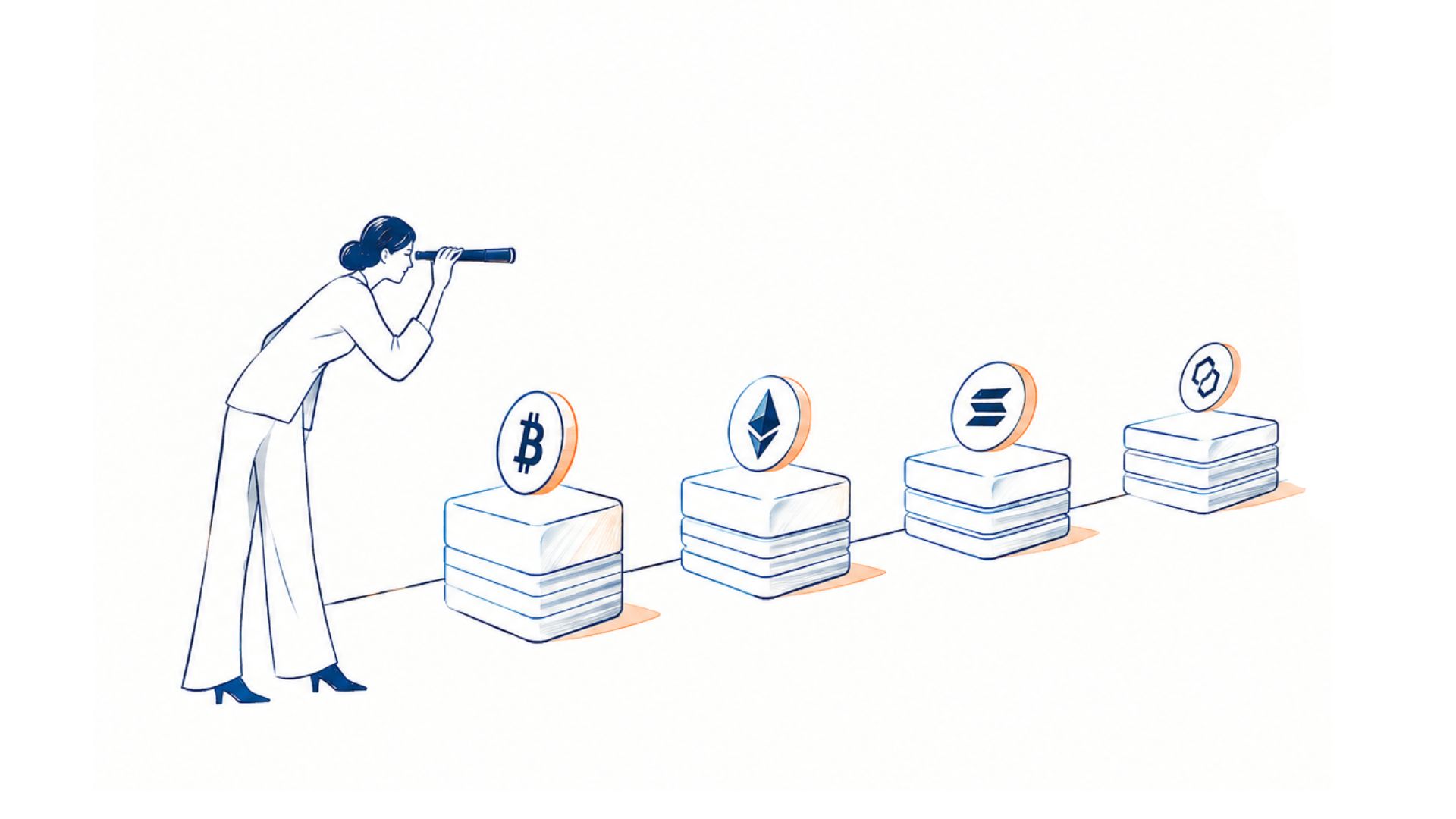

Decoding the complexities of the cryptocurrency market often starts with understanding the foundational elements that drive innovation and volatility. For anyone following altcoin news, a grasp of Layer 1 blockchains and the characteristics of emerging tokens is essential.
These distinct yet interconnected facets play crucial roles in the evolving landscape of decentralized technologies, shaping market dynamics and the direction of digital asset development.
Defining Altcoins: Beyond Bitcoin’s Shadow
Altcoins represent any cryptocurrency other than Bitcoin (BTC). The term itself is a portmanteau of “alternative” and “coin.” These digital assets emerged to introduce features or functionalities that Bitcoin either lacked or to improve upon its perceived limitations.
They often offer enhanced privacy, faster transaction speeds, or specific use cases beyond a simple store of value. This diverse landscape continually evolves with new projects and technological advancements.
Altcoins generally operate on blockchain technology, a decentralized ledger recording transactions across a network. This ensures transparency, security, and resistance to tampering.
To maintain network integrity, altcoins utilize various consensus mechanisms to validate data and agree on the ledger’s state.
While some altcoins, like stablecoins, aim to maintain a stable value, many exhibit higher volatility than established cryptocurrencies. This inherent characteristic makes them subject to significant price swings.
Prominent examples include Ethereum (ETH), Solana (SOL), XRP, Cardano (ADA), Polkadot (DOT), Avalanche (AVAX), and BNB Chain. Ethereum, for instance, is a leading altcoin known for its robust smart contract capabilities and as a platform for decentralized applications (dApps).
The continuous development within this sector keeps altcoin news cycles active and dynamic.
Diverse Functionalities and Categories
Altcoins boast a wide array of functionalities that set them apart. Many focus on enabling smart contracts, which automatically execute terms of a contract when conditions are met.
Others prioritize speed, aiming for near-instant transaction finality. These varied approaches highlight a constant drive for innovation.
Categories of altcoins include platform altcoins, payment altcoins, stablecoins, privacy coins, and interoperability altcoins. Each category addresses different market needs and technological goals.
This specialization contributes to the crypto market’s overall breadth. Privacy coins, for example, focus on obscuring transaction details to ensure anonymity.
Interoperability altcoins aim to connect different blockchain networks, facilitating seamless communication. This diverse utility drives continued innovation.
Layer 1 Blockchains: The Decentralized Foundation
A Layer 1 (L1) blockchain functions as the foundational, base-layer network for the cryptocurrency ecosystem. It independently processes and finalizes transactions, without relying on another network for security or consensus.
These networks form the primary architecture responsible for executing transactions, validating data, and maintaining network consensus. L1s are frequently called the “settlement layer” because all other components or layers ultimately write back to them.
Their independence is a defining characteristic, providing the fundamental infrastructure for decentralized applications and protocols. They do not borrow security from other chains.
Most L1 networks operate with a native token, such as Bitcoin (BTC), Ethereum (ETH), or Solana (SOL). These tokens are essential for paying transaction fees, often called “gas,” and for incentivizing node operators who secure the network.
The token economy is integral to an L1’s operation. This ensures continuous security and functionality for the network.
Core Responsibilities and Mechanisms
Layer 1 blockchains employ a consensus mechanism to ensure network-wide agreement on the ledger’s state and to validate new transactions. This is fundamental for preventing fraudulent activities and maintaining network integrity.
The choice of consensus mechanism significantly impacts an L1’s performance. Common mechanisms include Proof-of-Work (PoW), pioneered by Bitcoin and early Ethereum, where miners compete to solve complex calculations.
Proof-of-Stake (PoS), used by Ethereum post-merge and Cardano, involves validators staking their native coins. Solana utilizes Proof-of-History (PoH) for enhanced transaction speed and efficiency.
According to eco.com, L1s have several core responsibilities. These include data availability, ensuring every full node stores the complete transaction history.
They also handle execution, processing transactions according to the chain’s specific rules. Finally, settlement means that once a transaction is finalized, it is considered irrevocable by the protocol.
Navigating the Blockchain Trilemma
Designing an L1 blockchain inherently involves navigating the “Blockchain Trilemma.” This concept posits trade-offs between decentralization, security, and scalability.
Typically, a decentralized network can prioritize only two of these three core properties effectively. Bitcoin and Ethereum historically prioritized decentralization and security, which sometimes led to network congestion issues.
The ongoing efforts to enhance scalability without compromising the other two pillars remain a central theme in Layer 1 blockchain development. Developers continually seek innovative approaches to optimize all three aspects.
Understanding these trade-offs is crucial for evaluating the long-term viability and potential of various Layer 1 projects. The evolution of consensus mechanisms reflects this pursuit.
Distinguishing Layer 1s from Layer 2s
It’s vital to differentiate Layer 1 blockchains from Layer 2 (L2) solutions. Layer 2s are secondary layers of protocols that integrate with L1s to improve network performance, particularly scalability. They achieve this by processing transactions off-chain and then settling them on the underlying L1.
Crucially, L2s inherit the security guarantees of the Layer 1 blockchain they build upon. This architecture allows L1s to maintain their core security and decentralization while offloading transactional load to L2s.
This synergistic relationship is key to scaling the broader crypto ecosystem. Layer 2 solutions process transactions off-chain, then settle them on the Layer 1, improving overall network performance.
Understanding Ongoing Altcoin News Cycles
The continuous stream of altcoin news often reflects developments within these foundational Layer 1 networks and the projects building on them. Innovations in consensus mechanisms, new dApp launches, or updates to network infrastructure directly impact market sentiment and project valuations.
Investors and users watch these developments closely. A project’s success often hinges on its ability to offer distinct advantages or solve specific problems more effectively than competitors.
This competitive environment fosters rapid technological advancement. The constant drive for better performance and utility shapes the narrative around leading altcoins.
Market events, such as major altcoin unlocks, can also significantly influence short-term price movements. These scheduled releases of previously locked tokens can increase supply and affect market capitalization.
Keeping abreast of such events is a critical part of informed participation. This informed approach helps navigate the often-volatile altcoin market.
The Trajectory of Emerging Tokens
Emerging tokens frequently gain prominence through their association with novel technologies or niche use cases. These tokens often launch on established Layer 1 blockchains, leveraging their security and infrastructure.
Their success is intrinsically linked to the underlying L1’s capabilities and adoption. Emerging tokens frequently leverage Layer 1 security and infrastructure for their operations.
Their growth trajectory can be steep, but also comes with higher risk compared to more established assets. The utility and real-world application of an emerging token are often key determinants of its long-term relevance.
Projects that solve tangible problems tend to garner more sustained interest. Observing new partnerships and development milestones helps gauge potential impact.
The interplay between a vibrant Layer 1 ecosystem and innovative emerging tokens is crucial for overall market health. It creates a dynamic environment where new ideas are constantly tested and refined.
This constant evolution is a hallmark of the cryptocurrency space, driving continuous innovation and adaptation.
What distinguishes an altcoin from Bitcoin?
An altcoin is simply any cryptocurrency other than Bitcoin, which was the first decentralized digital currency. Altcoins were created to offer unique features, improved functionalities like smart contracts or faster transactions, or to address specific use cases that Bitcoin does not prioritize.
What is a Layer 1 blockchain?
A Layer 1 blockchain is the foundational network that processes and finalizes transactions independently, without relying on another network for its security or consensus. It provides the core infrastructure for decentralized applications and protocols, acting as the primary settlement layer for its ecosystem.
Why are consensus mechanisms important for Layer 1s?
Consensus mechanisms are critical for Layer 1 blockchains because they ensure network integrity and agreement on the state of the ledger. They prevent fraudulent transactions and maintain security across the decentralized network, enabling trustless operation. Different mechanisms like Proof-of-Work, Proof-of-Stake, and Proof-of-History offer varied trade-offs in terms of security, decentralization, and scalability.