
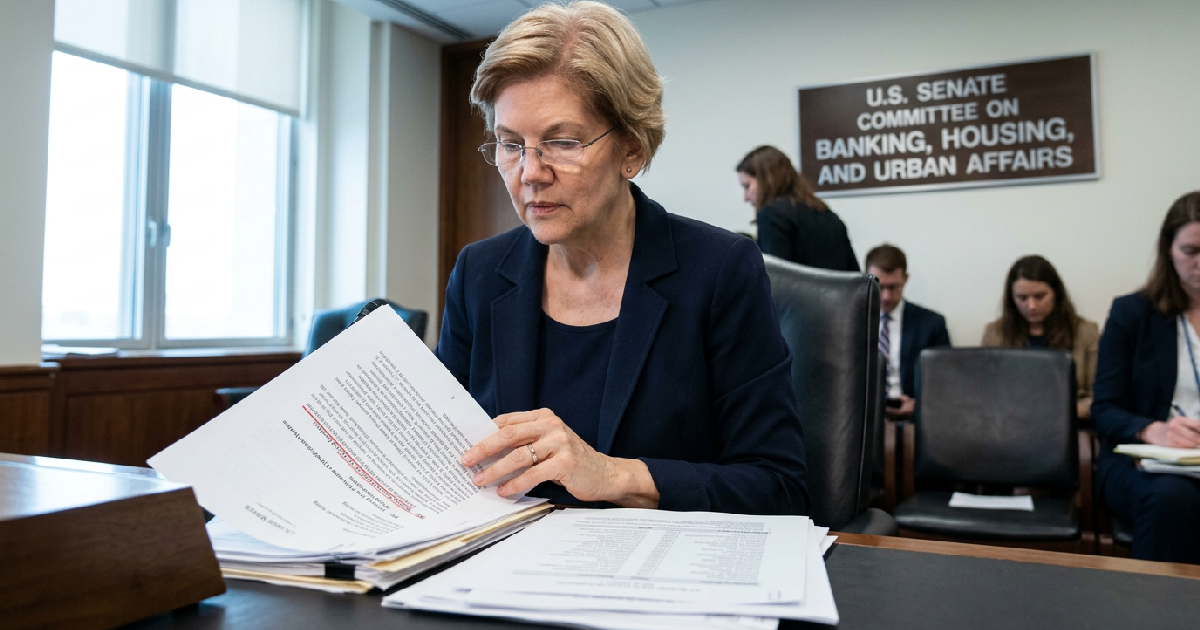

Senator Elizabeth Warren (D-Mass.) has launched a formal inquiry into the Commodity Futures Trading Commission (CFTC), alleging the regulator has been “steamrolled” by the cryptocurrency and prediction market firms it is responsible for policing.
In a letter sent June 5, 2026, to CFTC Chairman Michael Selig, the ranking member of the Senate Banking Committee raised concerns about industry capture and possible political interference. Warren has demanded the agency provide detailed records of its industry communications and a list of staff members placed on leave by June 18, 2026.
The probe follows a period of explosive growth for prediction markets, where users trade on the outcomes of real-world events. These platforms, including market leaders Kalshi and Polymarket, held an estimated $60 billion in market value by early 2026.
Warren warned that a “gutted” workforce and a “steep decline” in enforcement actions during the current administration’s first year have left the public vulnerable to bad actors. She noted that as market confidence and geopolitics continue to drive volatility, the lack of oversight poses severe risks to the U.S. financial system.
The senator’s inquiry highlights reports that the CFTC reduced its workforce by approximately 25 percent over the last 16 months. Elizabeth Warren argued that this hollowing out of the agency is a “recipe for disaster,” particularly as Congress considers new legislation that could further loosen cryptocurrency regulations.
The letter suggests the agency’s leadership may be prioritizing the interests of wealthy insiders over investor protection and market integrity.
Allegations of political interference and industry capture
Senator Elizabeth Warren specifically questioned the CFTC’s relationship with companies linked to President Donald Trump and his family. The letter cites reports that the agency approved a request from Polymarket following an investment by Donald Trump Jr.’s firm.
Additionally, the CFTC reportedly fast-tracked a Gemini offshoot founded by Tyler and Cameron Winklevoss, who allegedly donated $1 million each in Bitcoin to the president’s reelection campaign. This shift mirrors broader trends where U.S. strategic Bitcoin infrastructure has become a focal point of political debate.
The probe further examines claims that the CFTC moved to vacate a $5 million penalty against an exchange founded by the Winklevoss twins. Warren’s letter characterized these developments as “concerning signs” of an agency beholden to political pressure. She expressed alarm over reports that senior staff members who questioned firms like Crypto.
com—a business partner of Trump Media & Technology—were reportedly suspended, investigated, or forced out of the agency.
Warren and other Democratic lawmakers are also pushing for stricter rules regarding insider trading by government officials on prediction markets. In early 2026, lawmakers cited instances of users profiting from non-public information, such as the specific duration of a White House press secretary’s speech.
The senator has previously asked the CFTC to finalize rules banning financial contracts that allow bets on U.S. political events to prevent such conflicts of interest.
The struggle for jurisdiction over prediction platforms
The CFTC has asserted exclusive federal jurisdiction over prediction markets, frequently clashing with state regulators in Arizona, New York, and Illinois. However, Senator Elizabeth Warren argued that the agency cannot effectively manage this authority if its internal resources are being depleted.
She highlighted that without a robust staff, the agency is failing to fulfill its role in the memorandum of understanding it established with other regulators to protect customers.
Beyond staffing levels, the inquiry seeks to clarify the agency’s rulemaking authority as the prediction industry eyes an estimated $1 trillion in trading volume by 2030. Warren’s letter demands the disclosure of all communications between the CFTC and prediction market firms to expose potential private-sector influence.
The senator’s aggressive stance reflects a growing divide in Washington over the appropriate “guardrails” for digital assets and speculative trading platforms.
Chairman Michael Selig’s response by the June 18 deadline will likely influence the direction of pending crypto legislation in the Senate. If the requested information reveals significant industry capture, it could lead to further congressional hearings or a push for leadership changes at the commission. For now, Elizabeth Warren maintains that the CFTC is “failing to protect investors” during a critical period of financial innovation.