
Close Menu
  • Markets
    • Spot Market
      • Market Overview
      • Top Gainers / Losers
      • Market Cap Charts
      • Reviews
    • Futures Market
      • Market Overview
      • Funding Rate
      • Liquidations
      • Long Short/Ratio
  • Metrics
    • Dashboard
    • Whale tracker
    • Market Heatmap
    • Funding Rates
  • News
    • Bitcoin
    • Ethereum
    • Altcoins
  • Prediction
  • Opinion
  • Calendar
  • Live Feed
What's Hot

Senators Question CFTC on Polymarket Deceptive Advertising Claims

June 26, 2026

Dogecoin Buy Signal Appears After Hitting 3-Year Low

June 26, 2026

Corporate Treasury SBET Buys 5,000 ETH, Resumes Ethereum Accumulation

June 26, 2026

When the Catholic Church Enters the DeFi Debate, Crypto’s Biggest Question Stops Being Technical

June 26, 2026

SBI Holdings Buys Bitbank For ¥46.7 Billion

June 26, 2026

Linux Foundation, Tech Giants Launch Akrites for Open Source Defense

June 26, 2026

ARK Invest Buys Coinbase, Robinhood Stocks Amid Crypto Slump

June 26, 2026

XRP Tests $1 Support Amid Surge in Long Liquidations

June 26, 2026

Singapore Flags Hyperliquid DEX for Consumer Protection Concerns

June 26, 2026

OpenAI GPT-5.6 Rollout Limited By Trump Administration Stance

June 26, 2026
Facebook X (Twitter) Instagram
Daily Crypto News
  • Markets
    • Spot Market
      • Market Overview
      • Top Gainers / Losers
      • Market Cap Charts
      • Reviews
    • Futures Market
      • Market Overview
      • Funding Rate
      • Liquidations
      • Long Short/Ratio
  • Metrics
    • Dashboard
    • Whale tracker
    • Market Heatmap
    • Funding Rates
  • News
    • Bitcoin
    • Ethereum
    • Altcoins
  • Prediction
  • Opinion
  • Calendar
  • Live Feed
Dashboard
Daily Crypto News
Home»Opinion»Washington State plans to revive internet regulation bills in 2026 session
Washington State internet regulation: Washington State plans to revive internet regulation bills in 2026 session
Washington State lawmakers prepare to revive internet regulation bills SB 5708 and HB 1834 in 2026, targeting addictive feeds and youth safety amid legal con...
Opinion

Washington State plans to revive internet regulation bills in 2026 session

Michael FawnBy Michael FawnJune 26, 20265 Mins Read
Share
Facebook Twitter LinkedIn Pinterest Email

By Michael Fawn

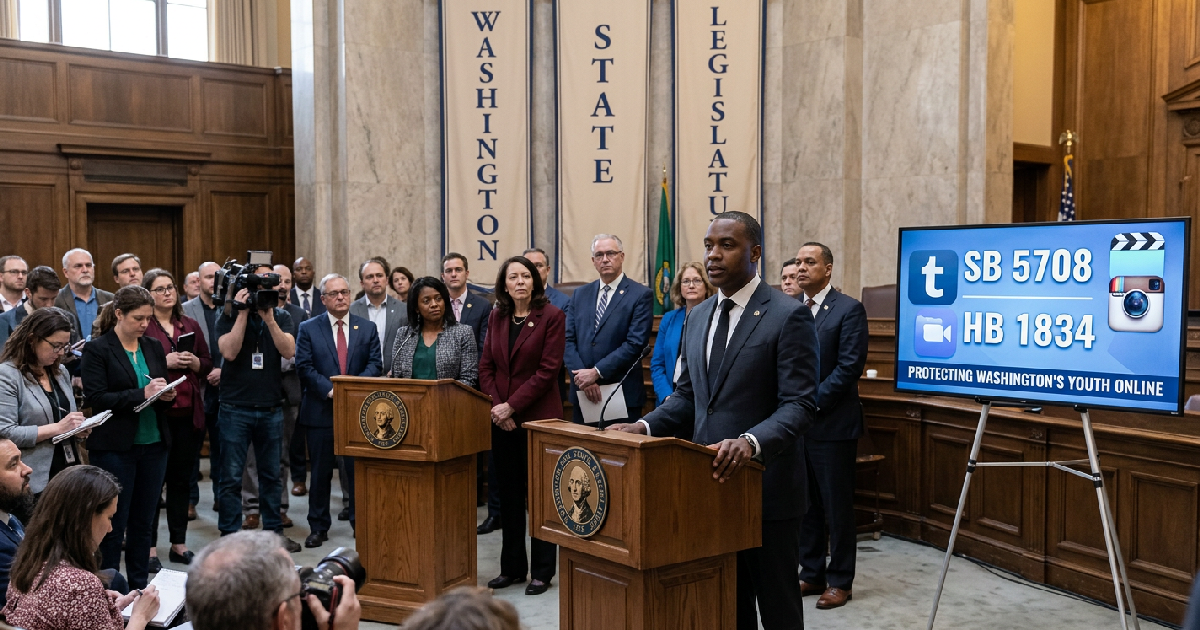
Washington State lawmakers are set to revisit aggressive internet regulation proposals in the upcoming 2026 legislative session, focusing on “addictive feeds” and social media design despite significant legal and financial warnings. Senate Bill 5708 (SB 5708) and House Bill 1834 (HB 1834) are expected to return to the floor after failing to clear both chambers in 2025.

The legislative push centers on mandatory age estimation and the restriction of data-driven feeds for minors. While Washington State Attorney General Nick Brown has voiced support for “commonsense protections,” the bills face a steep climb. Critics argue the state is attempting to regulate the modern web like dial-up, potentially triggering over $4 million in taxpayer-funded legal fees.

State lawmakers target addictive internet-based services for minors

The core of the Washington State legislature’s effort involves mitigating “addictive internet-based services” that proponents claim contribute to youth behavioral health issues. Proponents, including former Meta director Kelly Stonelake, argue that tech companies prioritize market dominance over child safety. The proposed rules would require platforms to stop serving targeted addictive feeds to identified minors.

Other provisions include stopping push notifications during school and sleep hours and requiring parental consent for such alerts. Additionally, the legislation aims to restrict data collection on minors and requires a signal to warn children if they are being monitored. This has caused a market resistance of sorts among safety advocates who believe warning a minor of monitoring could hinder interventions.

The financial burden of defending social media regulation

Pursuing these regulations comes with a heavy price tag for Washington taxpayers. Similar legislation in other states has faced immediate First Amendment challenges. Experts estimate that defending these laws in court would cost the state at least $4 million in legal fees, a concerning figure as Washington faces a significant budget deficit.

Courts have historically viewed state-level internet restrictions with skepticism, particularly those that govern delivery methods rather than content. This legal uncertainty impacts the broader digital sector, much like how speculative activity returns to markets when regulatory clarity is lacking. Washington is one of 40 other states currently attempting to advance such legislation.

Public divided on state level content moderation roles

Public opinion within Washington remains fragmented regarding the state’s role as a digital regulator. An October 2022 poll of 719 registered Washington voters found that 48% believe state governments should not be involved in regulating social media content moderation. In contrast, only 28% argued that the government should have a role in these activities.

Jevin West, a professor at the University of Washington Center for an Informed Public, noted that “As social media has grown to become a significant source of news for Americans, debates around free speech, elections and misinformation on Facebook, Twitter and other social media platforms has proved controversial.” This controversy is highlighted by the 48% of poll respondents who believe platforms should restrict misleading information regarding U.S. elections.

Critics point to existing parental controls and federal authority

Opponent of the bills argue that current tools from Apple, Google, and Meta already allow parents to set limits and monitor activities. They contend that HB 1834 could actually undermine safety by notifying minors they are being tracked. This might prevent parents from having valuable location data in emergency or missing person cases.

Furthermore, some critics suggests that such regulation should be left to Congress rather than individual states. U.S. Senator John Thune (R-S.D.) has previously opposed the FCC’s efforts to reimpose net neutrality, stating the proposal resembled rules that led to “less competition, declining broadband investment, and slower internet speeds.” Similar legislative progress at the federal level is often viewed as a more stable alternative to a patchwork of state laws.

Attorney General Nick Brown backs digital safety measures

As the 2026 session looms, Washington State Attorney General Nick Brown remains a prominent supporter of the digital safety drive. Brown has stated that “Speak with any parent, and you’ll hear that they are concerned about the effect that addictive feeds are having on kids’ mental health.” He frames the bills as necessary “commonsense protections” for the digital age.

The fate of SB 5708 and HB 1834 in 2026 will be a barometer for similar efforts across the country. Whether the legislature can overcome the $4 million legal hurdle and public skepticism remains to be seen. For now, the push to regulate the internet remains at the forefront of Washington’s political agenda.

Michael Fawn

About Michael Fawn

Michael Fawn is a cryptocurrency journalist and blockchain analyst with a passion for breaking down complex market trends into easy-to-understand insights. Covering everything from Bitcoin and Ethereum to emerging altcoins and Web3 innovation, Michael focuses on delivering accurate, timely, and engaging crypto news for investors and enthusiasts alike. With years of experience following the digital asset industry, Michael keeps readers informed on the latest developments shaping the future of finance.

More from Michael Fawn →

addictive online platforms legislation hb 1834 nick brown social media regulation sb 5708 washington state internet regulation washington state legislature 2026 digital bills washington youth online safety laws
Share. Facebook Twitter Pinterest LinkedIn Tumblr Email

Related Posts

When the Catholic Church Enters the DeFi Debate, Crypto’s Biggest Question Stops Being Technical

June 26, 2026

Can Bitcoin’s Seasonal Patterns Really Tell Investors What Comes Next?

June 26, 2026

Why Crypto Exchanges Are No Longer Competing Only on Innovation

June 26, 2026

Strategy Inc. faces $12,000,000,000 Bitcoin deficit as market falls

June 26, 2026

Recent Posts

  • Senators Question CFTC on Polymarket Deceptive Advertising Claims
  • Dogecoin Buy Signal Appears After Hitting 3-Year Low
  • Corporate Treasury SBET Buys 5,000 ETH, Resumes Ethereum Accumulation
  • When the Catholic Church Enters the DeFi Debate, Crypto’s Biggest Question Stops Being Technical
  • SBI Holdings Buys Bitbank For ¥46.7 Billion
Top Posts

When the Catholic Church Enters the DeFi Debate, Crypto’s Biggest Question Stops Being Technical

June 26, 2026

Can Bitcoin’s Seasonal Patterns Really Tell Investors What Comes Next?

June 26, 2026

Why Crypto Exchanges Are No Longer Competing Only on Innovation

June 26, 2026

Stay updated with the latest crypto news, market trends, and expert insights. We provide accurate and timely information to help you make better decisions.

Facebook X (Twitter) Instagram Pinterest YouTube
Our Resources
  • About Us
  • Privacy Policy
  • Editorial Policy
  • Legal Disclaimer
  • Contact us
Categories
  • Altcoins
  • Prediction
  • Opinion
  • Guides
  • Reviews
  • Bitcoin
  • Ethereum
Recent Posts
  • Senators Question CFTC on Polymarket Deceptive Advertising Claims
  • Dogecoin Buy Signal Appears After Hitting 3-Year Low
  • Corporate Treasury SBET Buys 5,000 ETH, Resumes Ethereum Accumulation
  • When the Catholic Church Enters the DeFi Debate, Crypto’s Biggest Question Stops Being Technical
© 2026 Daily Crypto News

Type above and press Enter to search. Press Esc to cancel.