
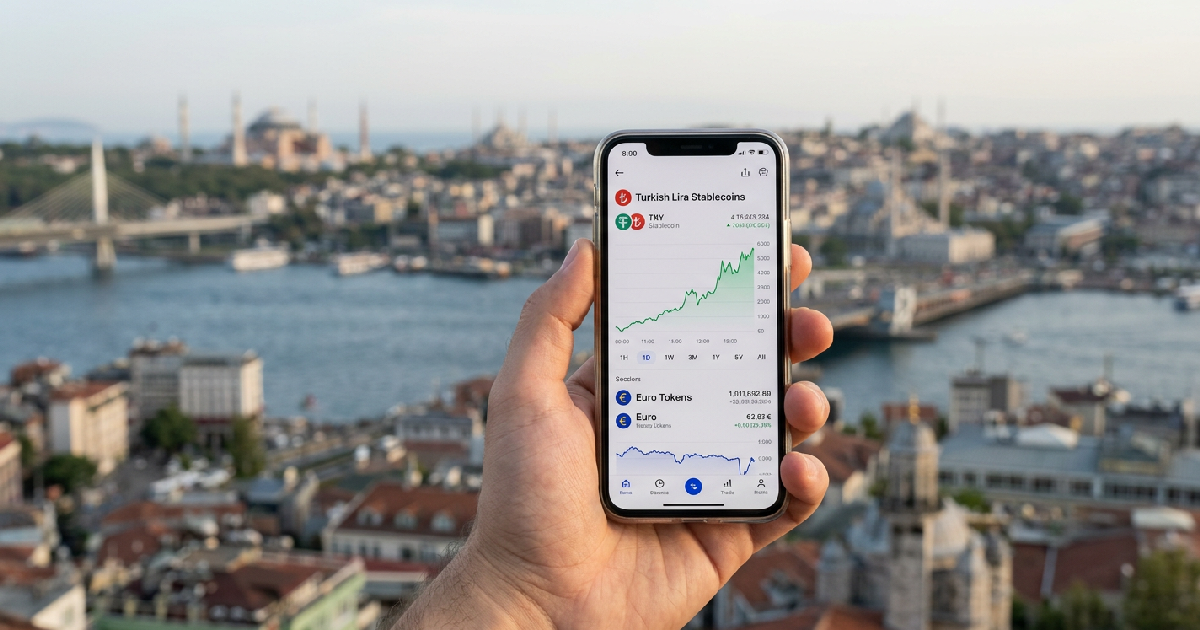

Turkish lira stablecoins have emerged as a dominant force in local digital asset markets, providing a stark contrast to the sluggish adoption of regulated euro tokens across the European Union. While the Turkish lira (TRY) has faced persistent volatility and high inflation, the demand for stable digital alternatives has skyrocketed, highlighting a fundamental divide between necessity-driven crypto adoption and the compliance-heavy framework of the Eurozone.
The success of TRY-pegged assets reveals a critical lesson for the European market: stablecoins thrive where the traditional banking infrastructure is inefficient or the local currency is unstable. In Turkey, these tokens serve as a vital tool for wealth preservation and seamless cross-border trade. Conversely, the com/intesa-sanpaolo-bitcoin-etf-exposure-q1-2026-report/”>Eurozone banking sector remains integrated and highly efficient, leaving little room for new digital assets that bring heavy regulatory baggage without clear immediate utility.
Monetary instability fuels demand for Turkish lira stablecoins
And yet, as the Markets in Crypto-Assets (MiCA) regulation begins to reshape the continent’s digital finance landscape, the disparity is becoming more pronounced. European regulators have prioritized consumer protection and financial stability, but the resulting red tape has made it difficult for euro-pegged tokens to compete with established dollar-backed giants or niche regional winners like the lira counterparts.
The rapid rise of lira-backed digital assets is not a matter of technical curiosity but of economic survival for many Turkish citizens and businesses. With the national currency frequently devalued against the dollar and euro, the ability to pivot into stablecoins that track the lira—or use them as gateways to other assets—is a necessity.
This organic demand has created a liquid and high-volume market that functions almost independently of international trends.
Traditional banking in the region often comes with high fees for international transfers and slow processing times for large commercial settlements. Digital tokens bypass these barriers, offering 24/7 settlement that traditional rails cannot match. This utility is so profound that even during periods of heightened macro market volatility, the underlying demand for these specific regional tokens remains resilient and consistent.
But the Turkish model also demonstrates that users will tolerate a certain level of platform risk if the utility is high enough. This is the exact opposite of the current European philosophy, where every digital asset must be fully backed, audited, and sanctioned by central authorities before it can reach a wide audience.
The result is a vibrant but “wild” market in one region and a safe but stagnant one in the other.
The efficiency paradox of the European payments market
One of the primary hurdles for euro-denominated tokens is that Europe already has excellent payment systems. Services like SEPA Instant allow for nearly immediate transfers at almost no cost to the consumer. For a regulated euro stablecoin to succeed, it has to be better than “free and instant,” which is a difficult value proposition to realize under current constraints.
Furthermore, many European investors are currently focused on established assets like Bitcoin, which has seen declining exchange supply as long-term holders hunker down. In this environment, a stablecoin is often viewed merely as a temporary parking spot rather than a revolutionary payment tool.
Without a “crisis of confidence” in the traditional euro, the incentive to move into a blockchain-based version remains low for the average citizen.
Regulatory hurdles of MiCA stifle euro token innovation
The MiCA framework, while providing a clear legal structure, imposes significant costs on issuers of euro-backed tokens. Requirements for capital reserves, liquid assets, and rigorous reporting mean that only the largest financial institutions can afford to enter the space. These companies are often risk-averse, moving slowly to launch products that might cannibalize their own existing banking fees.
The mismatch between Turkey’s lira stablecoins and Europe’s regulated tokens can be summarized by three factors:
- Economic Urgency: Turkey has it; the Eurozone currently does not.
- System Efficiency: Europe’s existing rails are too good to easily displace.
- Compliance Cost: MiCA creates barriers that favor security over rapid adoption.
As we look toward the remainder of 2026, the contrast will likely sharpen. Turkish lira stablecoins will continue to serve as a blueprint for “unbanked” or “volatile” economies, while the European Union may need to reconsider its stance if it wants to see a truly digital euro ecosystem take flight.
Without a reason to switch, the regulated euro token risks becoming a niche product for high-finance settlement rather than a tool for the masses.