
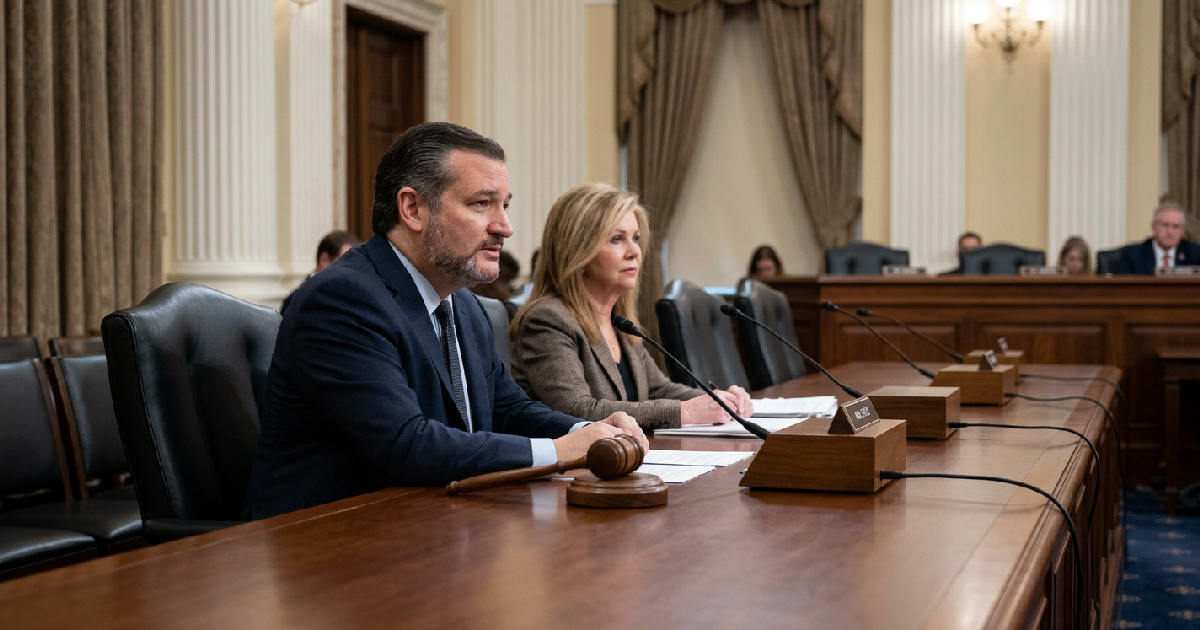

The U.S. Senate Commerce Subcommittee on Consumer Protection, Technology, and Data Privacy convened a high-stakes hearing on Wednesday to address the rapid rise of prediction markets and their impact on sports integrity. Titled “No Sure Bets: Protecting Sports Integrity in America,” the session scrutinized how platforms like Kalshi and Crypto.com are influencing a gambling-related landscape already grappling with scandals. Subcommittee Chairman Senator Ted Cruz and Chair Senator Marsha Blackburn led the two-hour inquiry into gameplay manipulation and the potential sharing of insider information.
Lawmakers expressed bipartisan concern over the growing exposure of children to these betting platforms. Senator Marsha Blackburn emphasized that fair play remains the foundation of American sports, but recent match-fixing incidents have cast a shadow over the industry. The hearing marks the first time a Senate body has formally placed prediction markets alongside the licensed sportsbook industry to evaluate the need for stronger oversight. This scrutiny follows a period where the Bitcoin exposure in traditional banking has signaled a wider mainstreaming of digital asset derivatives.
Senator Ted Cruz highlighted the risks that financial incentives pose to athletes and officials. “Fans shouldn’t have to wonder if their favorite player missed a buzzer-beater or dropped a touchdown pass because of a secret bet,” Senator Cruz said. He cited specific cases, including NBA players accused of providing insider tips, Major League Baseball pitchers allegedly rigging pitches, and Major League Soccer banning players for intentionally seeking yellow cards. These incidents, he argued, sow seeds of doubt that could undermine the credibility of professional competitions.
Rapid valuation growth and trading surges in prediction markets
The scale of the prediction markets sector has expanded dramatically over the past year. Kalshi recently closed a $1 billion fundraise that valued the startup at $22 billion—a tenfold increase in valuation in less than 12 months. The firm’s annualized trading volumes have more than tripled over the past half-year to reach $178 billion. This surge reflects a broader shift in consumer behavior, as a Siena Research Institute and St. Bonaventure University survey found that 27% of Americans now hold active accounts on such platforms.
While these firms grow, traditional gambling interests are pushing back. The American Gaming Association (AGA) spent $730,000 lobbying on prediction markets in the first quarter of 2026 alone, marking its heaviest single-quarter expenditure in over a year. Meanwhile, the legal environment remains volatile. The Senate Banking Committee recently advanced the Digital Asset Market CLARITY Act, a move that parallels the recent shifts in exchange supply seen in the broader crypto market.
The Commodity Futures Trading Commission (CFTC) is also engaged in multiple legal battles over state-level bans. The regulator filed a lawsuit on Tuesday to block a Minnesota law that would declare prediction market activity illegal. This federal-state friction occurs as established players like Mick Mulvaney, Executive Director of the Gambling Is Not Investing coalition, warn that these markets are creating a parallel sports betting world that lacks the safeguards of tribal and state-regulated gaming authorities.
Protecting sports integrity and investigating suspicious trades
The subcommittee heard testimony regarding the unique difficulties of monitoring trades based on nonpublic sports information. Joseph Grundfest, a Stanford Law School professor and former SEC commissioner, noted that identifying those with “insider” access to sports data is often much more difficult than in corporate finance. Despite these challenges, Kalshi has reportedly flagged more than 400 suspicious trades since the start of 2026, which is more than double the number investigated in all of 2025.
One alarming case mentioned during the proceedings involved Gannon Ken Van Dyke, a U.S. special forces soldier. Federal authorities arrested Van Dyke for allegedly using classified information to net $409,000 in profits on Polymarket. This case, along with match-fixing concerns in the UFC, has accelerated calls for new legislative guardrails. As the market develops, some investors are exploring more transparent options, such as those discussed in rankings of the top crypto casinos that emphasize regulated gaming environments.
Responding to accusations of “preying on young people” via social media, industry defenders say current age-gating is effective. Patrick McHenry, an adviser to the Coalition for Prediction Markets and a former congressman, testified that the average user age is 33 and trades are prohibited for those under 18. Additionally, Kalshi CEO Tarek Mansour recently committed $2 million to a partnership with the National Council on Problem Gambling to address trader health and safety, though lawmakers remain divided on whether these private initiatives are sufficient.