
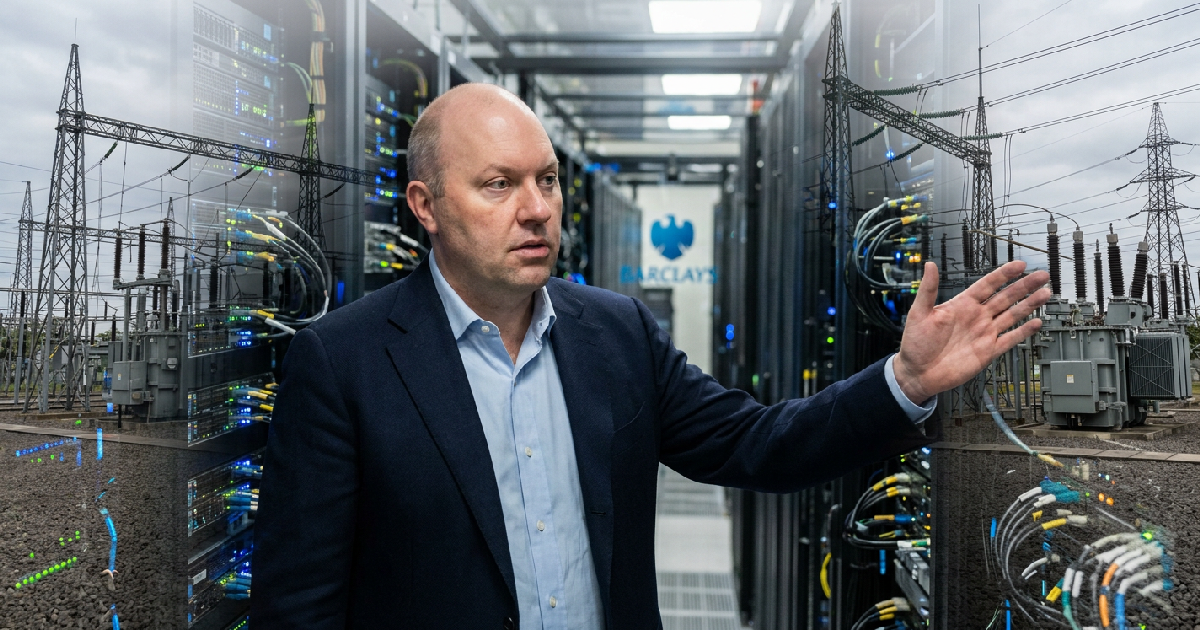

Marc Andreessen warns that the energy grid’s limitations could significantly hinder the future growth of artificial intelligence, a concern emerging as a new Barclays AI research report released today, June 28, 2026, confirms that AI has transitioned from a speculative technology to an essential daily tool for institutional investors.
Despite this rapid adoption, prominent venture capitalist Marc Andreessen has issued a stark warning regarding the physical constraints of the global energy grid, suggesting that power availability and cooling capacity will ultimately dictate the ceiling of the AI revolution.
Institutional investors prioritize research and risk management
The survey, which polled 410 fixed-income investors across North America, Europe, the Middle East, and Asia, found that AI is now deeply embedded in the workflows of major financial players. Hedge funds are leading this charge, with 72% of respondents reporting daily use of AI tools primarily for research and data processing.
This institutional shift occurs as the International Energy Agency (IEA) projects a massive surge in electricity demand, with data center consumption expected to more than double globally by 2030 to reach approximately 945 terawatt hours.
The Barclays research, spearheaded by strategists Zornitsa Todorova and Andrea Diaz Lafuente, details a landscape where AI is no longer a “nice-to-have” novelty. While hedge funds show the highest penetration, 49% of long-only managers and 38% of asset owners also utilize AI on a daily basis.
The primary application is intelligence gathering; 52% of long-only managers and asset owners use the technology for research, while 44% of hedge funds lean on it to process vast quantities of market data.
Key details
Despite the integration of advanced algorithms, human oversight remains the industry standard. The report notes that AI currently stays on the sidelines regarding actual trade execution and order fulfillment. Most participants indicated that the technology’s impact on actual trading remains minor at this stage.
Instead, the focus is on boosting productivity and refining risk assessments, leading to a surprising outlook on the labor market. Only 7% of those surveyed expect meaningful staff cuts, with the majority predicting that AI will lead to higher individual output rather than reduced headcounts.
This trend of increasing productivity through digital tools is also being observed in other sectors of the financial market. For instance, the Ethereum network outlook has recently strengthened due to increased activity from AI-driven decentralized exchanges, showing that the marriage of automated intelligence and capital management is a multi-chain phenomenon.
However, as these digital systems grow more complex, Barclays found that data security has emerged as the single largest barrier to wider adoption among conservative institutions.
Marc Andreessen warns of energy and cooling bottlenecks
While Barclays highlights the demand for AI, Marc Andreessen, co-founder of the venture firm Andreessen Horowitz (a16z), is focusing on the supply side of the equation—specifically the physical infrastructure required to keep servers running.
Marc Andreessen recently posited his “AI:AC Hypothesis,” suggesting that the amount of AI a country can produce will be directly proportional to its available air conditioning and cooling capacity. This framing highlights the often-overlooked environmental and logistical costs of the compute-heavy AI era.
The energy requirements are staggering. Barclays Investment Bank estimates that by 2030, US data center usage could triple, consuming up to 13% of the nation’s total electricity demand. This represents a leap from approximately 150-175 terawatt hours (TWh) in 2023 to 560 TWh by the end of the decade.
Key details
As Marc Andreessen points out, the heat generated by these operations requires massive cooling infrastructure, which itself consumes significant power—sometimes accounting for over 50% of a data center’s total energy draw.
This infrastructure strain creates a paradox for investors. While institutions depend on AI for a competitive edge, the “hyperscalers” building this capacity—including Microsoft, Amazon, and Alphabet—are facing unprecedented capital expenditure. These firms have set out a combined $725 billion in capital guidance for 2026, marking a 77% increase over previous cycles.
The success of these investments hinges on a regional grid’s ability to provide cheap, reliable power, which Marc Andreessen argues will become the ultimate gatekeeper for economic growth.
Regional challenges and the future of AI infrastructure
The pressure on the grid is not distributed evenly. The United States faces a particularly steep climb, as the IEA suggests data centers there may soon consume more power than the country’s aluminum, steel, and cement production combined.
In Europe, Francesco Ceccato, CEO of Barclays Europe, has noted that the continent’s capital markets remain fragmented, making it difficult for any single government or company to finance the required energy transitions and infrastructure upgrades independently.
Investment patterns are already shifting to reflect these macro risks. Investors are increasingly eyeing territories with energy abundance as the next frontiers for data center expansion.
As macro warning signs emerge in other parts of the global economy, the stability of the power grid is becoming as important to a firm’s valuation as its proprietary algorithms.
Key details
Christian Keller, Head of Economics Research at Barclays, has emphasized that a “balancing act” is required between meeting emissions targets and allowing AI technology to advance.
Barclays identified leaders and contributors to AI research
- Zornitsa Todorova: Head of Thematic FICC Research and lead Barclays strategist.
- Andrea Diaz Lafuente: Barclays strategist and co-author of the institutional survey.
- Marc Andreessen: Co-founder of Andreessen Horowitz and author of the AI:AC Hypothesis.
- Ajay Rajadhyaksha: Global Chairman of Research at Barclays, focusing on the economic impact of humanoid AI.
- Stephen Brown: Head of Barclays Eagle Labs, overseeing the scaling of AI businesses.
- Francesco Ceccato: CEO of Barclays Europe, highlighting the need for private-public partnerships in infrastructure.
- Christian Keller: Head of Economics Research at Barclays, focusing on the energy-emissions balance.
The financial impact of this build-out is already tangible in the broader market. Barclays analysts estimate that approximately 1% of US economic growth in 2025 was driven specifically by AI-related capital expenditure.
As we move through 2026, the question for the C-suite is no longer whether to use AI, but whether the physical world can sustain the digital world’s appetite for energy. If the grid cannot keep up, the productivity gains reported by the 410 surveyed investors may hit a hard physical wall.
For many institutions, the solution lies in a hybrid approach—optimizing existing models for “useful work” rather than mere computation. The shifting investor sentiment toward hard assets and infrastructure serves as a reminder that even the most sophisticated virtual intelligence requires a very real, very physical foundation to survive.
As the $725 billion in “Big Tech” spending continues to flow, the industry will be watching the power lines as closely as the bottom lines.