
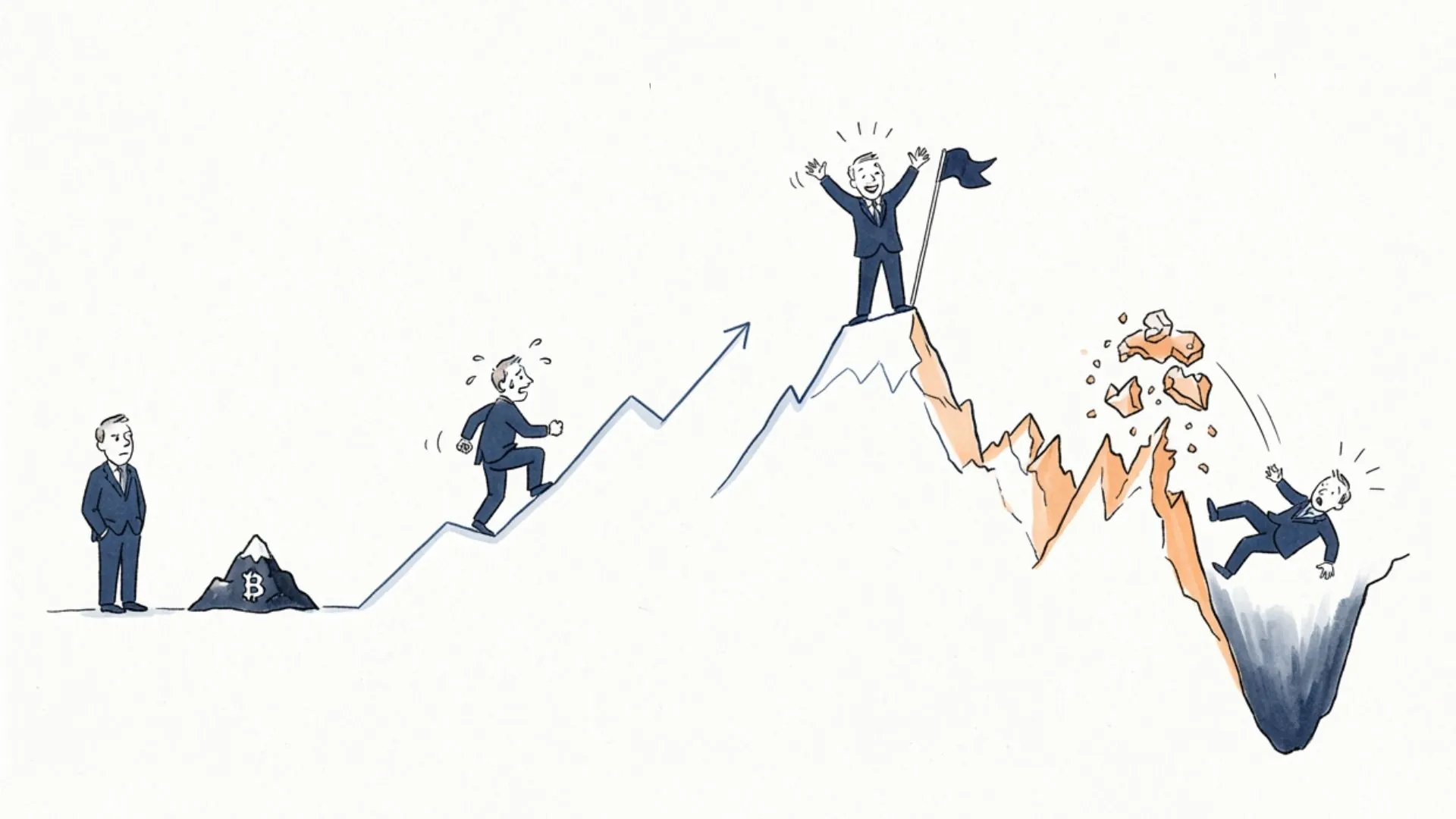

Watching cryptocurrency prices can feel like observing an erratic psychological experiment. One month, the collective consensus is that a digital asset will permanently disrupt global finance; the next, the narrative shifts to total despair, leaving investors wondering if the asset class will ever recover.
This dramatic oscillation isn’t random chaos. Beneath the immediate noise of green and red candles lies a predictable structural rhythm. Understanding crypto market cycles is the fundamental difference between being a casualty of market sentiment and being an investor who navigates the space with clarity.
The Invisible Engine Driving Crypto Volatility
Why do these massive waves exist? At its core, any market is simply a reflection of human behavior interacting with the laws of supply and demand. However, the digital asset ecosystem amplifies these dynamics. Unlike traditional equities, crypto assets operate 24/7, feature deep global retail participation, and are highly influenced by speculative narratives.
These factors accelerate and intensify the natural phases of financial markets. The collective crypto market sentiment — alternating between extreme greed and paralyzing fear, creates the repetitive boundaries of crypto market cycles. When buyers outnumber sellers, prices climb; when the narrative breaks, the reverse happens with equal velocity.
Surviving the Silence of the Accumulation Phase
This phase emerges from the ashes of a prolonged market downturn. The speculators have left, trading volume dries up, and the broader public loses interest entirely. During this period, asset prices stabilize within a tight, sideways range.
To the uninitiated, the accumulation phase feels stagnant and unprofitable. However, this is precisely where the foundation of new crypto market cycles is laid. Experienced market participants and long-term believers use this period of low volatility to build positions quietly. Wealth is systematically transferred from panic-sellers to strategic buyers without triggering a massive price spike.
The Euphoria and Psychological Traps of a Bull Market
Once the available supply is thoroughly absorbed during accumulation, a subtle shift occurs. Prices begin to form higher highs and higher lows, marking the transition into the expansion phase, commonly known as a bull market.
At first, skepticism lingers from the previous bear market. But as the upward momentum gains traction, media coverage intensifies, and positive project developments take center stage. Bull market dynamics thrive on a powerful feedback loop: rising prices attract new capital, which drives prices even higher.
The psychological trap here is the illusion of permanence. When profits seem effortless, investors often abandon their risk management rules, mistakenly believing the upward trajectory will last indefinitely.
When the Music Stops: Recognizing the Distribution Phase
Eventually, the intense buying pressure exhausts itself. This introduces the distribution phase, characterized by high trading volume but stagnant price action. The market flattens out, forming a prolonged plateau.
What is actually happening under the hood is a massive transfer of risk. Early buyers who accumulated assets at lower valuations begin locking in profits. Conversely, latecomers, driven by FOMO (Fear of Missing Out), eagerly buy these assets, convinced that another massive leg up is imminent. This tug-of-war creates a deceptive sense of stability right before the underlying market structure weakens.
      [Distribution] -> Peak Euphoria, Profit Taking
         /\
        /  \
 [Bull] /    \ [Bear] -> Panic Selling, Capitulation
      /        \
_____/__________\______
[Accumulation] -> Sideways movement, Smart Money Buys
Why Bear Markets Are Actually Necessary
When there are no longer enough new buyers to sustain inflated valuations, the trend reverses sharply. The descent into a bear market represents the final phase of crypto market cycles.
As asset values drop, bear market psychology takes over. Negative narratives flood the media, and leveraged positions are forcefully liquidated, accelerating the downward spiral. While painful, this phase serves a vital structural purpose. It flushes out unsustainable speculation, eliminates poorly engineered projects, and resets asset valuations to fundamentally justifiable levels. Without this cleansing process, the market could not build the healthy economic baseline required to start the next cycle.
The External Catalysts That Shift the Tides
While investor psychology dictates the emotional narrative, specific structural and macroeconomic factors act as major catalysts for phase transitions.
- The Bitcoin Halving Impact: Cutting the issuance of new Bitcoin supply in half roughly every four years, this programmatic event historically creates a supply squeeze. Because Bitcoin commands the largest share of total market capitalization, its supply dynamics influence the broader direction of all crypto market cycles.
- Macroeconomic Liquidity: Global economic conditions play a massive role. Periods of lower interest rates and capital injection favor speculative risk assets like crypto. Conversely, economic tightening reduces the overall appetite for volatility.
Moving From Reactive Trading to Strategic Holding
The ultimate paradox of financial markets is that while most participants understand these four phases in hindsight, very few can identify them in real-time. Emotional discipline is remarkably difficult when your portfolio’s value is shifting violently by the hour.
The goal of studying crypto market cycles is not to perfectly time the absolute bottom or the absolute top— a feat that even seasoned professionals rarely achieve. Instead, this framework provides the contextual background needed to execute a resilient long-term crypto strategy. Recognizing that extreme highs and deep corrections are simply natural phases of a larger economic rhythm, you can stop reacting to daily volatility and start executing a deliberate, rational investment plan.