

The first wave of tokenization had a relatively straightforward objective. Bring traditional financial assets onto blockchain.
Investment funds, government securities, private credit and equities all began gaining digital representations that could move across new infrastructure.
The conversation was always centered on the asset itself. Now it is beginning to reach a far less visible layer of the financial system.
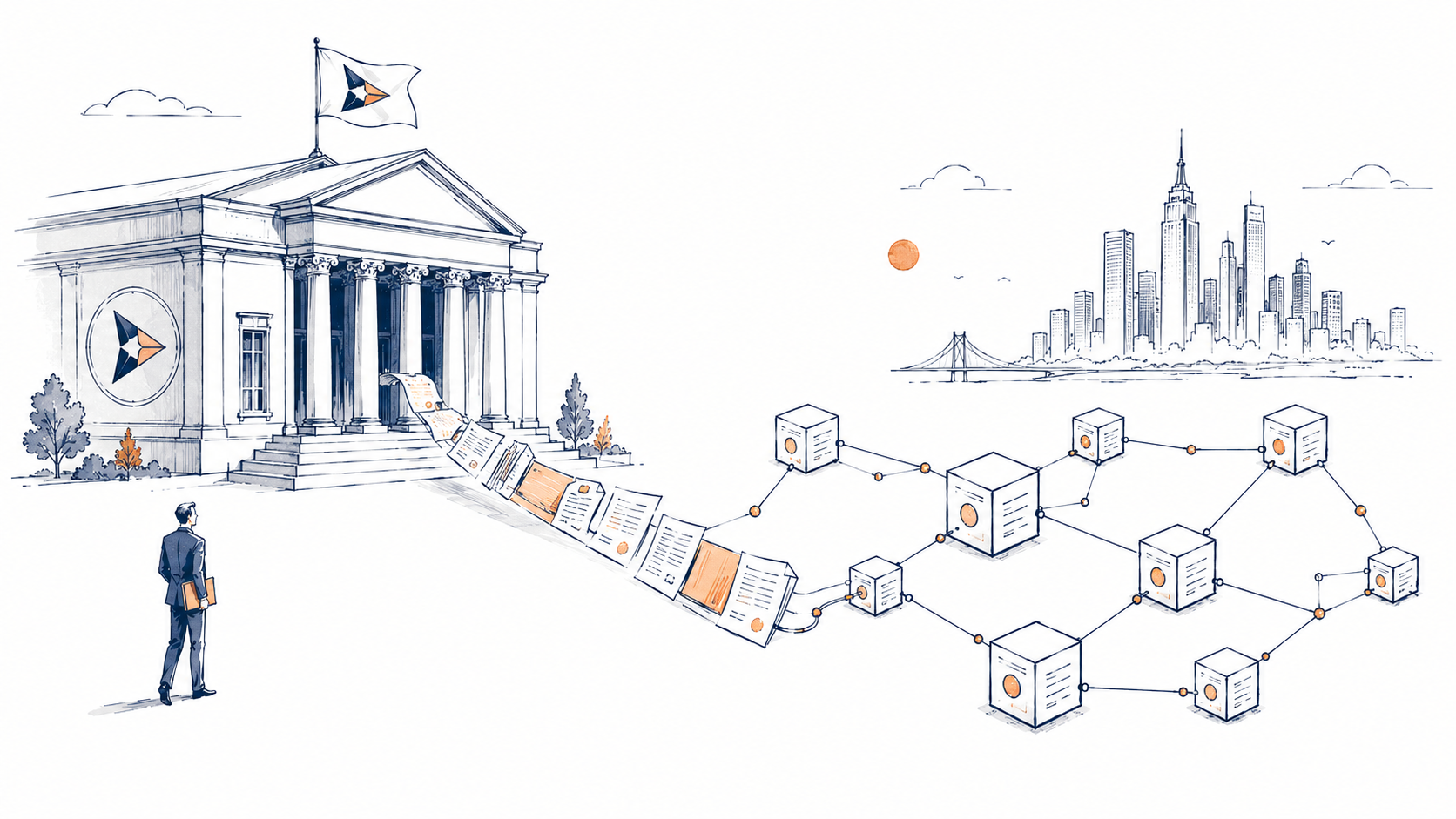
BNY has launched a new digital transfer agency platform that will maintain the official ownership records of native digital funds on blockchain. The initiative will initially support managers including BlackRock, BNY Investments Dreyfus and Baillie Gifford.
Rather than tokenizing only fund shares, BNY is bringing part of the infrastructure responsible for administering those shares onchain.
It is a subtle shift. But it suggests tokenization is beginning to transform more than financial products.
It is starting to reshape the infrastructure behind Wall Street itself.
The Market Is No Longer Just Changing How Assets Are Represented
The earliest institutional tokenization projects largely used blockchain as a new way to represent assets that already existed.
A fund continued to operate within traditional financial infrastructure, while a blockchain token provided a digital representation of an investor’s ownership.
That model made digital assets easier to access.
But much of the market’s operational machinery remained exactly where it had always been.
Official ownership records, fund administration and many of the processes supporting those investments continued to rely on conventional systems.
BNY’s new platform begins to narrow that separation.
For funds built on its infrastructure, blockchain is no longer limited to representing ownership. It becomes part of the system that records, administers and maintains that ownership from the outset.
Blockchain is no longer simply following the market. It is beginning to operate part of it.
The Biggest Changes Are Happening Behind the Scenes
Viewed on its own, BNY’s announcement may look like another incremental step in tokenization.
Placed alongside recent developments across the industry, however, a broader pattern starts to emerge.
Securitize is working to bring IPOs onchain. BlackRock has introduced native digital investment funds. Now BNY is moving one of the least visible but most essential functions in asset management onto blockchain: the official record of who owns each fund share.
Each initiative addresses a different part of the financial system.
Together, they point toward the same direction.
Blockchain is no longer being used simply to create digital versions of financial assets.
It is beginning to replace parts of the operational infrastructure that has supported those assets for decades.
The Next Stage of Tokenization May Be Invisible to Investors
Most investors will never need to understand how a transfer agent works.
That may be exactly the point.
The deepest technological changes rarely begin with the products investors see. They begin inside the infrastructure that allows those products to exist in the first place.
BNY services trillions of dollars in assets for many of the world’s largest asset managers. When an institution of that scale starts moving ownership records onchain, the discussion extends well beyond tokenized funds.
It becomes a question of which infrastructure will administer financial markets in the years ahead.
The first generation of tokenization proved that financial assets could exist on blockchain.
BNY’s latest move suggests the next phase may not be about digitizing more products.
It may be about quietly rebuilding the infrastructure that has always kept Wall Street running.