
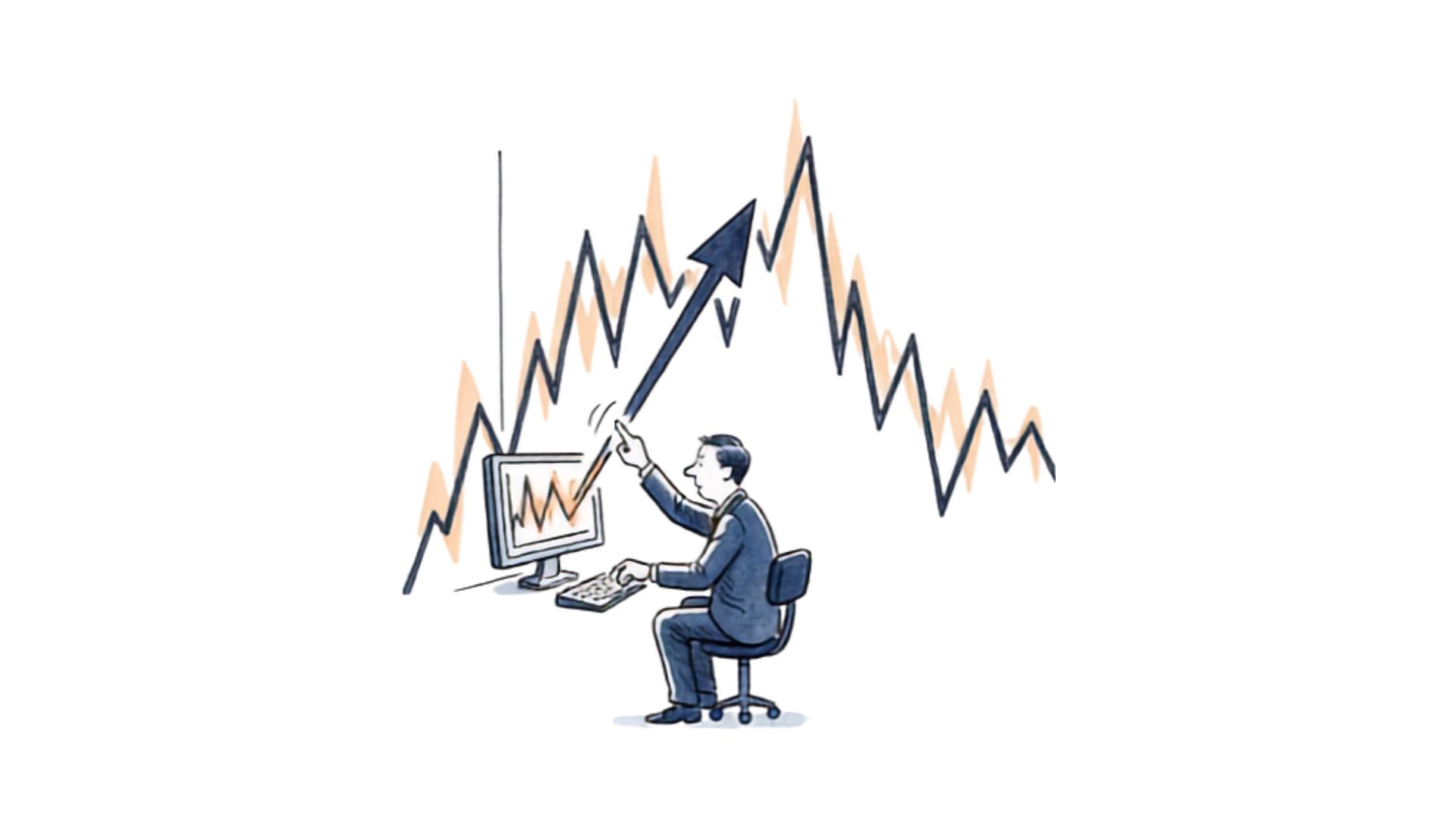

The digital asset market famously never sleeps. While traditional stock exchanges ring closing bells and lock their doors for the weekend, cryptocurrency networks keep processing transactions every second of every day.
To a newcomer, this uninterrupted availability suggests that opportunity to day trade crypto is uniform — that a Tuesday at 10:00 AM and a Sunday at 2:00 AM offer the same playground for short-term trading.
In reality, they do not.
For a day trader looking to capture small, rapid price movements, the clock matters immensely. Not because the underlying code changes depending on the hour, but because the human beings and institutional algorithms moving the money still follow a deeply ingrained routine.
To trade effectively, one must understand that a market being technically open does not mean it is practically active.
Why the 24/7 blockchain still answers to traditional financial clocks
Cryptocurrency was built to be an alternative to the traditional financial system, yet it remains tethered to it by a very human reality: capital concentration. The massive investment funds, market makers, and professional trading desks that provide the bulk of market liquidity operate on standard corporate schedules.
When traditional financial hubs like New York, London, and Tokyo open their doors, a wave of capital enters the crypto ecosystem. When they close, that wave recedes.
This creates a rhythmic cycle of activity throughout any given 24-hour period. A decentralized network might run on automated validation protocols, but the decision to buy or sell millions of dollars in digital assets is still largely made by people who eat, sleep, and work within specific time zones.
Trying to day trade during the lulls between these regional working hours often feels like rowing against a stagnant tide.
The triad that actually moves the needle: Liquidity, volume, and volatility
To survive short-term trading, a participant needs to look past the time on their phone and focus on three interconnected market mechanics: volume, liquidity, and volatility.
Volume represents the sheer amount of an asset being bought and sold within a specific timeframe. High volume indicates that the crowd is awake and participating.
This surge in volume directly feeds into liquidity — the ease with which you can enter or exit a trade without significantly moving the price against yourself. In a highly liquid market, the gap between the highest buyer’s offer and the lowest seller’s asking price (the spread) narrows.
For a day trader, wide spreads are an invisible tax that eats into profit margins; high liquidity is the shield against that tax.
Then comes volatility, the rapid up-and-down movement of price. Without volatility, day trading is impossible because prices remain flat. However, there is a nuance here: Volatility in a low-liquidity environment is dangerous and unpredictable, often caused by a single large order disrupting a thin market.
Volatility in a high-liquidity environment is the sweet spot. It represents a genuine, heavily contested battle between thousands of buyers and sellers, creating cleaner trends that technical tools can actually map.
Mapping the global overlap: When major trading hubs collide
The most reliable windows for day trading occur when the working hours of major global financial centers overlap. During these periods, two distinct pools of regional investors are active at the exact same time, compounding the volume in the order books.
The first notable shift occurs in the early morning hours of Universal Time Coordinated (UTC), as the Asian market session winds down and European traders begin their day.
This transition often triggers an initial awakening in price action, setting a baseline for the morning.
However, the undisputed “prime time” for digital asset volatility occurs later, specifically during the convergence of the European afternoon and the North American morning. When traditional institutional desks in London are finalizing their day just as Wall Street is ringing its opening bell, the influx of capital hits a crescendo.
This window frequently experiences sharp directional moves, heavy volume, and optimal liquidity, making it the preferred arena for short-term strategies.
A final, smaller spike often happens late in the evening in the Western hemisphere, matching the opening bell of the Asian markets. While sometimes less intense than the transatlantic overlap, it represents another distinct shift where market sentiment can pivot rapidly based on regional news.
Mid-week momentum versus the weekend liquidity trap
The temporal shifts in crypto are not confined to a 24-hour clock; they stretch across the days of the week. Statistical realities show that Tuesday, Wednesday, and Thursday consistently register the highest concentration of trading activity.
By mid-week, macro-economic announcements have usually been digested, and institutional participants are operating at full capacity.
Conversely, Mondays often suffer from a cautious inertia. Traders are frequently waiting for traditional markets to establish a weekly direction before deploying capital into more volatile digital assets.
The real trap, however, lies in the weekends.
Saturdays and Sundays see a drastic drop-off in institutional participation. While retail traders keep the markets moving, the overall liquidity thins out significantly. This creates a deceptive environment. A weekend market can look calm for hours, only to experience an aggressive, erratic price spike because the order book was too thin to absorb a relatively standard order.
For the intermediate day trader, weekend volatility is often an unguided missile, lacking the foundational volume needed to sustain reliable trends.
Why the clock is a risk filter, not a trading strategy
Understanding the ebb and flow of global liquidity does not provide a trader with a green light to buy or sell. Sychronizing a routine with the busiest hours of the day will not magically make a bad trade profitable, nor does it guarantee an asset’s price will go up.
Instead, identifying the right time to trade serves as an essential risk filter.
Operating during peak liquidity hours ensures that when an entry or exit signal appears on a chart, the order can be executed instantly and at the expected price. It minimizes the risk of slippage — where a trade closes at a significantly worse price than intended due to a lack of available counterparties.
Ultimately, the 24/7 nature of cryptocurrency is a technical feature, not a trading mandate. The most disciplined participants recognize that patience is a core component of risk management.
Success in short-term trading relies less on hunting for opportunities every hour of the day, and more on waiting quietly for those brief windows where the global financial clock aligns in your favor.