
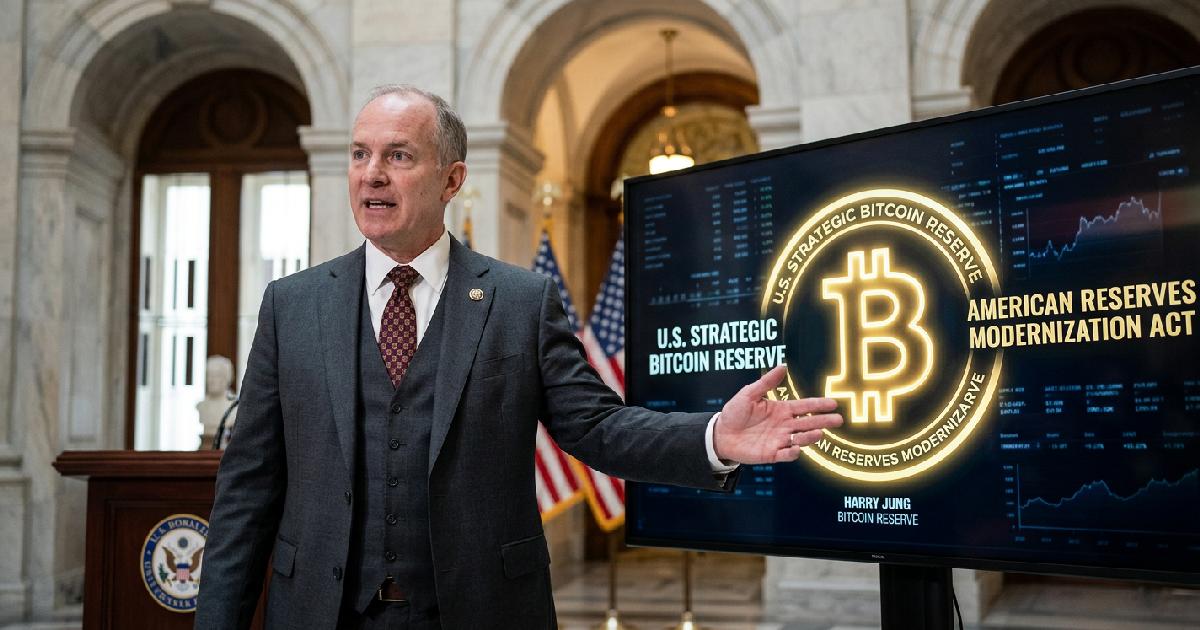

Patrick Witt, the White House digital-assets official, has teased a “breakthrough” regarding the establishment of the US Strategic Bitcoin Reserve, signaling that the administration is preparing an imminent announcement. Speaking in an interview released May 17, 2026, the Executive Director of the President’s Council of Advisors for Digital Assets indicated that the focus has shifted toward making the reserve legally sound and operationally secure. This progress follows the executive order signed by President Donald Trump on March 6, 2025, which first established the reserve framework.
The upcoming announcement, expected in the coming weeks, will likely detail the implementation of legal compliance and asset custody structures. Patrick Witt credited his deputy, Harry Jung, with leading the interagency process to define the financial infrastructure necessary for the government to manage its holdings. The initiative aims to properly safeguard government-held digital assets while determining if existing agency authorities are sufficient to maintain a long-term sovereign reserve without constant legislative intervention.
Currently, the U.S. government holds an estimated 328,372 BTC as of February 2026, valued at approximately $25 billion. This stash represents nearly 1.56% of the total circulating supply of Bitcoin. As investor sentiment shifts and exchange supply maintaining multi-year lows, the administration views formalizing these holdings as a way to provide powerful institutional sponsorship for the asset class. Patrick Witt noted that “there’s no more powerful institutional sponsorship” than the U.S. government integrating Bitcoin into the national financial architecture.
Establishing legal compliance and asset custody structures
A central pillar of the “breakthrough” referenced by Patrick Witt involves the creation of a sophisticated custody and reporting infrastructure. Federal agencies were originally designed to manage traditional assets like gold, but the unique nature of private keys requires a proprietary approach. Patrick Witt emphasized that “custody is unique for digital assets,” necessitating new legal memos and agency coordination to prevent the mishandling of billions in sovereign wealth.
The urgency to modernize these systems follows high-profile security failures within the federal government. In late 2025, government contractor John Daghita allegedly stole more than $46 million in cryptocurrency from U.S. Marshals Service custody accounts; the FBI arrested him in March 2026. This incident followed a separate $24 million theft that federal investigators traced back to October 2024. These vulnerabilities underscored the need for the “operationally secure” framework Witt is now championing.
While the administration solidifies its internal procedures, the broader market remains sensitive to government movements. Recent volatility has seen Bitcoin test key resistance levels, but a formalized federal reserve could provide a long-term floor for institutional confidence. The White House effort is designed to ensure that the U.S. leads the digital-asset space from a position of legal and operational strength.
Legislative support for the American Reserves Modernization Act
On Capitol Hill, lawmakers are moving to codify the executive order into federal law to prevent it from being reversed by future administrations. Representative Nick Begich is currently leading a House effort for the American Reserves Modernization Act (ARMA). Separately, Representative Tom Emmer is reportedly preparing to introduce ARMA in the House as well, reflecting a growing consensus on the need to stabilize the reserve’s legal standing.
In the Senate, Cynthia Lummis (R-Wyo.) continues to advocate for the BITCOIN Act, which proposes a more aggressive acquisition strategy. The act envisions the Treasury Department acquiring 1 million BTC over five years, with an annual purchase target of 200,000 BTC. These legislative paths aim to create a permanent statutory home for Bitcoin on the national balance sheet, moving beyond the temporary nature of executive actions.
Treasury Secretary Scott Bessent has previously suggested that these reserves could grow through “budget-neutral pathways,” such as utilizing future asset seizures rather than new taxpayer outlays. By focusing on agency coordination and asset safeguards, the administration intends to build a system that is transparent and protected from theft. The next few weeks will determine how these interagency legal memos translate into a functioning, state-level financial powerhouse.