
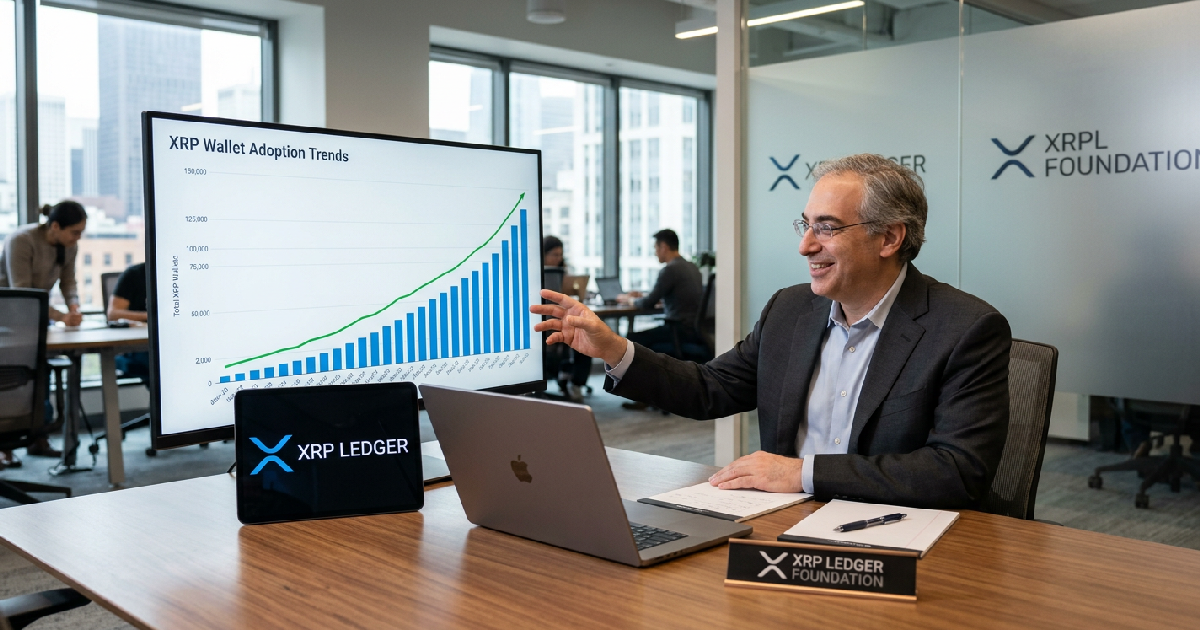

Ripple Chief Technology Officer David Schwartz has joined the XRP Ledger Foundation as an honorary board member, a move that formalizes a closer advisory relationship between the company and the independent body. The appointment comes as network participation reportedly continues to climb, with the total number of individual XRP wallets reaching new highs in the current market cycle. Meanwhile, Cardano founder Charles Hoskinson has voiced sharp criticism of legislative developments involving the Clarity Act, describing the current regulatory direction as a significant risk to the industry.
The addition of David Schwartz to the XRP Ledger Foundation (XRPLF) board is viewed as a strategic bridge between Ripple and the non-profit organization. As a primary architect of the ledger, David Schwartz brings technical expertise that observers believe will help align development goals for the ecosystem. The foundation remains the entity responsible for the long-term health and growth of the XRPL, operating independently to preserve the decentralized nature of the network.
Network Adoption and XRP Ecosystem Expansion
While leadership changes gain attention, the underlying network data suggests that retail interest in XRP holds steady despite broader market fluctuations. Reports indicate that active wallet addresses have reached a significant milestone, suggesting a broadening base of holders at a time when many traders are closely watching XRP speculative activity as buyers test major resistance levels in the current price cycle.
The increase in wallet counts and the formalization of leadership at the XRPLF are seen by analysts as foundational steps toward maturity. By bringing David Schwartz into a formal role at the foundation, the community anticipates more cohesive updates to the ledger protocol. These updates could eventually include enhancements to smart contract capabilities or the integration of sidechains designed to expand the network’s utility.
Charles Hoskinson Critiques Clarity Act Provisions
Outside of the Ripple ecosystem, the regulatory environment is facing renewed pushback from prominent industry figures. Cardano founder Charles Hoskinson recently lambasted the removal of specific protections from the Clarity Act, a piece of legislation intended to provide a framework for digital assets in the United States. Charles Hoskinson argued that the current legislative trajectory threatens the fundamental privacy and decentralized nature of blockchain technology.
His concerns center on the potential for government oversight and a perceived lack of legal protections for software developers. This debate follows market sentiment shifts as the CLARITY Act advances through various congressional committees. The Cardano founder warned that without certain amendments, the resulting legal framework could create a restrictive environment for domestic innovation.
Broader Sentiment and On-Chain Market Signals
The combination of leadership changes and legislative pressure has kept market sentiment in a state of flux. While Ripple focuses on strengthening its foundation, other major assets are seeing varied levels of on-chain activity. For instance, Dogecoin network signals have flashed recently, drawing the attention of short-term traders back toward user metrics and price volatility rather than the slow-moving legislative process.
The industry is now looking toward the next phase of the Clarity Act’s progress. Proponents of decentralized finance hope that feedback from figures such as Charles Hoskinson will lead to revisions that protect the autonomy of open-source protocols. For now, the focus remains on whether the XRPL can translate its recent growth in wallet addresses into sustained utility under the expanded guidance of David Schwartz and the XRPL Foundation board.