
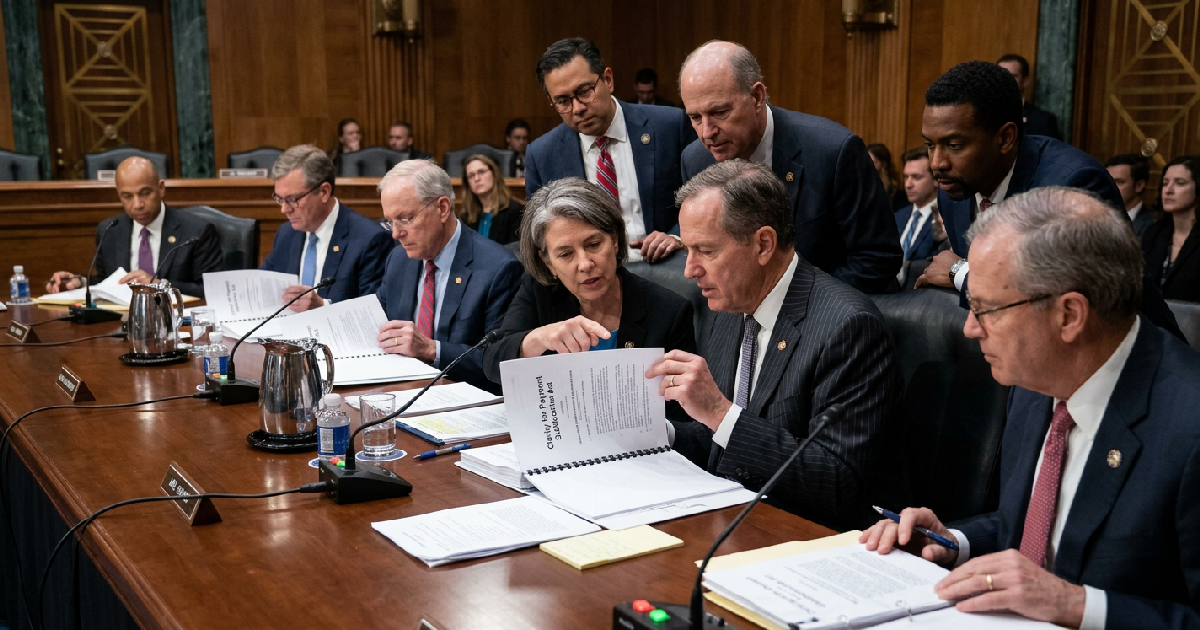

The Senate Banking Committee is moving toward a highly anticipated vote on the Clarity for Payment Stablecoins Act, a development that represents a critical moment for the regulation of digital assets in the United States. Analysts at the investment bank TD Cowen indicate that while the committee is preparing to take action later this month, the legislation still faces a difficult path toward final passage. The push for a vote shifts the primary debate from the committee level to the broader Senate, where bipartisan support will be essential for the bill to progress beyond its current stage.
Led by Senator Sherrod Brown, the committee appears set to advance the measure despite ongoing pushback from several corners of the financial and political landscapes. The move is viewed by many Washington observers as an attempt to build momentum before the summer legislative sessions begin. Market participants are watching the proceedings with intense interest, as seen recently where Bitcoin leads crypto fund inflows as CLARITY Act hopes grow, signaling an appetite for clearer regulatory frameworks within the industry.
However, analysts caution that clear passage is far from guaranteed. Moving the legislation to the full Senate exposes it to a wider range of political pressures, including the potential for procedural delays and the high threshold of support required to move the bill to a final floor vote. Rather than signaling a final consensus, the decision to hold a committee vote may essentially be a tactical maneuver to force lawmakers to take a public stand on stablecoin oversight.
Banking Interests and the Stablecoin Yield Conflict
A primary point of contention stalling a unified legislative front involves the treatment of yields on stablecoins. Established financial institutions have raised concerns that the current framework could grant an unearned advantage to digital asset providers. The core of the argument centers on how interest is generated and distributed by stablecoin issuers, which traditional banks worry could undercut their own deposit models and disrupt existing financial structures.
Reports suggest that the Senate Banking Committee has grappled with these competing interests for a significant period. Lawmakers are currently navigating a difficult balance between supporting the growth of the domestic crypto industry and addressing the concerns of the traditional banking sector. This friction reflects broader industry trends where companies are looking for new ways to deploy capital, such as the Sharplink and Galaxy Digital Ethereum yield strategy, which highlights the growing demand for institutional-grade yield products.
Because these two powerful constituencies often present mutually exclusive demands, analysts believe a legislative stalemate remains a high probability. Without a compromise that addresses the cost of capital and security for traditional lenders, the bill may struggle to find the broad base of support needed to survive the amendment process in the full Senate.
Ethical Provisions and Political Hurdles
Beyond the technicalities of banking law, the bill’s progress is being slowed by disagreements over ethics and conflict-of-interest requirements. Several high-profile Democratic lawmakers have indicated that their support is contingent upon strict rules governing the involvement of high-ranking government officials in the cryptocurrency sector. These provisions are reportedly designed to prevent potential conflicts of interest among those who may hold significant influence over policy or have business ties to the industry.
This dynamic adds a layer of political complexity that transcends religious or financial policy. There is a concern among some analysts that the executive branch may be hesitant to support a version of the bill that contains overly restrictive language targeting specific individuals or their families. These tensions are expected to intensify as the political calendar matures toward the later months of the year, making any major bipartisan breakthrough even more difficult to achieve.
Lingering Regulatory Obstacles in Washington
While stablecoins and ethics are the current focus, several other regulatory hurdles have yet to be cleared. The committee has not yet released the final list of amendments or the specific order for the upcoming vote. The following issues are expected to remain at the center of the debate as the bill moves forward:
- Provisions for anti-money laundering (AML) and their application to decentralized systems.
- Maintaining parity with the Bank Secrecy Act to ensure digital assets do not bypass existing financial safeguards.
- New standards to mitigate market manipulation and fraudulent trading activities.
- Requirements for stablecoin issuers to provide transparent disclosures regarding their reserves.
The complexity of these issues suggests that a successful committee vote would only be the beginning of a prolonged legislative journey. Security remains a foundational concern for many regulators, especially as security firms launch quantum-proof wallets to address emerging technological threats. Without satisfying these security and transparency requirements, the Clarity Act is unlikely to gain the momentum required for a successful transition into law.
Outlook for the Clarity Act Through 2026
The window for passing significant financial legislation is narrowing as the current session progresses. Analysts remain skeptical that a middle ground between competing House and Senate versions of the bill can be found before the end of the calendar year. To reach the president’s desk, both chambers must eventually agree on a single, unified text that can satisfy a diverse group of stakeholders ranging from consumer advocates to traditional financial lobbyists.
If the committee succeeds in moving the bill to the full Senate chamber, the negotiation process will effectively restart. Leadership from both parties would need to find a way to navigate a crowded legislative schedule and bridge deep-seated ideological divides. For the time being, the upcoming committee activity represents a shift in strategy that forces the debate into the open, but it does not yet mark a definitive victory for U.S. crypto regulation.