
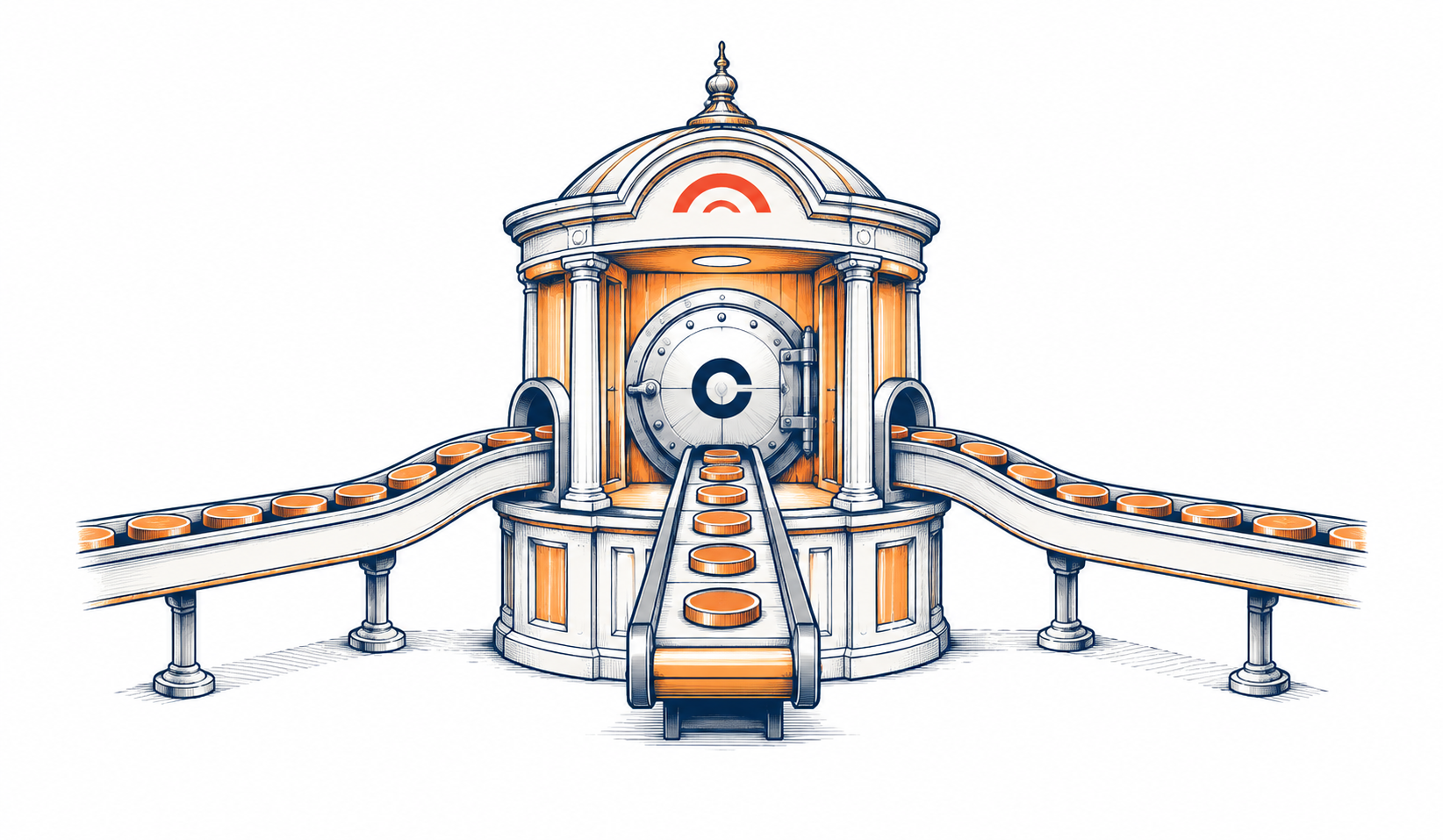

Stablecoins have made moving digital dollars faster. They have not made the banking system disappear.
For businesses, that creates an awkward reality. Money can arrive through a bank account and need to move onto a blockchain, or arrive as a stablecoin and ultimately need to land in the traditional banking system. Connecting those environments often requires multiple providers, accounts and conversion steps.
Coinbase and Citi are now trying to compress that process into infrastructure businesses can use without managing the bridge themselves.
The companies expanded their existing partnership with integrations that work in opposite directions. Coinbase is adopting Citi’s Virtual Account Wallet infrastructure for Coinbase Virtual Accounts, allowing businesses to receive fiat funds that can be automatically converted into stablecoins.
Citi, meanwhile, will allow institutional clients to accept stablecoin payments through Spring by Citi using Coinbase’s payments infrastructure. Coinbase handles the digital-asset side of the transaction and conversion into fiat, while Citi settles the funds and remains the bank of record.
One route moves money from banks toward blockchains. The other brings blockchain money back into banks.
Together, they point toward a version of stablecoin adoption that may depend less on replacing traditional finance than on making the boundary between the two increasingly difficult for customers to see.
Businesses Still Have to Cross Two Financial Systems
Stablecoins and bank deposits may both represent dollar-denominated value, but they do not move through the same infrastructure.
A company receiving dollars through the banking system cannot automatically use those funds on-chain. Likewise, receiving USDC or another supported stablecoin does not necessarily solve the problem of getting that value into a corporate bank account.
Someone has to connect the two environments.
Coinbase Virtual Accounts are designed to move that work behind the product.
Using Citi’s Virtual Account Wallet infrastructure, Coinbase can give business customers account-like functionality for receiving, holding and sending fiat. Incoming funds can then be automatically converted into stablecoins.
Spring by Citi approaches the same problem from the other direction.
A Citi corporate client can accept a supported stablecoin payment from a customer, while Coinbase provides the infrastructure needed to process the digital asset and convert it into fiat before the funds are settled through Citi.
The important change is not that conversion has become possible. Crypto companies and banks have offered fiat on- and off-ramps for years.
It is that the conversion is becoming part of the financial product itself.
Citi Does Not Need to Become Coinbase
The partnership also offers a useful view of how banks and crypto companies may divide the financial stack.
Citi already has the banking relationships, accounts, settlement infrastructure and regulatory framework required to move money for large companies.
Coinbase already has infrastructure connecting wallets, stablecoins and public blockchains.
Neither company needs to reproduce the other’s entire business.
Instead, Citi can provide the banking layer behind a Coinbase product, while Coinbase can provide the blockchain layer behind a Citi product.
That creates a different competitive dynamic from the one that shaped much of crypto’s early narrative.
Stablecoins were often presented as a way to move value without relying on traditional banking rails. At the corporate level, however, the more scalable model may involve connecting those rails rather than choosing between them.
Businesses can continue using banks for the functions banks already perform while adding stablecoins where blockchain infrastructure offers a practical advantage.
Coinbase Can Expand Without Owning the Customer Relationship
There is another consequence for Coinbase.
Historically, accessing crypto usually meant going to a crypto company. A user opened an exchange account, deposited money and entered the digital-asset ecosystem through that interface.
Stablecoin infrastructure allows Coinbase to occupy a different position.
Its technology can increasingly sit behind products offered by banks, payment companies and financial platforms. The end customer may interact primarily with another institution while Coinbase provides part of the infrastructure underneath.
That is a significant change in distribution.
Coinbase has been expanding beyond exchange trading into payments, custody, institutional services and infrastructure that allows other businesses to offer crypto functionality.
The Citi partnership pushes that strategy further.
Coinbase does not necessarily need every company using its stablecoin infrastructure to behave like a traditional Coinbase exchange customer.
It can become part of the plumbing.
Citi Is Keeping Multiple Digital-Money Options Open
Citi is also avoiding a single technological bet.
The bank has already developed Citi Token Services, which uses blockchain technology for institutional payments and liquidity. It has also participated in work around blockchain-based interbank settlement infrastructure.
Its expanded relationship with Coinbase adds public-blockchain stablecoins to that toolkit.
These systems do not necessarily solve identical problems.
Tokenized bank deposits can preserve money inside the banking architecture. Stablecoins can circulate across public blockchain networks. Traditional payment infrastructure remains useful for other transactions and jurisdictions.
A global bank can therefore have reasons to support several forms of digital money simultaneously.
What matters to the corporate customer is often less ideological: money needs to arrive in the right place, in the right form, when it is needed.
Stablecoin Adoption Could Become Harder to See
Crypto adoption has traditionally been easy to identify.
Someone bought Bitcoin. A company added crypto to its balance sheet. A merchant started accepting stablecoins.
Infrastructure adoption can look different.
If a business receives dollars into a Coinbase product and those dollars become stablecoins automatically, the blockchain transition happens behind the interface.
If another business accepts stablecoins through Citi and ultimately sees fiat deposited into its banking environment, the same thing happens in reverse.
The company does not need to restructure its entire financial operation around crypto for blockchain infrastructure to become part of the transaction.
That may be one of the more important implications of the Coinbase-Citi partnership.
Stablecoins do not have to pull businesses out of banks to increase their role in payments. Banks do not have to build every piece of blockchain infrastructure themselves to offer stablecoin functionality.
The two systems can meet in the middle.
And as that integration improves, one of the clearest signs that stablecoins are becoming financial infrastructure may be that businesses no longer need to think about when their money crosses from one system into the other.