
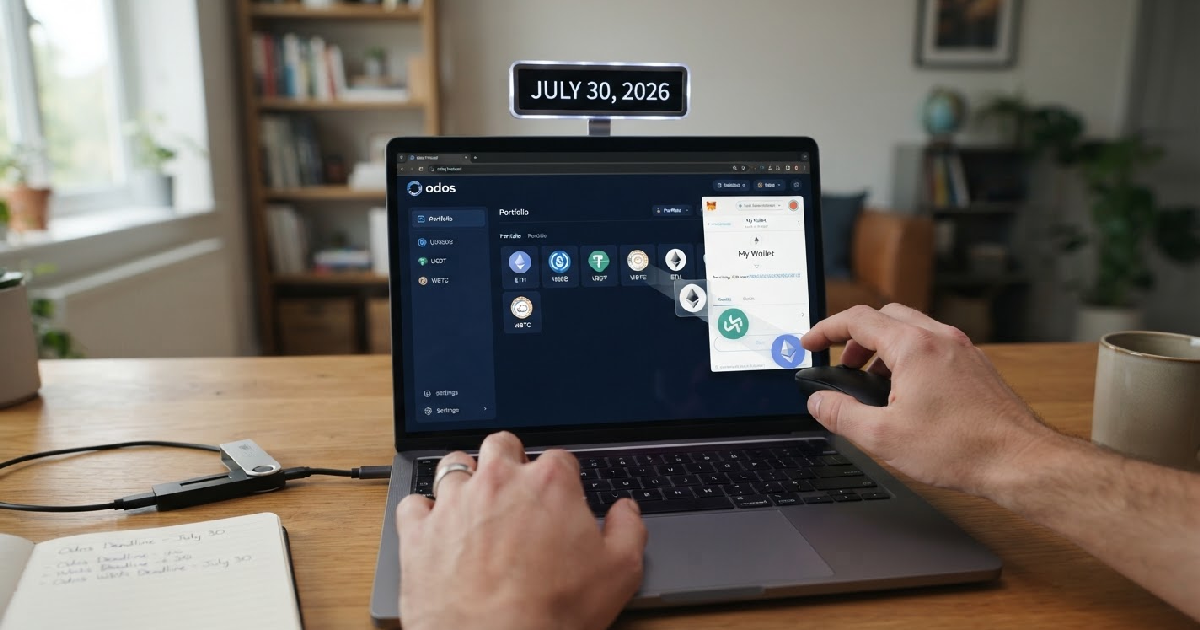

Odos Protocol, a prominent decentralized exchange (DEX) aggregator, has officially confirmed its services will cease operations by July 30, 2026. This shutdown necessitates immediate action from users managing crypto assets via Odos, especially those who utilize social or email logins for wallet access.
While the company cited “careful consideration” for the decision, it provided no specific reasons for the shutdown. This development aligns with a broader trend seen across the cryptocurrency sector in 2026, which has witnessed at least 17 major crypto businesses, including established players like BitMEX, exit the market.
Managing your assets before the Odos Protocol shutdown
The timeline for Odos Protocol’s phased shutdown began on July 23, 2026, when the platform officially disabled new account registrations, wallet creations, and the placement of new limit orders. This initial step marked the start of a critical period for existing users to manage their holdings.
Users can continue to swap assets and close positions through the Odos application until July 27, 2026. After this date, the application will transition into a read-only mode, allowing users only to view their transaction history and balances.
All Odos-operated services will permanently cease on July 30, 2026. Following this final deadline, the company confirmed there would be no further product development, customer support, or maintenance for the protocol.
Key Deadlines for User Action
The impending shutdown mandates specific actions depending on how users interacted with the Odos Protocol. Missing these deadlines could complicate access to funds, particularly for those who relied on the platform for wallet management.
What Users Need to Do Now
The urgency of the situation varies based on the type of wallet users hold. Odos Protocol has outlined distinct instructions to ensure users retain control over their digital assets before the final shutdown.
Social and Email Wallet Holders
Individuals who created their wallets directly through Odos using a social login or email authentication must take immediate action. They need to either transfer their assets to another compatible wallet or securely export their private keys.
Instructions for exporting wallets will remain accessible on an official support page even after the July 30 shutdown. This provision aims to prevent asset loss for users who might miss the initial deadlines.
Self-Custody Wallet Users
For users who connected external self-custody wallets, such as MetaMask, Rabby, or Ledger, no immediate action is typically required regarding their funds. Odos operates as a non-custodial protocol, meaning it never held user assets directly.
Their cryptocurrencies remain on-chain and are fully accessible through their respective self-custody wallet interfaces. This distinction is crucial for understanding the implications of the shutdown for different user groups.
Understanding Non-Custodial Nature and Token Status
Odos Protocol’s non-custodial design is a key factor in mitigating risk for most users, distinguishing its shutdown from instances where centralized exchanges collapse with user funds. This structure ensures that assets linked via self-custody wallets remain secure.
The ODOS token itself operates independently on-chain and is unaffected by the company’s closure. The operating company neither custodies nor market-makes the token, meaning its status as a digital asset is separate from the service shutdown.
Odos DAO and Independent ODOS Token
Adding another layer of distinction, the Odos DAO (Decentralized Autonomous Organization) functions autonomously from the operating company. The DAO is expected to communicate its own future plans independently, suggesting a potential continuation of some community-driven aspects related to the protocol.
This separation highlights the inherent resilience of decentralized components even when a core operating entity ceases operations. It’s a testament to the architecture of many Web3 projects.
Urgent Scam Alert
In response to the shutdown, Odos Protocol has issued a stark warning about potential scams. The team explicitly stated there will be no token migration, new product launches, official airdrops, or claims associated with the closure.
Users must ignore any unsolicited messages, fake support accounts, fraudulent migration websites, or requests for seed phrases. All official announcements, especially concerning fraudulent recovery schemes, will come solely through official DAO channels to protect users from malicious actors.
Declining Volume and Broader Industry Trends
While Odos Protocol did not provide a specific reason for its closure, DefiLlama data indicates a significant decline in its DEX aggregator volume. The protocol’s volume plummeted to $169 million in July 2026 from a peak of $7.8 billion in December 2024. During this period, the protocol generated $2.72 million in annualized revenue.
This sharp reduction in activity points to the increasingly competitive and challenging environment for DEX aggregators. The sector demands continuous innovation and robust liquidity to remain viable, and many projects struggle to maintain momentum amidst market fluctuations.
The shutdown is not an isolated incident; it reflects a broader trend of consolidation and exits within the crypto industry. The year 2026 has already seen numerous major crypto companies and projects cease operations. This environment forces even well-regarded projects to re-evaluate their long-term sustainability and strategic direction.
For market participants, such shutdowns underscore the inherent risks and rapid evolution of the decentralized finance (DeFi) landscape. Understanding project fundamentals and operational models becomes crucial. It highlights why investors often scrutinize long-term price predictions and overall market health when assessing potential investments.
The exit of a platform like Odos Protocol, despite its non-custodial nature, serves as a reminder that even infrastructure providers in the decentralized space are subject to market forces. Their operational viability directly impacts the user experience and service availability within the broader Web3 ecosystem.