
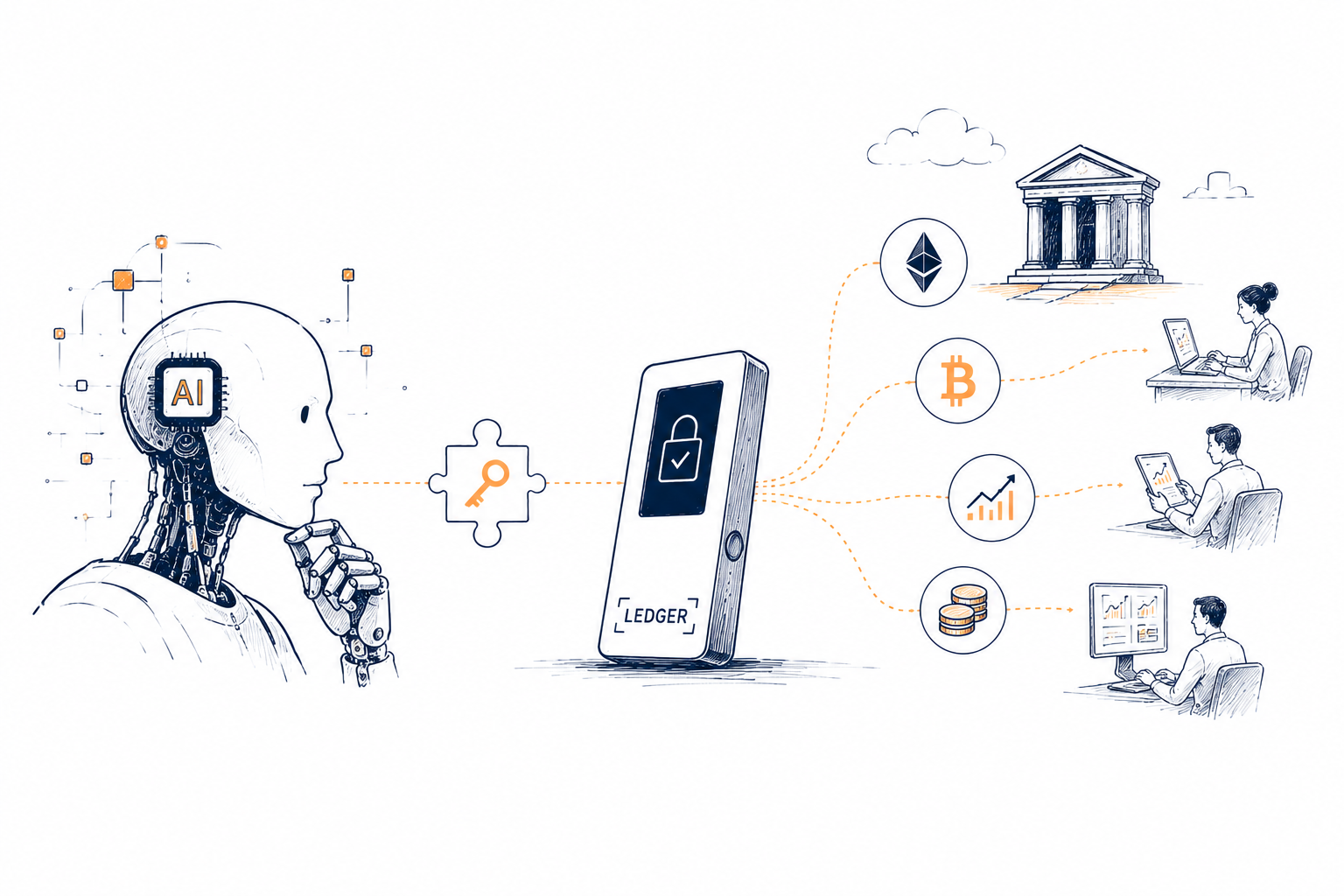

Ledger’s latest AI platform looks like another product announcement. It may actually signal a much bigger shift in how digital assets will be protected in the years ahead.
The first generation of crypto security focused on a simple objective: preventing unauthorized access.
Artificial intelligence changes that equation.
Trust Is Becoming the New Security Layer
Giving an AI agent permission to manage a wallet is fundamentally different from protecting that wallet against hackers.
The challenge is no longer deciding who can access digital assets.
It is deciding how much authority should be delegated after access has already been granted.
That distinction may define the next generation of self-custody.
As AI agents begin monitoring portfolios, executing trades and interacting with on-chain applications, security will increasingly depend on permissions rather than passwords. The critical question will no longer be whether an agent can act, but under which conditions it should be allowed to do so.
Ledger’s announcement is one of the first signs of that transition.
The companies that shape the next phase of digital asset security may not be the ones that build stronger defenses against attackers. They may be the ones that build better systems for defining, limiting and supervising trust itself.