
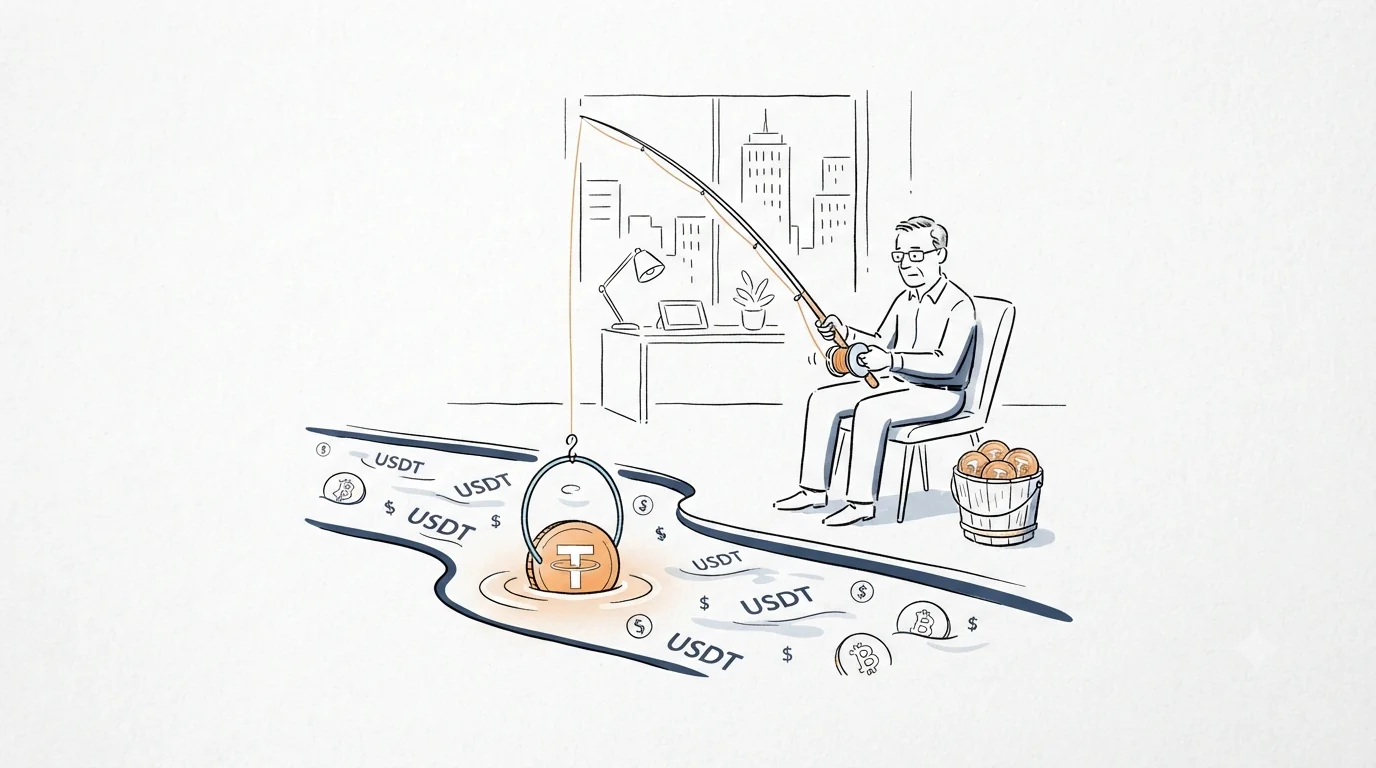

The cryptocurrency market is relentlessly obsessed with the daily volatility of digital assets, but the most consistent, billion-dollar cash flow happens entirely behind the scenes. If you have ever looked at the stablecoin ecosystem, you have likely asked yourself: how does Tether make money when one USDT is designed to always remain strictly pegged to one US dollar?
Without charging subscription fees or taking a cut from everyday network transfers, this massive entity quietly converts traditional cash deposits into digital assets every single day. To decode this mystery, we must look past the blockchain code and examine a corporate strategy that looks far more like an institutional treasury than a scrappy tech startup. The secret to their immense profitability lies in managing one of the largest reserve portfolios in the global financial system.
The Hidden Billions Behind the USDT Empire
Before dipping into the financial engineering of the world’s largest stablecoin, we need to establish the foundational rule of its existence: the commitment to the peg. The entire premise of USDT is to maintain a stable, 1:1 parity with the United States dollar.
For every single token circulating on networks like Ethereum, Solana, or Tron, there must be one actual dollar, or a highly liquid equivalent asset, secured in the issuer’s vaults. If this balance breaks, the trust in the asset evaporates immediately.
For the everyday investor, crypto stablecoin investing is rarely about generating a direct yield. Instead, a digital dollar functions as an agile tool to protect purchasing power against local currency devaluation or market crashes. It is a safe harbor.
However, the billions of dollars deposited to create these tokens do not just sit idle in a standard checking account. The strategic movement and allocation of that massive capital pool is exactly what defines the corporate profitability of the issuer.
The USDT Business Model: A Treasury Machine
The daily operations of Tether can be closely compared to a giant money market fund, but with one unbelievable competitive advantage: their cost of acquiring capital is practically zero.
While traditional financial institutions must pay interest to clients to attract deposits, the issuer of USDT retains all the yield generated by its reserves. They do not distribute those dividends to the people holding the tokens.
This structured flow of capital breaks down into clear, highly efficient stages that transform global deposits into predictable corporate revenue. This is the core of the USDT business model.
1. The Inflow (Minting USDT)
The retail investor rarely interacts directly with the issuing company. If you want to buy a few hundred dollars of stablecoins, you usually go through secondary trading platforms like Binance, Kraken, or Coinbase.
The primary issuance of entirely new tokens is a strictly gated process reserved for large institutional players, major trading firms, and global exchanges.
When market demand rises and liquidity is needed, these large entities wire real US dollars directly to the company’s banking partners. In exchange, they receive the exact equivalent amount in freshly minted USDT, expanding the total circulating supply.
2. The Pop-Star Treasury (Allocating Reserves)
Once the fiat capital is in hand, the company must structure a reserve portfolio deeply focused on security and immediate liquidity. They need to ensure funds are instantly available if a sudden wave of institutional redemptions occurs.
Think of this strategy like the financial treasury behind a massive global pop tour, similar to Taylor Swift’s Eras Tour or a major Hollywood studio production. Millions of tickets are sold months in advance, generating a massive pool of cash.
The promoters do not just leave billions of dollars in a basic bank account while waiting to pay stadium venues or crew members. They place that capital into short-term, ultra-safe financial instruments to earn interest in the meantime.
Tether does the exact same thing, but on a permanent, global scale. Their portfolio relies heavily on Tether treasury bills (T-bills), which are short-term debt obligations backed by the US government. They also hold cash equivalents and reverse repurchase agreements, ensuring deep liquidity.
3. The Yield Magic
This is where the financial puzzle comes together. Government bonds and money market instruments generate constant yields, heavily dictated by macroeconomic interest rates.
Because the company does not pass these dividends down to the retail or institutional token holders, the net revenue flows entirely into the institution’s own treasury.
When you manage tens of billions of dollars parked in sovereign debt paying an annual yield, the result is a multi-billion dollar revenue stream. This simple, elegant mechanism is exactly how does Tether make money without ever needing to charge everyday users extra tariffs or hidden fees.
Is USDT Safe? The Real Risks of Centralized Custody
The high profitability of this business model does not erase the systemic vulnerabilities that come with the operation.
It is common for investors to compare a stablecoin operation to a commercial bank, as both capture resources and make investments. However, their operational models follow completely opposite guidelines.
A traditional bank operates through a fractional reserve system, keeping only a small portion of deposits on hand and lending the rest out for long-term mortgages or corporate loans. The issuer of USDT, conversely, operates on a full reserve model, keeping assets in highly liquid instruments rather than illiquid commercial credit.
The Interest Rate Risk
The primary financial sensitivity of the company is its direct dependence on the monetary policy decisions of the Federal Reserve. The revenue generated by the institutional portfolio fluctuates entirely according to US economic cycles.
In periods of high interest rates, the yield on government bonds skyrockets, maximizing the company’s revenue impressively. They earn billions simply by holding the capital.
Conversely, if there is a severe cut in global interest rates, the yield on those reserves compresses immediately. In these circumstances, the company’s profitability shrinks drastically, even if the volume of tokens in circulation remains at record highs.
The Illusion of Total Safety
Looking at the security of a digital dollar requires understanding both operational and institutional risks. Many users ask: is USDT safe? The honest answer requires nuance.
Holding the asset in a digital wallet, the user is ultimately assuming the credit risk of the issuing company and its network of shadow banking partners.
Unlike fiat deposits in traditional checking accounts, stablecoins do not have safety nets like the FDIC in the United States. In the event of corporate insolvency, regulatory freezing of bank accounts, or a catastrophic failure of Tether reserves explained by auditors, there is no government insurance to cover the losses of token holders.
Is Holding USDT Worth It for Your Portfolio?
The stability of this structure is directly relevant to the health of the entire digital asset environment, as USDT acts as the primary liquidity index across both centralized and decentralized platforms.
The pros are undeniable. It provides instant global liquidity, serves as an immediate hedge against weak local currencies, and acts as the foundational currency for decentralized finance protocols.
However, the cons are equally present. Operating mostly outside the direct, strict jurisdiction of the United States, the company faces constant scrutiny from international regulators.
This brings us to the USDT vs USDC debate. Competitors like Circle’s USDC have built their entire brand on institutional compliance, publishing regular financial audits and utilizing custody services from legacy Wall Street asset managers. This forces the market leader to continuously refine its transparency policies to maintain investor trust.
Asset Protection and Counterparty Risk
Holding stablecoins is a vital part of portfolio management, but it is critical to remember that acquiring the token is only half the battle. True asset protection relies on how you store it.
Relying on a centralized issuer means you are already taking on counterparty risk. You should not compound that risk by leaving massive amounts of capital sitting idly on centralized exchanges where you do not control the private keys.
For serious wealth management in the crypto space, advanced investors transition their holdings into self-custody solutions, specifically utilizing multisig (multi-signature) wallets.
A multisig setup requires multiple independent approvals before any funds can be moved. By distributing the cryptographic keys across different devices or trusted parties, you ensure a single point of failure cannot compromise your digital treasury. It is the ultimate way to secure liquid stablecoins while mitigating individual risk.
Conclusion
Looking behind the curtain of the market’s largest stablecoin reveals one of the most effective financial arbitrage operations in modern history, aligning the insatiable global demand for digital dollar liquidity with the reliable yield of sovereign public debt, the issuer has consolidated a highly sustainable corporate empire.
When people wonder how does Tether make money, the answer is not hidden in complex blockchain algorithms. It is found in the simple, traditional mechanics of bond yields and massive scale.
Being aware that external macroeconomic fluctuations and the asset management skills of the issuer dictate the backing of your digital dollar is essential. Understanding the mechanics of liquidity, yield, and self-custody is the first step toward conscious, long-term navigation in the modern financial market.
This content is for informational purposes only and does not constitute financial advice.