
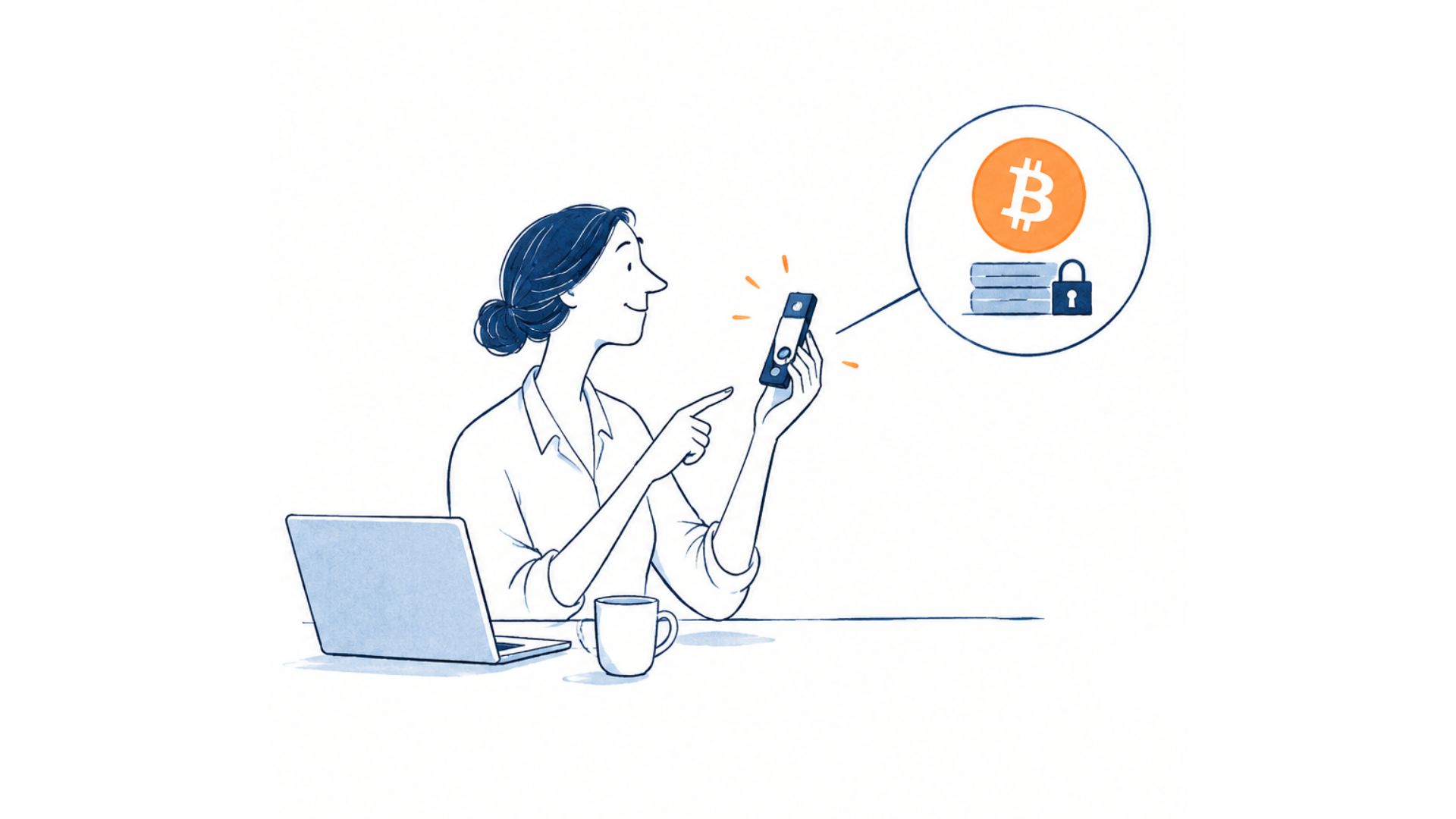

Keeping cryptocurrency on an exchange means relying on another company to safeguard the keys that control your assets. Moving those assets to a wallet you control changes that arrangement, but it also changes who is responsible when something goes wrong.
A hardware wallet is designed to protect private keys inside a physical device, reducing their exposure to malware on a connected computer or mobile phone. That makes it an important option for people who want greater control over their crypto holdings. It does not, however, guarantee that every transaction is safe or that funds can always be recovered.
A device can protect the key used to authorise a payment while its owner still approves a fraudulent transfer, loses the information needed to restore the wallet or installs compromised software.
What is a hardware wallet, and what does it actually protect?
A hardware wallet is a physical device designed to generate or manage the private keys used to authorise cryptocurrency transactions. It is commonly described as a type of cold wallet, a term associated with keeping private keys offline and away from internet-connected systems.
Despite the name, the device does not contain the cryptocurrency itself. Bitcoin, Ether and other crypto-assets remain recorded on their respective blockchains. The wallet holds or protects the credentials that allow the owner to authorise movements of those assets.
A private key is a cryptographic secret that enables a valid digital signature. The blockchain network checks that signature when a transaction is submitted. Someone who obtains the relevant private key may therefore be able to move the associated funds without the owner’s permission.
A hardware wallet is built to keep that secret within a dedicated environment rather than exposing it to the computer or phone used to prepare a transaction. Depending on the model, the device may connect through USB, Bluetooth or QR codes.
These differences affect how transactions are transferred, but the crucial question is whether the private key remains protected throughout the process.
This is also what distinguishes self-custody from simply holding an account with a cryptocurrency exchange. In a self-custodial arrangement, the user controls the keys. With an exchange-based custodial account, the provider generally controls them on the user’s behalf.
Neither arrangement removes every risk. The difference is where responsibility sits: with a third-party custodian, or with the person managing the wallet and its backups.
What happens when you approve a crypto transaction?
Imagine that you want to send Bitcoin to another wallet. You begin by entering the recipient’s address and the amount in an application on your computer or phone. The application prepares the transaction and passes the relevant information to the hardware wallet.
The device then uses the private key to produce a digital signature authorising that transaction. The signature returns to the application, which can broadcast the signed transaction to the Bitcoin network. In a properly designed system, the private key itself never needs to leave the hardware wallet.
That separation is the main security benefit. Even if malware compromises the connected computer, it should not automatically gain access to the secret required to sign transactions.
But the process contains an important detail: a valid signature does not establish that a transaction is trustworthy or sensible. It establishes that the appropriate key authorised it.
This is why checking the hardware wallet’s own display matters. The user should verify the recipient’s address and the amount against the intended payment, rather than assuming the information shown on the computer is correct.
Malware can interfere with the transaction being prepared, including by replacing a recipient’s address.
The protection offered by the device also depends on what it can display and interpret. A straightforward payment may be easy to inspect, while an interaction with a decentralised application may involve technical instructions or permissions that are difficult to understand.
Some devices cannot clearly decode every transaction, creating the risk of blind signing — approving information whose full consequences are not visible to the user.
An additional confirmation step is useful only when the person making it can meaningfully assess what they are approving.
What a hardware wallet cannot protect you from
Hardware wallets reduce certain attack routes, but they are not a universal defence against crypto theft.
Phishing is one example. A fraudulent website, email or support account may persuade someone to reveal their recovery phrase or approve a transaction they do not recognise. The attacker does not necessarily need to extract the private key from the device if the owner voluntarily provides another way to access it.
A compromised application can also present a transaction in misleading ways. If the user approves the wrong recipient or grants an excessive permission to a malicious smart contract, the hardware wallet may perform its intended function correctly while the resulting loss is entirely real.
Physical possession creates another set of considerations. A thief who obtains a device may attempt to access it, although protections such as a PIN can make that harder. The level of protection depends on the device’s implementation, its software and the security measures enabled by the owner.
There is also the question of authenticity. A counterfeit or tampered-with device, a fraudulent setup application or a malicious software update can undermine the safeguards the user expects. Buying through the manufacturer’s official channels or an authorised reseller, initialising the device according to its documentation and obtaining companion software from a trusted source help reduce these risks.
Treat a recovery phrase supplied on a pre-written card as a serious warning sign. A new wallet should be initialised according to the manufacturer’s instructions, with recovery information generated through the intended process.
A legitimate support representative should not need the secret words that restore the wallet.
None of these precautions makes the system infallible. They address different weaknesses, which is why hardware wallet security depends on more than the physical product alone.
Why your recovery phrase can matter more than the device
A recovery phrase, also called a seed phrase, is a sequence of words that can restore the keys associated with a compatible wallet. Many hardware wallets generate one during initial setup. It allows the owner to recover access if the device is lost, damaged or replaced.
This creates a distinction that is easy to overlook: losing the hardware wallet and losing control of the funds are not necessarily the same event.
If the device breaks but the recovery phrase remains available and secure, the owner can generally restore the wallet using a compatible replacement. If the phrase is lost and no other valid recovery method or backup exists, the funds may become permanently inaccessible.
The reverse is equally important. Someone who obtains the recovery phrase may be able to restore the wallet elsewhere and transfer its assets without physically possessing the original device. Depending on the wallet configuration, an additional passphrase may provide another layer of protection, but it introduces its own recovery responsibilities.
For that reason, recovery information should be kept private and securely stored offline. Photographing it, saving it in an email account or cloud service, entering it into a website or sharing it with someone claiming to provide technical support can expose the wallet to theft.
The backup deserves at least as much attention as the device itself. A sophisticated piece of hardware cannot compensate for a recovery process that fails when it is needed.
When does a hardware wallet make sense?
A hardware wallet may be useful for someone who holds crypto-assets over longer periods and wants to reduce reliance on an exchange or on a computer-based wallet. It can also suit users who are comfortable managing their own recovery information and following a careful process when signing transactions.
For smaller amounts used frequently, a software wallet on a phone or computer may offer greater convenience. Software wallets are generally easier to access for everyday transactions, although their security depends on the device, the software and how the keys are protected.
Some users combine both approaches, keeping a limited amount in a more convenient wallet and holding other assets in cold storage.
There is no universal balance that works for everyone. The decision depends on the assets involved, how frequently they are moved, the cost of the device and the user’s ability to maintain secure backups.
Compatibility is another practical consideration. Not every hardware wallet supports every cryptocurrency, blockchain network or decentralised application. Before choosing one, check which assets it supports, how transactions are displayed and approved, what recovery options are available and how firmware and companion software are maintained.
Features such as an independent screen, a secure element or open-source software can inform that assessment, but none proves that a product is immune to attack. Security depends on how its components work together, including the manufacturing process, software, distribution and the owner’s habits.
A hardware wallet is therefore not automatically the right choice simply because someone owns cryptocurrency. It becomes more useful when the reduction in certain risks justifies the additional cost and responsibility.
Better key protection does not mean fewer responsibilities
The central trade-off of crypto self-custody is straightforward. A hardware wallet can reduce the need to trust an exchange or leave private keys exposed to a connected computer, but it cannot remove the consequences of every mistake.
Its strongest contribution is narrower and more practical: it creates a dedicated environment for authorising transactions without routinely exposing the private key to the devices used to access the internet.
Whether that protection translates into safer ownership depends on the rest of the process. The device must be authentic, the transaction must be understood, and the recovery information must remain available to its owner without becoming available to anyone else.
The question is not simply whether a hardware wallet is more secure than leaving crypto on an exchange. It is whether the person using it understands which risks have been reduced, which remain and which responsibilities now belong to them.