
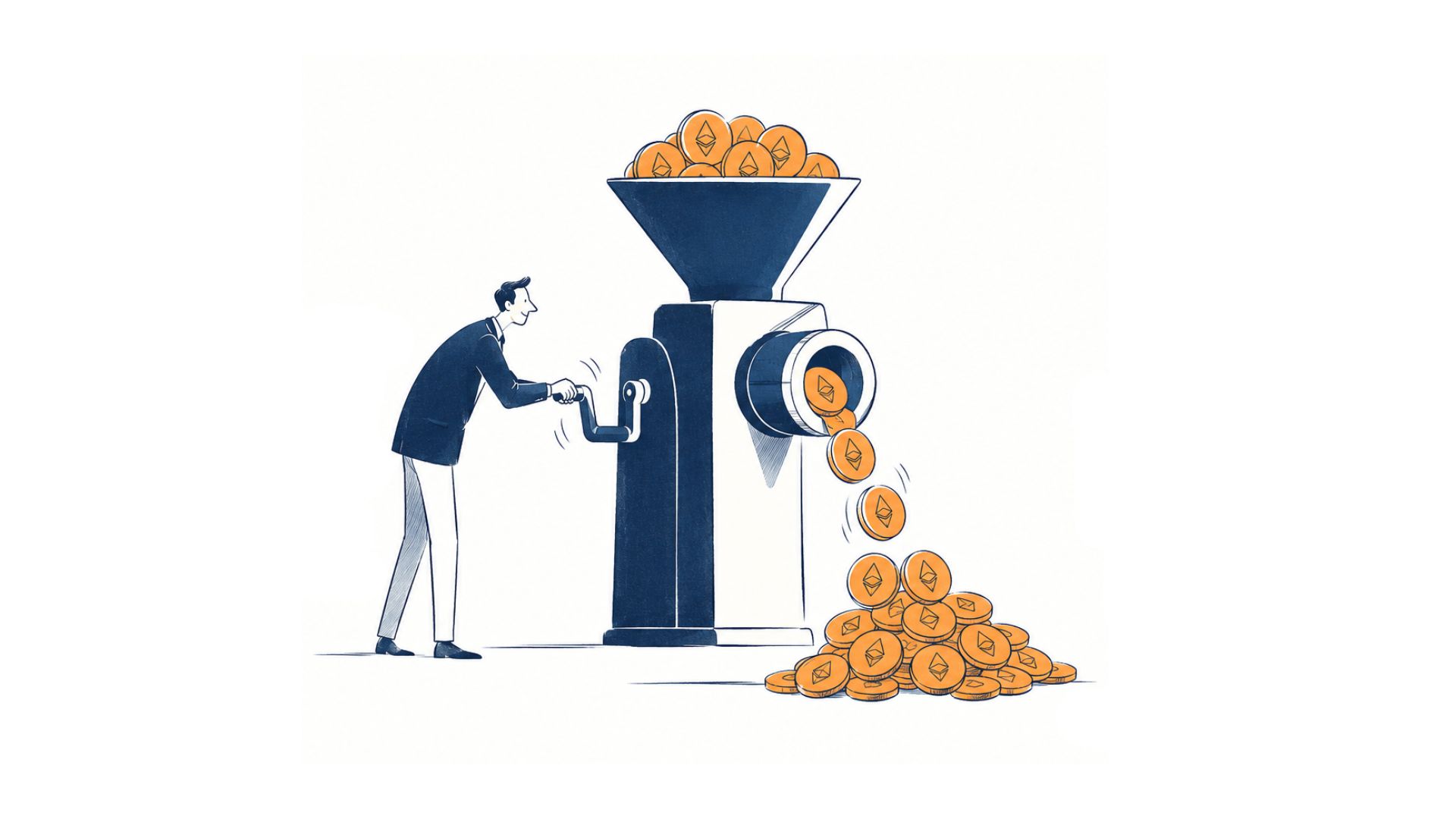

Token supply is one of those figures that looks straightforward on a crypto dashboard and becomes less clear the closer you look. A project might have a hard cap on the number of tokens it can create, while only a portion is available to trade. Another may have no fixed maximum but follow a published schedule for issuing new units.
A supply figure is not a complete description of an asset.
To interpret it, you need to know which units it counts, what can change the number and who may gain access to tokens later. Token supply is best understood as a set of rules in motion, not a number that tells you whether a cryptocurrency is cheap or expensive.
Circulating, total and max supply answer different questions
Crypto data platforms commonly display three measures: circulating supply, total supply and max supply. They are related, but describe different things.
Circulating supply is the number of tokens a data provider considers to be in circulation. It is often used to calculate market capitalisation, but providers may apply different criteria to determine whether tokens are available to the market.
Locked allocations, treasury holdings and balances believed to be inaccessible may be treated differently.
Total supply generally counts tokens that have already been created and remain in existence, after accounting for burned units. Because methodologies can vary, check how a platform defines the figure rather than assuming every dashboard uses the same calculation.
Max supply is the maximum number of units that can exist under a token’s rules, if a limit has been set. Some assets have a hard cap; others do not. A maximum does not tell you how many tokens will be issued next year or how many can be traded now.
Consider a hypothetical token with 100 million units in total, of which 60 million are circulating and 40 million are locked under a release schedule. The total shows how many units exist; the circulating figure shows how many the source counts as being in the market; the unlock schedule helps explain how the gap might narrow.
A low circulating supply can make an asset look scarcer than it will be once more tokens become available. That does not make the figure misleading in itself. It means it needs context.
Circulating supply can rise without new tokens being created
A token unlock changes availability, not necessarily the number of units that exist. Projects often reserve tokens for founders, employees, early investors, community rewards or a treasury. A vesting schedule sets when some of those allocations can be released.
In the example above, if 10 million locked tokens become transferable, circulating supply might rise from 60 million to 70 million while total supply remains at 100 million. No new units were minted; existing tokens simply became available.
This is why unlocks matter alongside issuance. A release can increase the number of tokens holders are able to sell or use, potentially changing market conditions. It does not tell you what they will do: some may sell, others may hold, and some tokens may be used for their intended purpose.
Check how many tokens are due to be unlocked, who receives them and how large the release is compared with circulating supply. The same number of tokens can have a very different significance in a small market than in a much larger one.
New issuance can dilute a holder’s share
Issuance creates additional units. Depending on the network, new tokens may reward miners, validators or participants in an incentive programme. These rewards can help a protocol operate, but they also increase the supply against which existing holdings are measured.
Imagine that 100 million tokens exist and one person owns 1 million. Their share is 1%. If the protocol creates another 10 million tokens and their balance stays the same, that holding represents about 0.91% of the new 110 million total. They own the same number of tokens, but a smaller proportion of the supply.
That is dilution. It does not mean the token’s price must fall: demand may grow, the asset may become more useful, or buyers may be willing to pay more despite additional issuance. The point is to understand how a token’s rules affect proportional ownership, rather than looking only at the balance in a wallet.
The term token inflation often describes growth in supply over time. It is different from consumer-price inflation: one measures the number of units, the other the prices of goods and services. Nor does a fixed maximum automatically mean low issuance today.
A token can have a hard cap and still release new units quickly until it reaches that limit. The schedule matters as much as the headline cap.
Token burns only matter in relation to issuance
A token burn removes units from circulation, usually by sending them to an address from which they cannot be spent or using a protocol rule that makes them unusable. Projects may present burns as evidence of growing scarcity, but a burn mechanism does not prove that supply is shrinking.
The key measure is the net change over a period: how many tokens were created and how many were burned? Unlocks affect circulating supply differently, while issuance changes the number of units created. These mechanisms should not be treated as interchangeable.
Ethereum illustrates the balance. Under EIP-1559, the base fee paid for a transaction is burned. The network also issues ETH as staking rewards. Depending on network activity and the amount burned, total ETH supply can increase or decrease over a given period.
A burn can offset some or all of the new issuance, but the effect depends on the numbers and the rules. It cannot create demand by itself. Fewer tokens may change the supply side of the equation; they cannot guarantee that more people will want to hold or use the asset.
What a supply figure leaves out
A token supply dashboard is a starting point, not a full assessment of a token’s economics. Before drawing conclusions, check the definitions and look beyond the headline figures.
- What counts as circulating? Check whether locked allocations, treasury holdings or other balances are excluded.
- What could change the supply? Look for issuance rules, scheduled unlocks and any burn mechanism.
- Can the rules change? A cap or emissions schedule is only as dependable as the governance and code that enforce it. Some protocols can amend their parameters; others impose tighter constraints.
- Who receives new or newly released tokens? Rewards, team allocations and investor unlocks reach different groups and may create different incentives.
Project documentation describes intended tokenomics, while on-chain data shows what has happened. Third-party dashboards are useful, but differences in methodology can produce different figures. If a number matters to your judgement, verify it against project documentation and, where possible, blockchain data.
Valuation metrics need context, too. A calculation based on circulating supply describes the value of units currently counted as circulating; a fully diluted figure assumes a broader set of tokens. Neither tells the whole story if future issuance or unlocks remain uncertain.
Scarcity is a rule, not a valuation
Supply tells you something about the rules governing an asset, but not whether it is worth buying. A hard cap cannot guarantee growing demand. A burn cannot ensure that remaining tokens will become more valuable.
And a growing circulating supply may reflect new issuance, the release of existing allocations, or both.
Separate those mechanisms before interpreting the numbers. Check how much supply exists, how much is considered available and what could change each figure. Then consider the evidence alongside demand, actual use and the credibility of the project’s rules.
Scarcity is meaningful only when you understand what is scarce, who can access it and how that condition might change.
The most useful token supply analysis is not a bet on a single number; it is a view of how the token’s economics are designed to evolve.