
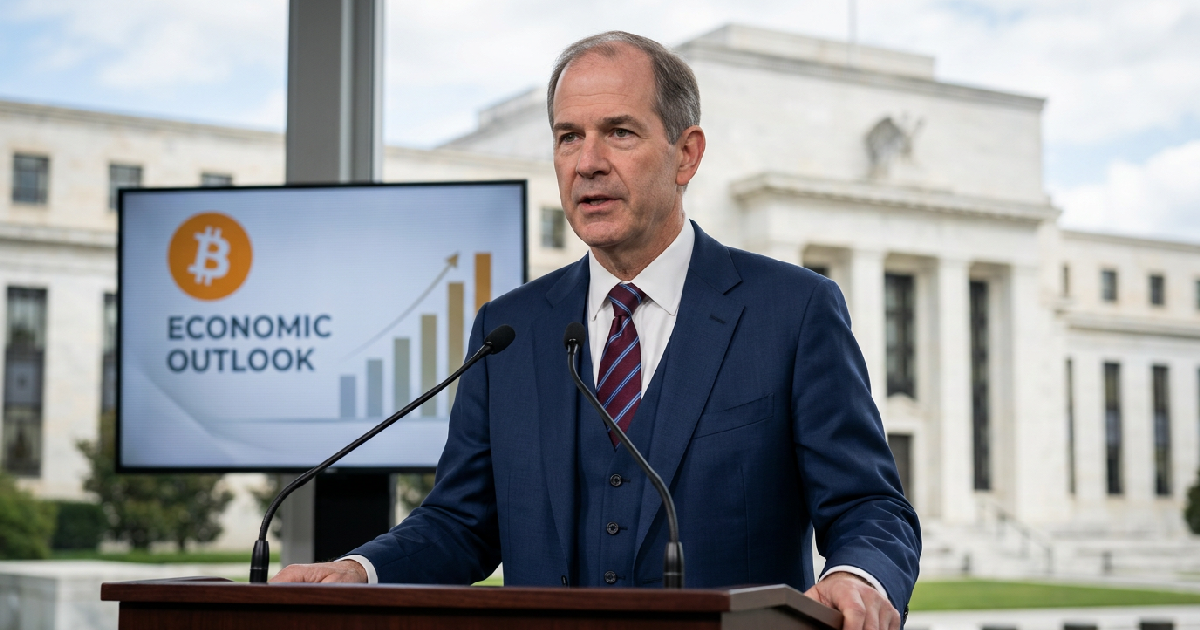

Bitcoin (BTC) rose to $60,336.43 on July 1, 2026, gaining 3.1% after Federal Reserve Chair Kevin Warsh suggested that inflation risks have finally begun to decrease. The recovery followed a period of intense volatility that saw the asset crash below $60,000 for the first time since October 2024.
The price movement reacted positively to the chair’s Wednesday remarks, which reaffirmed the central bank’s commitment to a 2% inflation target. Traders viewed the comments as a brief reprieve for a market that has been battered by nearly $3 billion in institutional outflows over the last month.
Kevin Warsh signals shift in Federal Reserve inflation outlook
This bounce reclaimed a critical psychological level but remains precarious. Investors are now debating whether this represents a sustainable path toward the $65,000 resistance zone or a bull trap in a broader downtrend that began earlier this summer.
Federal Reserve Chair Kevin Warsh delivered a series of remarks on Wednesday, July 1, that appeared to soothe anxious financial markets. He stated that inflation risks have decreased and reaffirmed the central bank’s unwavering commitment to its long-stated 2% goal.
The comments were particularly impactful given that the Federal Open Market Committee (FOMC) recently held its first meeting under his leadership on June 16-17. During that session, the committee decided to keep interest rates unchanged within the 3.50% to 3.75% range.
Key details
But the policy outlook remains complicated by a revised economic forecast. The FOMC’s “dot plot” recently pivoted to point toward a possible rate hike later in 2026, while the PCE inflation forecast was revised up to 3.6%.
Kevin Warsh noted that the Fed is moving away from explicit forward guidance on interest rates. Instead, the central bank will focus on data-driven decisions, acknowledging that persistently high prices have been a burden for the American people for five years.
To address these challenges, the chair announced he would begin task forces to review and update the Fed’s approach to its central responsibilities. These reviews will cover Fed communications, the balance sheet, data streams, productivity and jobs, and inflation.
Bitcoin survives massive liquidations following June price crash
The recent price appreciation follows one of the most difficult stretches for digital assets in recent memory. On June 25, 2026, Bitcoin hit a low of $59,023 during New York trading hours, a level not seen in nearly two years.
That crash triggered nearly $1 billion in liquidations within a single 24-hour window. Long positions accounted for approximately $780 million of those total losses, as around 180,000 individual traders were liquidated across various global exchanges.
Volatility intensified as macro warning signs emerged alongside rising yields, forcing many leveraged participants out of their positions. The June drawdown left Bitcoin trading 53% below its October 2025 all-time high of $126,272.
Chair Kevin Warsh also highlighted that artificial intelligence-driven investments could boost the U.S. economy’s productive capacity. He suggested that such productivity gains could play a vital role in future monetary policy, potentially mitigating some inflationary pressures.
Market participants are also assessing the impact of recent rejections at higher price levels. While the $60,000 support has held for now, the massive liquidations in late June have left a gap in market confidence.
Record outflows hit spot Bitcoin ETFs throughout June
Institutional sentiment remains a significant headwind for the current recovery. US-listed spot Bitcoin ETFs experienced record monthly outflows throughout June 2026, as investors moved toward higher-yielding fixed-income assets and technology stocks.
On June 30 alone, the iShares Bitcoin Trust saw approximately $212.4 million in outflows. The Fidelity Wise Origin Bitcoin Fund followed a similar path, reporting $10.2 million in net outflows on the same trading day.
This extended outflow streak has now persisted for seven consecutive weeks. This trend matches a broader market shift where strong earnings momentum in the AI sector is pulling capital away from non-yield-bearing assets like Bitcoin and gold.
The strengthening of the U.S. dollar has further complicated the recovery. Traders fear that incentives for fixed-income investments will continue to pressure the crypto market, reducing the odds of a quick bounce back to previous highs.
The record monthly withdrawals led Citigroup to slash its one-year price target for Bitcoin. The bank lowered its projection from $112,000 to $82,000, citing the persistent lack of institutional demand through the popular ETF products.
Market outlook as Bitcoin nears significant supply zones
For a sustainable rally to $65,000 to materialize, Bitcoin must first establish a firm base above the current $60,000 level. The market is currently approaching a significant supply zone that could trigger further selling.
Analysts warn that without a significant increase in spot buying, the current move could transform into a bull trap. The reliance on Federal Reserve sentiment makes the price particularly sensitive to any shifts in the upcoming economic data.
The Federal Reserve Bank of Cleveland continues to provide daily nowcasts of inflation for the PCE and CPI. These figures will remain critical for traders who are looking for signs of a more permanent pause in interest rate hikes.
And while the immediate panic from the June liquidations has subsided, the market is far from a full recovery. The focus now shifts to how Kevin Warsh acts on his new task force reviews in the coming weeks.
The Cleveland Fed will host a hybrid talk on July 16 titled “The Crises That Led to the Fed’s Creation.” This event may provide further insight into the central bank’s historical approach to price stability during periods of stubborn inflation.