
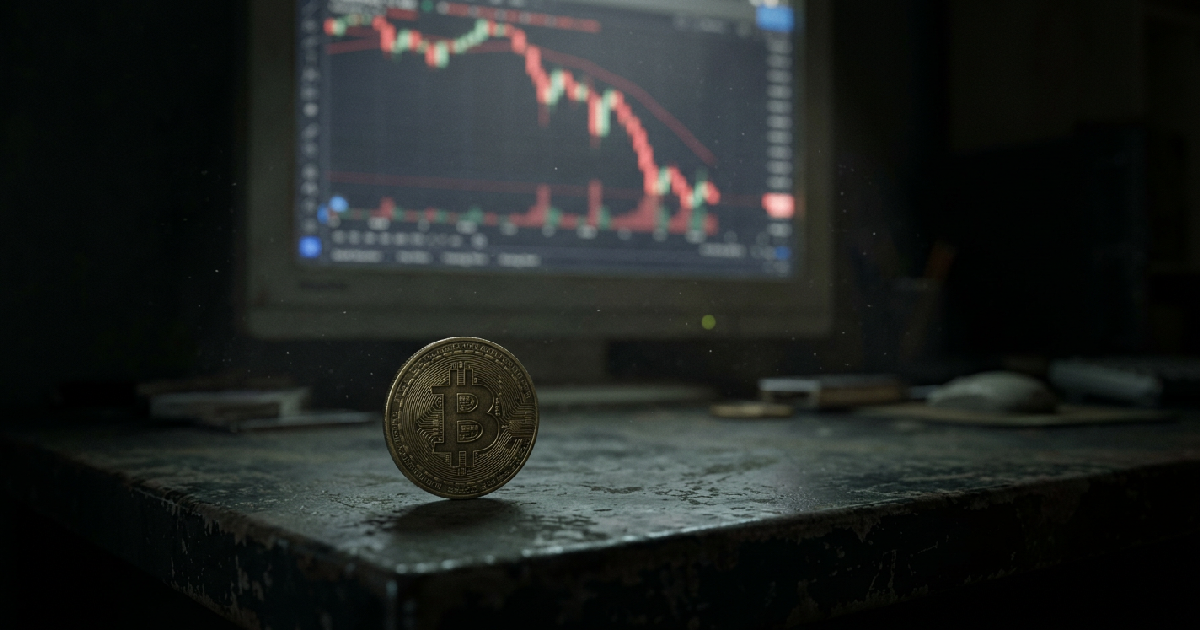

Fear is spreading across the crypto market once again.
The Crypto Fear & Greed Index has fallen into Extreme Fear territory, reflecting one of the most pessimistic moments of the current correction. Under normal circumstances, such a sharp deterioration in sentiment would be expected to trigger another wave of selling and push Bitcoin toward fresh lows.
That has not happened.
Despite the growing anxiety among investors, Bitcoin has managed to hold above recent support levels instead of extending its decline. The divergence may seem subtle, but it raises an important question.
What if investor psychology is changing faster than Bitcoin’s price?
Market sentiment has always played a central role in crypto. But the relationship between fear and price may no longer be as straightforward as it once was.
Why Extreme Fear Doesn’t Always Lead to Lower Prices
Markets are driven as much by expectations as by fundamentals.
When investors become excessively optimistic, prices often move ahead of reality. The opposite also tends to be true. Extreme pessimism frequently appears near periods when selling pressure begins to fade rather than accelerate.
This is not unique to Bitcoin.
Traditional financial markets have repeatedly shown that some of the strongest recoveries begin when investor confidence reaches its lowest point.
The reason is relatively simple.
By the time fear becomes widespread, many of the investors most willing to sell have often already done so. As selling pressure gradually weakens, prices can begin stabilizing even while overall sentiment continues to deteriorate.
That appears to be one of the more interesting dynamics unfolding in today’s crypto market.
Investors are becoming increasingly cautious, yet Bitcoin is no longer reacting to every surge in pessimism with a new collapse.
That does not guarantee a recovery.
It simply suggests that price and psychology may be moving on different timelines.
Has Institutional Capital Changed How Bitcoin Reacts to Fear?
One of the biggest differences between today’s market and previous cycles is who owns Bitcoin.
In earlier years, retail investors dominated market activity. Sharp declines frequently triggered emotional selling, amplifying volatility and accelerating corrections.
The current landscape looks different.
Spot Bitcoin ETFs have introduced long-term institutional capital into the ecosystem. Pension funds, asset managers, corporations, and wealth advisors increasingly hold Bitcoin as part of broader investment strategies rather than short-term speculation.
These investors do not necessarily react to market fear in the same way.
Their decisions are often influenced by portfolio allocation, macroeconomic expectations, and investment mandates rather than social media sentiment or daily price swings.
That shift may be reducing the feedback loop that once connected fear directly to aggressive selling.
Bitcoin remains volatile.
But the composition of its investor base has become more diverse, making market psychology itself more complex.
Extreme Fear may still reflect retail sentiment, while institutional investors quietly maintain—or even increase—their exposure.
Should Investors Watch Sentiment More Closely Than Price?
Price remains the market’s most visible indicator. It captures attention, drives headlines, and shapes daily conversations.
Yet price alone rarely explains what is happening beneath the surface.
Sentiment indicators help reveal how investors are thinking before those beliefs are fully reflected in market movements.
When fear continues rising while prices stabilize, the divergence deserves attention.
It does not predict an immediate rally.
Nor does it guarantee that the correction has ended.
Instead, it offers insight into the balance between emotion and positioning.
Markets often reach turning points when those two forces stop moving together.
That is why experienced investors rarely treat sentiment as a forecasting tool. They use it as context, combining it with liquidity, institutional flows, macroeconomic conditions, and on-chain data to understand the market more completely.
The most important story of this correction may therefore have little to do with Bitcoin’s latest price.
It may be about how investors are responding to it.
For years, fear and selling moved almost in lockstep.
Today, that relationship appears to be evolving.
If Bitcoin continues holding its ground while pessimism deepens, the market may be revealing something far more significant than a short-term price pattern.
It may be showing that crypto investors have learned to fear uncertainty without immediately abandoning the asset itself.
That would not eliminate volatility.
But it could mark another important step in Bitcoin’s transition from a speculative experiment to a more mature financial market.