
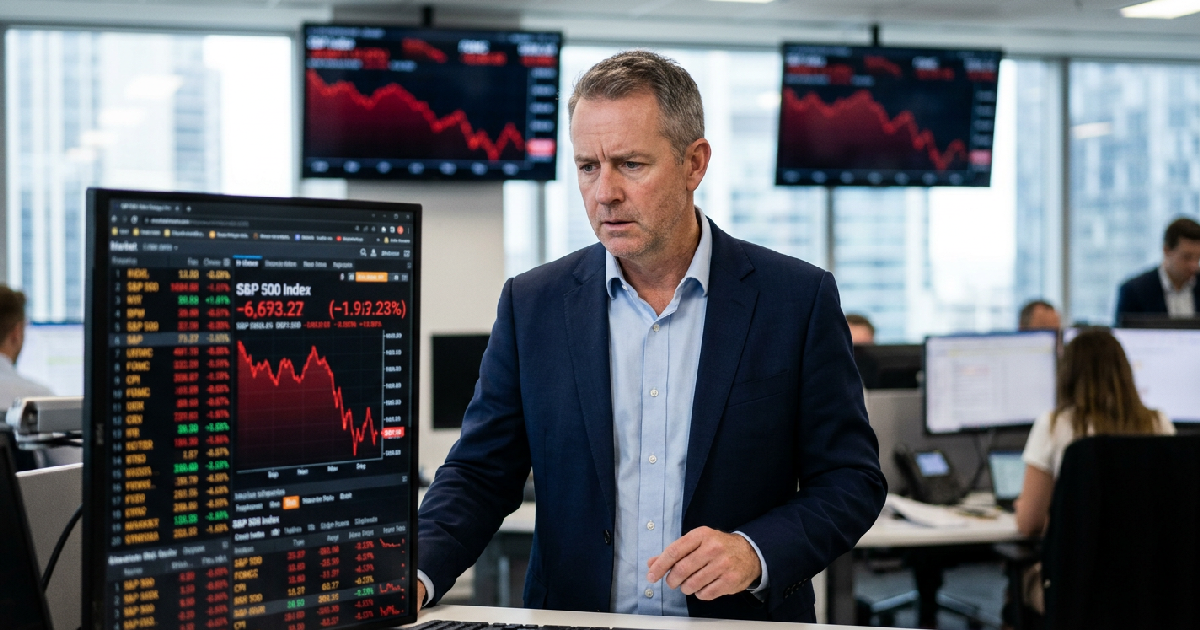

Federal Reserve rate expectations and persistent price hikes triggered a sharp sell-off in risk assets during the early trading session on June 26, 2026. Aaron Hill, the Chief Market Analyst at FP Markets, described the market conditions as a “rough morning for risk” in his latest First Light News column for FXEmpire.
The cautionary tone comes as sticky inflation data forces investors to recalibrate for a higher-for-longer interest rate environment.
Persistent price hikes challenge central bank targets
The current market turbulence follows recent economic reports showing that inflation remains stubbornly above targets set by Federal Reserve Chair Jerome H. Powell. With annual inflation in the United States climbing to 4.2% in May 2026, the central bank’s dual mandate of price stability and maximum employment faces renewed pressure.
This figure marks the third consecutive monthly acceleration in headline inflation, heavily influenced by an energy shock and rising shelter costs.
The latest consumer price data has shifted sentiment as energy costs jumped 23.5% in May 2026. This surge was primarily triggered by a conflict involving Iran, causing gasoline prices to soar 40.5% and fuel oil to increase 58.9%. These spikes are creating a significant drain on consumer purchasing power across the economy.
Furthermore, inflation for shelter and food increased by 3.4% and 3.1% respectively, suggesting price pressures are broadening beyond volatile sectors.
This persistent upward trend makes it difficult for the Federal Open Market Committee (FOMC) to consider lowering interest rates. The annual core inflation rate—which strips out food and energy—also rose to 2.9% in May 2026, its highest level since September 2025. As these macro warning signs emerge, capital has naturally begun to migrate toward safer assets, putting pressure on both equities and digital currencies.
Monetary policy and the Jerome Powell mandate
Federal Reserve Chair Jerome H. Powell is navigating a fragile economic environment as the Fed attempts to bring inflation back to its 2% long-term target. The central bank implements policy through administered rates that influence the federal funds rate, affecting everything from business loans to consumer credit.
Historically, aggressive moves to curb “stagflation” have led to sharp recessions, such as the one seen between 1979 and 1982 when rates reached nearly 20%.
Investor anxiety has increased as the prospect of near-term rate cuts fades. Higher interest rates make borrowing more expensive, compression profit margins and weighing on stock valuations. The S&P 500 Index reached its highest quote on June 1, 2026, at 7,620.90 USD, but sentiment has soured more recently.
In the week prior to June 26, 2026, the index value decreased by -2.21%, contributing to a monthly decline of -1.48%.
Market volatility is also being fueled by a cloudy economic outlook and the high-stakes U.S. presidential contest. The CBOE Volatility Index (VIX) traditionally signals market anxiety, and current futures are pricing in higher volatility through the coming months. This “risk-off” pivot is visible in the crypto sector as well, where Ethereum navigates a technical breakdown alongside institutional outflows and shifting financial conditions.
Analyzing the flight from risk assets
Risk assets, including equities and commodities, are sensitive to shifting Federal Reserve rate expectations because they thrive in low-yield environments. As Treasury yields rise, the appeal of speculative instruments often diminishes. This trend is visible in various sectors where sell-side intensity has grown as investors seek lower-risk havens to protect their portfolios against further downside.
Geopolitical instability in the Middle East continues to pose a threat to global supply chains, keeping energy prices elevated and complicating the Fed’s mission. For investors, the focus remains on the next FOMC meeting to gauge whether the central bank will maintain its hawkish stance.
While the road ahead remains bumpy, the current cycle highlights the Fed’s struggle to balance economic growth with the necessity of price stability.