
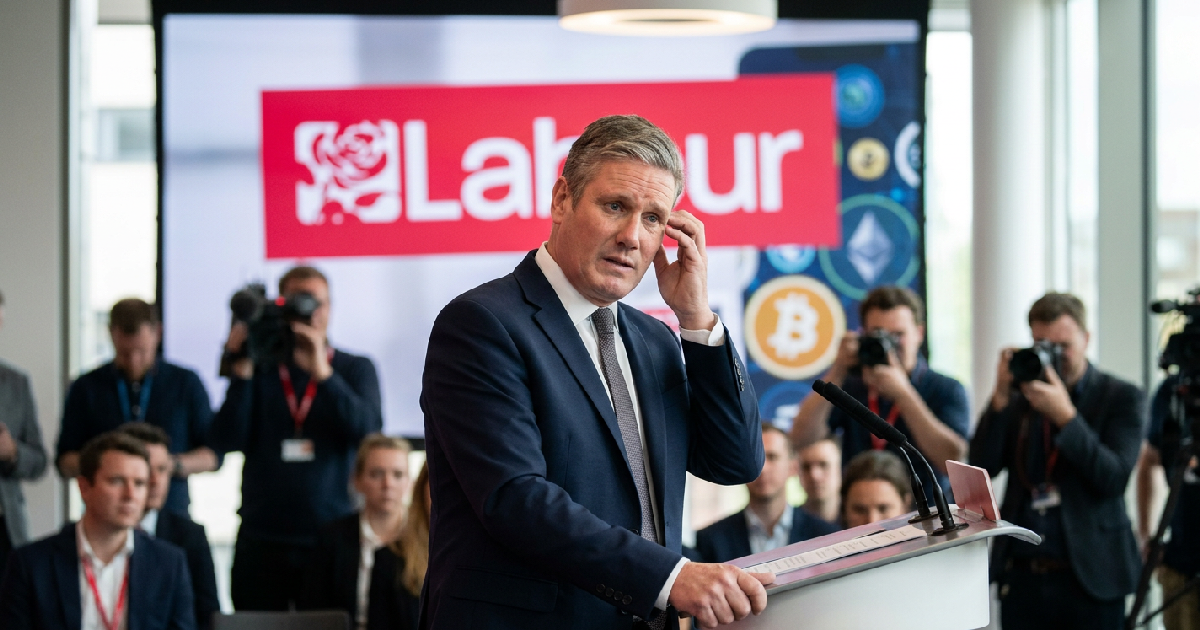

Prime Minister Keir Starmer faces intensified pressure to resign as leader of the Labour Party, with internal reports suggesting a formal announcement regarding his departure could arrive as early as Monday, June 22, 2026.
This potential shift in Downing Street follows a period of sharply declining approval ratings and a significant by-election victory for Andy Burnham, a figure widely regarded as the most crypto-friendly senior politician in the current Labour ranks.
Andy Burnham and the potential for a crypto-friendly Labour policy
The timing of the crisis reflects a broader dissatisfaction with the government’s recent performance on economic and digital policy.
While the Starmer administration has maintained a cautious approach to the digital asset sector, the sudden political momentum behind Mayor Andy Burnham has sparked speculation that a leadership change could pivot the United Kingdom toward a more aggressive pro-blockchain agenda.
This transition happens as Bitcoin exchange supply maintains multi-year lows, suggesting that any regulatory shift in a major financial hub like London would meet a highly reactive global market.
Andy Burnham has increasingly distinguished himself from the central party line by advocating for the integration of emerging technologies into local economies. His recent by-election success is seen by many analysts as a mandate for his vision, which includes more robust support for digital innovation and financial technology.
For the crypto industry, the prospect of a Burnham leadership represents a significant departure from the current “wait and see” regulatory environment fostered under the Starmer premiership.
Industry advocates argue that a leader with a clearer stance on decentralised finance could help the UK regain its footing as a global fintech hub. Many firms have recently expressed frustration with slow licensing processes and a lack of legislative clarity.
Unlike the current leadership, which has often viewed digital assets through the lens of risk management, a new faction within the party seems more focused on the potential for job creation and infrastructure development within the Web3 space.
The shift comes at a delicate time for digital assets in Europe. As crypto liquidations rise alongside treasury yields, the need for stable, predictable regulatory frameworks has become a priority for institutional investors. A Burnham-led government might prioritise the finalisation of these frameworks to attract capital that has recently migrated toward more welcoming jurisdictions in the Middle East and Asia.
Market expectations and the Labour leadership vacuum
The potential exit of Keir Starmer has already begun to stir discussions within the City of London’s financial circles.
Key details
Proponents of digital asset adoption believe that a leadership contest would force candidates to take a more definitive stance on the UK’s “Crypto Hub” ambitions, a goal originally set by previous administrations but largely sidelined under the current government.
The vacancy would allow the party to refresh its image as one that embraces the digital economy rather than merely tolerating it.
However, the transition is not without its hurdles. A leadership battle during a time of economic volatility could lead to further delays in key legislation.
While Andy Burnham’s track record suggests a more open-minded approach to tokenisation and digital identity, he would still need to contend with a Treasury that remains wary of the systemic risks associated with high-volatility assets.
This internal friction is mirrored in the broader market where Ethereum price outlook weakens during periods of regulatory or political uncertainty.
What a change in leadership means for UK regulators
If Keir Starmer does step down on Monday, the Financial Conduct Authority (FCA) and the Bank of England may find themselves receiving new mandates from the Cabinet Office. A more “crypto-friendly” Labour leader would likely push for faster implementation of the Financial Services and Markets Act’s provisions regarding stablecoins and digital securities.
This would be a welcome change for stakeholders who have felt the UK’s progress has stalled compared to the European Union’s MiCA implementation.
The coming weeks will likely determine whether the Labour Party is willing to fully embrace the digital asset sector as a pillar of its economic growth strategy. For now, all eyes remain on the Prime Minister’s expected announcement and the subsequent moves from the Burnham camp.
If the leadership does pivot, the UK could find itself moving from a position of caution to one of active competition in the race to define the future of global finance.