
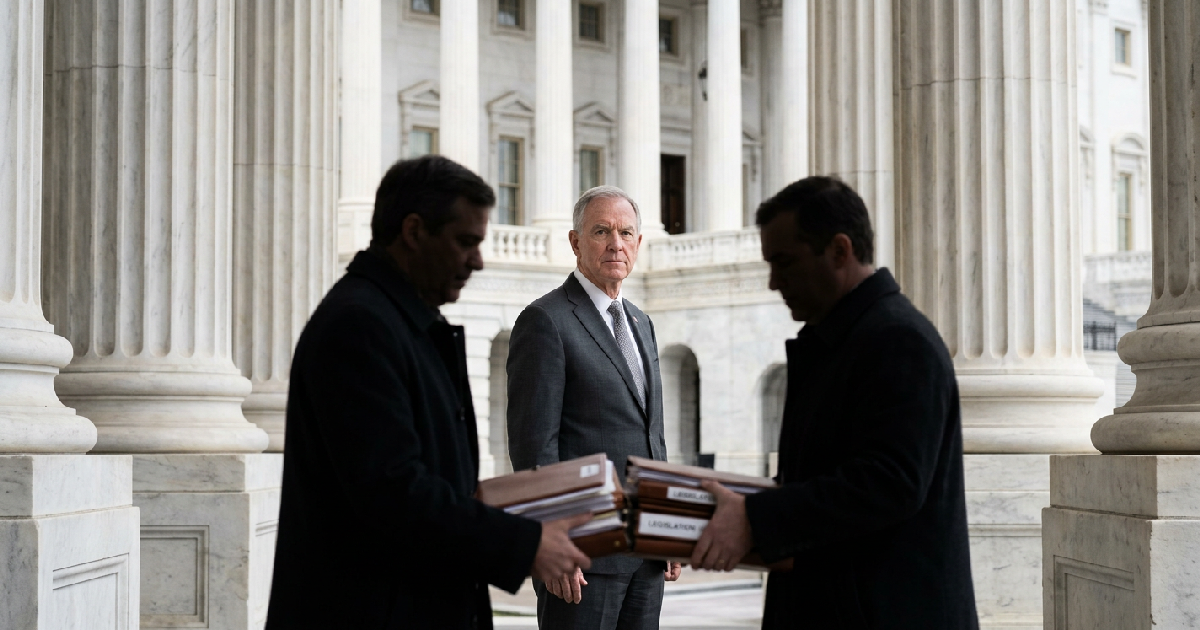

Robert Lawson argues in a Chicago Tribune op-ed that while entrepreneur Elon Musk may be viewed as a trillionaire in terms of influence and wealth trajectory, the “oligarchs of Congress” possess a far more dangerous level of authority.
Lawson contends that the public’s intense fixation on the net worth of private individuals acts as a distraction from the systemic power held by career politicians. These lawmakers, he suggests, exert control over the national economy and regulatory environment in ways that no private citizen, regardless of their bank balance, ever could.
The core of Lawson’s argument rests on the distinction between voluntary market influence and the coercive power of the state. While Elon Musk manages multi-billion dollar enterprises like Tesla and SpaceX, his success depends on consumer choice and market confidence. In contrast, members of the U.S.
The imbalance between market success and legislative control
Congress hold the unique ability to draft legislation that can pick winners and losers across entire industries. This institutional authority allows a relatively small group of elected officials to dictate the flow of trillions in federal funds and established legal mandates.
And though the media often treats high-profile billionaires as the primary architects of societal shifts, Lawson points out that they cannot compel behavior through federal decree. A congressional committee chair, however, can reshape the economic landscape overnight through new tax codes, subsidies, or regulatory hurdles.
This disparity in actual power is often overlooked because of the high visibility of tech moguls. But the reality is that the legislative “oligarchs” maintain a grip on the country’s fiscal levers that remains insulated from the competition faced by private businesses.
The tension between private wealth and public authority has become a focal point of modern political discourse, yet the accountability for each differs wildly. Robert Lawson notes that a business owner’s wealth is inherently precarious; if their company fails, they lose their capital and standing.
Conversely, when a politician’s fiscal policy or regulatory framework fails, the burden usually falls upon the taxpayer. This lack of personal financial risk for policymakers helps solidify a permanent class of powerful figures in Washington D.C.
This dynamic is notably visible in the way the government interacts with emerging financial technologies. As the CLARITY Act advances through Congressional committees, it highlights how lawmakers prioritize maintaining regulatory oversight. By defining the legal boundaries of new assets, Congress ensures its continued relevance even as private innovation outpaces traditional systems.
Lawson suggests that this is not merely a reaction to growth, but a proactive effort by the political class to maintain their superior influence over the private sector.
Fiscal policy as a tool for institutional power
According to Lawson, the “oligarchs” aren’t just the individuals holding office, but the very system that grants them the “power of the purse.” By controlling federal spending and national debt limits, Congress directly impacts the value of the dollar and the broader economy. This influence often trickles down to affect global markets, where com/crypto-market-liquidation-analysis-macro-outlook-2026/”>crypto liquidations rise alongside Treasury yields in response to shifting federal stances. These macro movements can wipe out individual savings, yet the legislative decisions driving them rarely face the same scrutiny as a CEO’s business moves.
And while some investors look toward decentralized finance to bypass traditional oversight, the reach of the state remains formidable. We see this in international contexts where lawmakers push to legalize trade or restrict digital assets based on geopolitical goals. Lawson argues that the power to decide what is legal is the ultimate authority.
No amount of private wealth can match the ability to write laws that govern how that wealth is permitted to exist or be traded.
Public focus on billionaires serves as a smokescreen
The narrative that labels Elon Musk as a threat to democracy often ignores the symbiotic relationship between big government and large corporations. Robert Lawson suggests that the hyper-fixation on Musk’s social media presence or personal habits serves as a convenient shield for the administrative state.
By framing a single private individual as a “boogeyman,” the public may overlook the compounding effects of long-term legislative stagnation and the expansion of bureaucratic power.
Lawson’s commentary serves as a reminder that the authority to govern a nation’s economy is the most potent force in the modern world. Musk’s influence, while vast, is ultimately tied to his ability to provide services that people choose to use. The authority wielded by Congress is not voluntary and does not require market approval.
Lawson concludes that until the public identifies the “oligarchs of Congress” as the primary drivers of the American economic condition, the debate over individual wealth will remain a secondary concern.