

—
The Biden administration is accelerating its efforts to pass a comprehensive cryptocurrency framework, with White House officials and industry leaders warning that legislative windows are closing fast. Patrick Witt, Executive Director of the President’s Council of Advisors for Digital Assets, signaled a sharp increase in urgency on June 7, stating that while disagreement has narrowed through good-faith negotiations, “time is of the essence.” R.
3633), known as the CLARITY Act, which has already cleared major hurdles in the House and Senate committees.
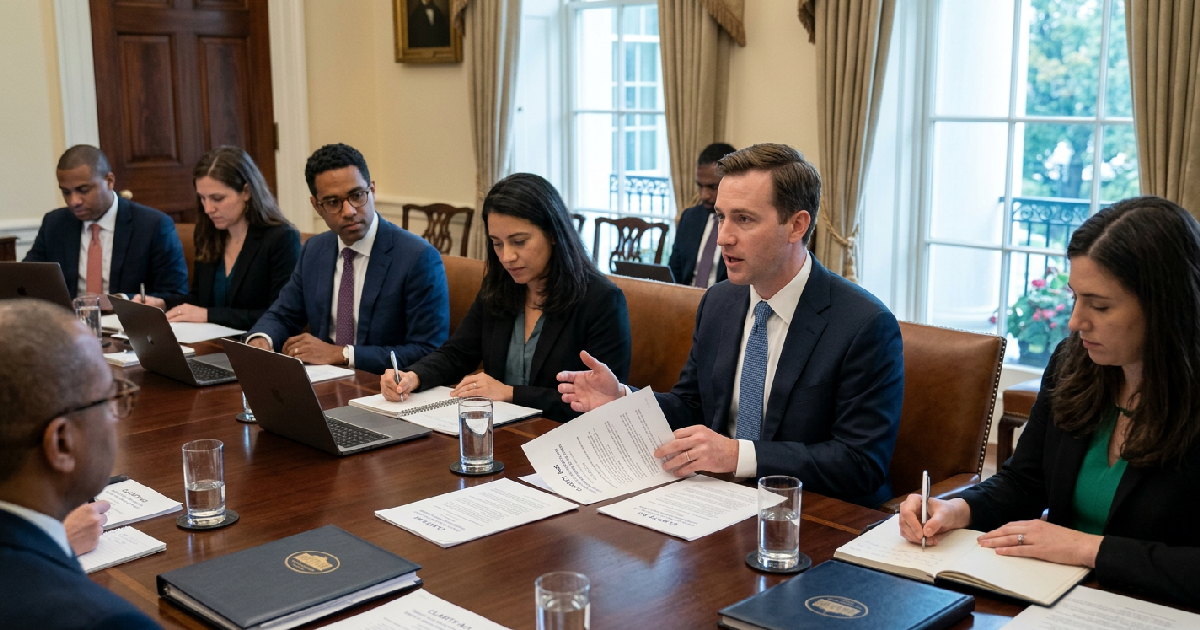
Administration officials are now scheduled to host law enforcement groups at the White House on Wednesday, June 10, 2026. This meeting aims specifically to address concerns regarding certain provisions in the Act that federal investigators fear could create loopholes for financial crime. The White House has endorsed the bill as a “pro-law-enforcement framework,” arguing it is necessary to keep legitimate activity under U.S. oversight rather than losing ground to foreign jurisdictions.
The legislation reflects a shifting market structure as analysts forecast a need for clear federal standards to replace the current patchwork of enforcement actions. Momentum for the bill has been building since the U.S. House of Representatives passed it on July 17, 2025, with a bipartisan vote of 294 to 134. More recently, the Senate Banking Committee approved the measure on May 14, 2026, in a bipartisan 15 to 9 vote.
Resolving jurisdictional friction between the SEC and CFTC
The primary goal of the CLARITY Act is to establish a definitive regulatory boundary between the Securities and Exchange Commission (SEC) and the Commodity Futures Trading Commission (CFTC). Under the proposed law, digital assets that derive value from decentralized blockchain protocols, such as Bitcoin and Ethereum, would be classified as digital commodities under CFTC purview. This move seeks to provide the market with the “bright line” clarity that participants have requested for years.
Conversely, the SEC would maintain oversight of digital assets offered as part of an investment contract, particularly those relying on centralized management. A “mature blockchain test” is included to allow tokens to transition from SEC to CFTC jurisdiction once their underlying networks achieve sufficient decentralization. This structure is intended to prevent the confusion that often arises when market participants monitor geopolitical shifts and regulatory flip-flops.
The Act also introduces specific consumer protections, including what proponents call “Anti-FTX Protection.” This provision requires digital asset exchanges to keep customer funds in separate accounts from their own company physical operations. By mandating fund segregation, the bill aims to ensure that user assets remain protected if a platform fails, while also strengthening disclosure requirements and limiting potential insider abuse.
Addressing law enforcement and developer liability concerns
Tomorrow’s White House meeting focuses on a friction point involving “developer protections” derived from the Blockchain Regulatory Certainty Act (BRCA). Some Democratic lawmakers and law enforcement officials are concerned these clauses might shield bad actors. They argue that certain exemptions for software developers could hinder the ability to trace and seize funds used for money laundering or terrorist financing.
The administration must balance these security fears against immense pressure from the private sector. On June 7, 2026, an open letter signed by more than 200 crypto firms and advocacy groups—including Coinbase, Ripple, and Binance US—was sent to Senate leadership. The group urged leaders to schedule a floor vote before the August 10 recess, warning that further delays could force innovation overseas.
Treasury Secretary Scott Bessent has also joined the call for action, previously urging Congress to move forward this summer. While the administration supports the broad goals of the bill, the upcoming summit with law enforcement is a critical step in refining the legislative language before it hits the Senate floor.
Finalizing the path toward a full Senate floor vote
Senator Cynthia Lummis confirmed on June 8, 2026, that the bill has officially cleared the committee phase and will proceed to full Senate consideration. Lummis described the CLARITY Act as “the most consequential financial legislation of this generation.” Currently, legislative staff are working to merge the Banking Committee version with a companion bill from the Senate Agriculture Committee, the Digital Commodity Intermediaries Act.
The unified bill is expected to face a full Senate vote in June or July. To overcome a potential filibuster, the Act will likely require 60 votes, a threshold that necessitates continued bipartisan support. Proponents are optimistic after Democratic Senators Ruben Gallego and Angela Alsobrooks voted for the bill in the Banking markup.
The ultimate target is to finalize the legislation before the August recess. If the Senate passes the merged text, it may require a reconciliation process with the House before reaching the President’s desk for signature. For many in Washington, the window to pass meaningful digital asset reform before the 2026 election cycle begins in earnest is rapidly closing.