
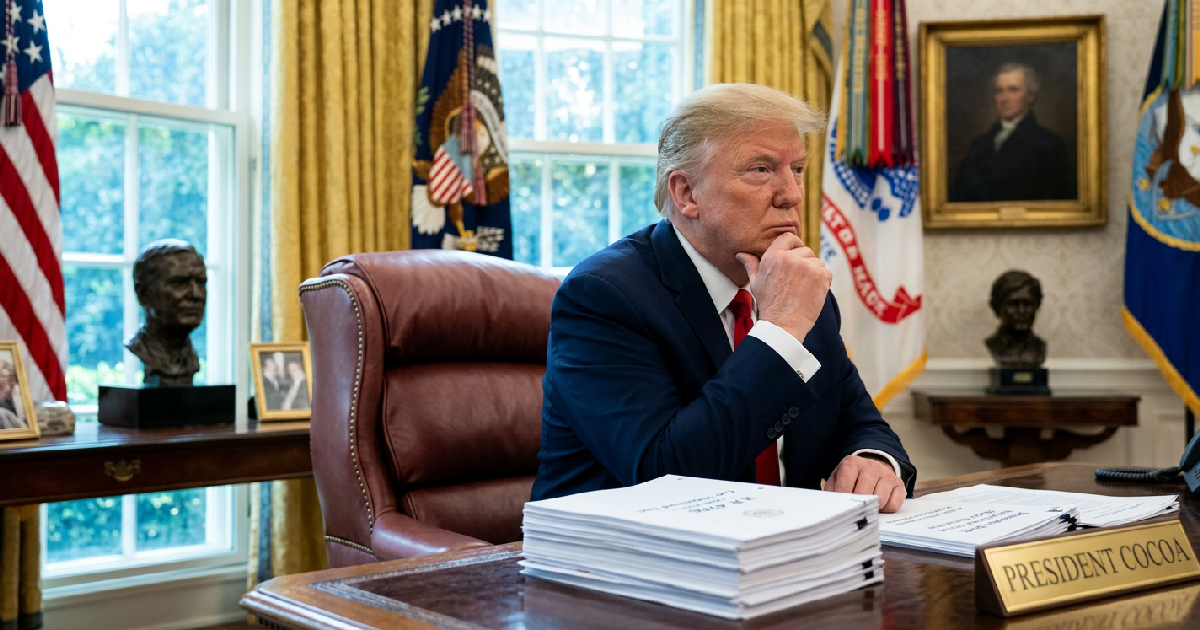

President Donald Trump, despite his public endorsement of the digital asset industry, reportedly faces growing concerns among lawmakers that his political presence is creating a legislative stalemate for key industry bills. Policy experts and congressional observers suggest that the president’s influence may be alienating the moderate support necessary to pass long-awaited regulations for stablecoins and spot market oversight during the current session.
The friction comes at a delicate moment for the sector, which has spent years lobbying for a clear legal framework to move past a period of intense regulatory enforcement. While the administration has championed a “crypto-first” agenda, the reality on Capitol Hill is more complex. Moderate Democrats, whose votes are essential for any bipartisan success, are reportedly hesitant to hand the administration a major legislative victory before the next election cycle.
This dynamic has put the industry in an awkward position. For years, crypto executives argued that a lack of clarity from the Securities and Exchange Commission (SEC) was the primary hurdle to growth. Now, they are discovering that having the most powerful man in Washington as a cheerleader can be a double-edged sword when it comes to the grind of committee markups and floor votes.
Congressional gridlock and the outlook for industry-led legislation
The legislative path for the digital asset industry was expected to become clearer throughout the year. However, the Clarity for Payment Stablecoins Act has reportedly faced hurdles as negotiators struggle to bridge the gap between pro-innovation mandates and consumer protection requirements. Opponents of the current draft argue the bill grants too much leeway to private issuers without sufficient federal oversight from the Treasury.
Republican leaders had hoped to pass a comprehensive stablecoin framework in the coming months. But the association with the president’s brand has turned a technical financial issue into a cultural flashpoint. Some lawmakers who previously expressed openness to the bill are now backing away, fearing that a “yes” vote will be used against them in upcoming primaries as a sign of alignment with the administration’s broader platform.
And while the industry’s lobbying groups remain well-funded and active, they are finding it harder to maintain a non-partisan image. The overt ties between top crypto donors and the executive branch have reinforced the perception that the industry’s legislative wishlist is a partisan project rather than a common-sense update to decades-old financial laws.
Bipartisan support fluctuates as election pressures mount
The disappearance of a middle ground is particularly visible in the House Financial Services Committee. Members have spent months refining language regarding the custody of digital assets, yet the final push for a floor vote has lost its momentum. The risk for the industry is that if these bills fail to pass now, they may be delayed for several more years under a potential change in leadership.
Some analysts point to rising crypto liquidations and macro pressures as a reason for Congress to move faster. They argue that without a legal safety net, American investors will remain exposed to the volatility of offshore platforms. Yet, the political optics of appearing “pro-crypto” under the current administration appear to outweigh the economic arguments for some swing-state representatives.
So, the industry finds itself in a holding pattern. While the executive branch can issue orders and nominate friendly regulators, it cannot unilaterally create the permanent laws that institutional investors crave. The very champion who promised to make the United States the world’s crypto capital might be the one inadvertently keeping that goal out of reach through legislative friction.
Institutional adoption continues despite the legislative slowdown
While Washington remains deadlocked, the private sector is not waiting for a signature on a bill. Large financial institutions are continuing their march into the space, albeit with more caution than they would have with a finalized legal framework. We have seen this trend most clearly in the banking sector, where major players are finding ways to gain exposure through existing product structures.
In Europe, for example, reports suggest that major financial institutions are exploring Bitcoin exposure through regulated exchange-traded funds. This illustrates a growing divide: while the U.S. political machine is bogged down by person-to-person conflicts, the global financial system is moving ahead with its own integration of digital assets. The U.S. risks falling behind if it cannot separate the merits of the technology from the personalities in the White House.
Industry advocates are now pivoting their strategy. Instead of focusing solely on the president’s support, they are trying to re-engage with rank-and-file members of both parties to emphasize the jobs and tax revenue at stake. They hope that by decentralizing the political conversation, they can salvage the core pieces of legislation before the window of opportunity closes entirely.
What a legislative failure means for the digital asset market
If the landmark bills currently before Congress fail to reach the president’s desk, the industry will likely face another year of “regulation by enforcement.” This means the SEC and other agencies will continue to set policy through lawsuits and settlements rather than clear, publicly debated rules. For many startups, this environment is both expensive and unpredictable.
The stakes are high for everyone involved. To summarize the current state of play:
- Stablecoin issuers face a fragmented market without a federal license path.
- Exchanges remain in a legal grey area regarding the definition of digital securities.
- Institutional inflows may slow as compliance departments wait for definitive laws.
- Offshore competition could gain an advantage if U.S. policy remains in flux.
Ultimately, the success of the industry’s legislative agenda depends on whether the product can outshine the politics. President Donald Trump remains a powerful ally for crypto enthusiasts, but his involvement has undeniably raised the political cost of cooperation for his rivals. Whether a compromise can be reached in this environment is the billion-dollar question facing the digital asset world today.