
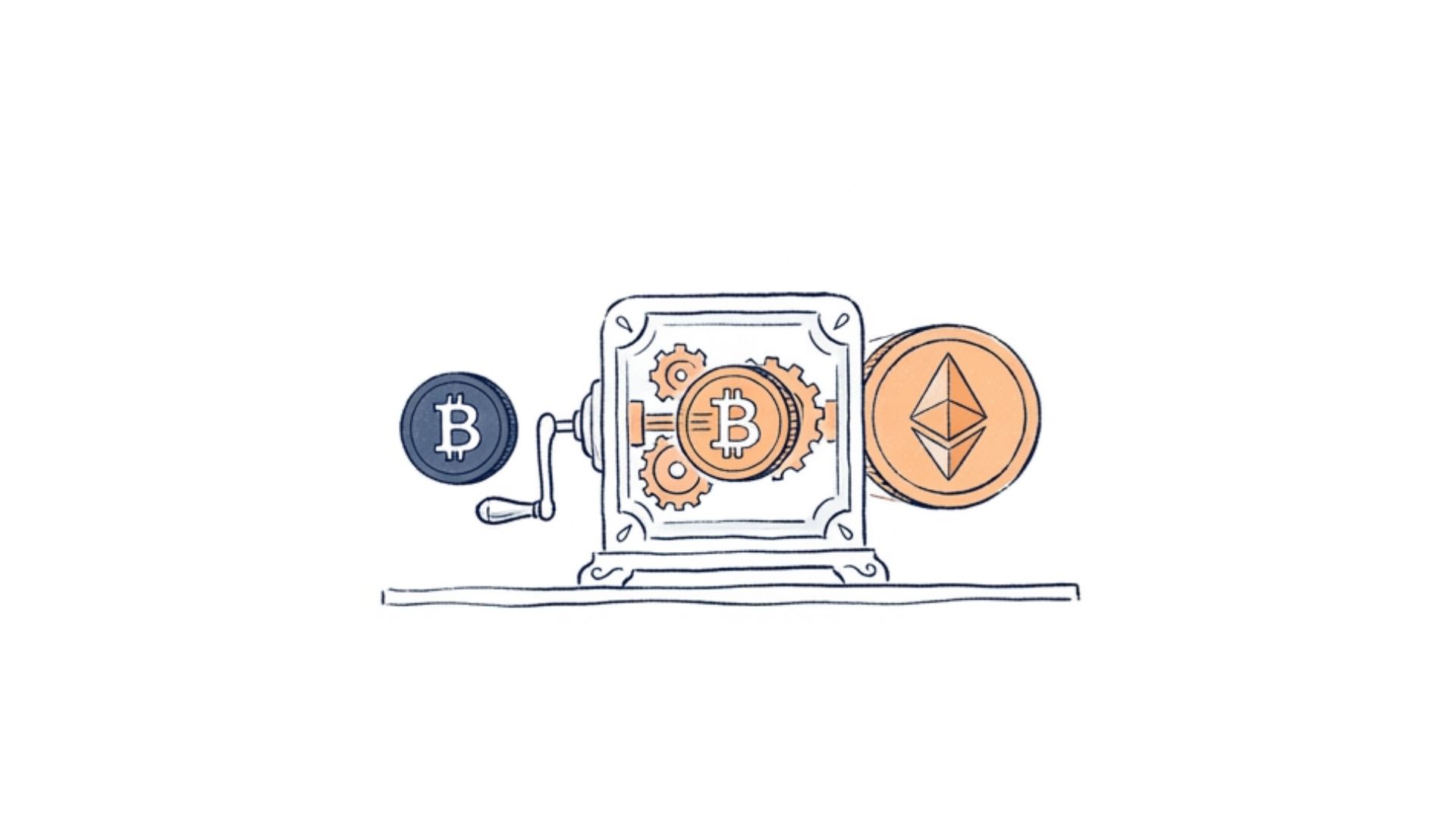

Blockchains suffer from a chronic isolation problem. Think of them as vibrant, wealthy island economies that completely lack ports or bridges connecting them to the outside world.
To solve this isolation and allow capital to flow freely, the market engineered a technological workaround: wrapped tokens. These digital assets act as invisible bridges, funneling billions of dollars across incompatible networks.
Bitcoin, for instance, holds the deepest liquidity in the market. Yet, in its pure form, a Bitcoin cannot natively interact with the bustling decentralized finance (DeFi) economy happening on the Ethereum network. It is locked out of lending protocols, yield farming, and automated trading.
But for this to work, investors must accept a fundamental change to the rules of the game — and quietly surrender a piece of the decentralization they originally signed up for.
Bridging the gap between isolated blockchain economies
Because Bitcoin and Ethereum operate on completely different consensus rules and programming languages, you cannot simply send BTC to an Ethereum wallet. The network wouldn’t know how to read it.
Wrapped tokens aren’t the original cryptocurrency itself. Instead, it is a digital representation — a clone — pegged to the original asset at an exact 1:1 ratio. It exists solely so that capital native to one blockchain can temporarily adopt the technical standard of another.
The most prominent example is Wrapped Bitcoin (wBTC). By wrapping Bitcoin, the asset is converted into an ERC-20 token, Ethereum’s standard format. Suddenly, the rigid, isolated capital of Bitcoin becomes programmable, able to be plugged directly into Ethereum’s complex financial infrastructure.
The mint-and-lock mechanics behind wrapped tokens
This interoperability doesn’t happen by magic. It requires an intermediary and a strict operational mechanism known as “mint-and-lock.”
When an investor wants to move their value across chains, the process follows a specific sequence:
- The Deposit: The user sends their original coin to a custodian. This entity could be a centralized company, a multi-signature wallet, or a smart contract.
- The Vault: The custodian locks the original asset in a digital vault. This native coin cannot be moved or spent on its home network while it remains locked.
- The Mint: Over on the destination network, a new, equivalent token is minted (created).
The value of this cloned token remains identical to the original asset because of a simple guarantee: at any given moment, the holder can reverse the process.
They can burn (destroy) the wrapped token on the destination network to unlock and redeem the authentic coin from the vault.
The hidden vulnerability of crypto bridges
Here lies the blind spot for many intermediate investors: when you hold a wrapped token, you are no longer just exposed to the risks of the blockchain itself. You have inherited custody and smart contract risks.
If you hold Bitcoin in a self-custodial hardware wallet, your primary concern is safeguarding your private keys. But if you hold wBTC or any other wrapped asset, your money’s value is entirely dependent on two external variables: the solvency of the entity guarding the original reserves, and the security of the technological bridge facilitating the transfer.
Market history proves this vulnerability is far from theoretical. Catastrophic security breaches on infrastructures like the Wormhole and Ronin bridges have shown that flaws in smart contract code can vaporize hundreds of millions of dollars in minutes.
When the vault is hacked and the original assets are stolen, the wrapped tokens left circulating on the destination network instantly become worthless ghosts with no real backing.
This fragility also manifests as a “de-peg.” In moments of extreme market panic or rumors of a custodian’s insolvency, investors rush to exit. The wrapped tokens end up trading at a severe discount compared to the original asset, heavily penalizing those caught holding the bag.
Wrapped tokens are the backbone that allows DeFi to operate at its current massive scale. Without them, crypto would remain a fragmented landscape of disconnected silos.
However, this convenience introduces the ultimate paradox: to achieve seamless, automated finance, the crypto market had to reintroduce the very counterparty risk it was originally designed to destroy.