

Until recently, tokenized deposits were largely viewed as experimental initiatives. Most projects took the form of pilot programs, limited trials and proof-of-concept exercises that demonstrated the technology’s potential but still felt far removed from everyday banking.
Traditional financial institutions proved that the technology worked, but almost always in controlled environments with no immediate expectation of reaching customers.
That dynamic is beginning to change.
When a bank the size of Wells Fargo decides to launch tokenized deposits for corporate clients, the discussion is no longer about whether the technology is viable. It becomes about when it will become a standard banking service.
Pilot Projects Are Giving Way to Commercial Products
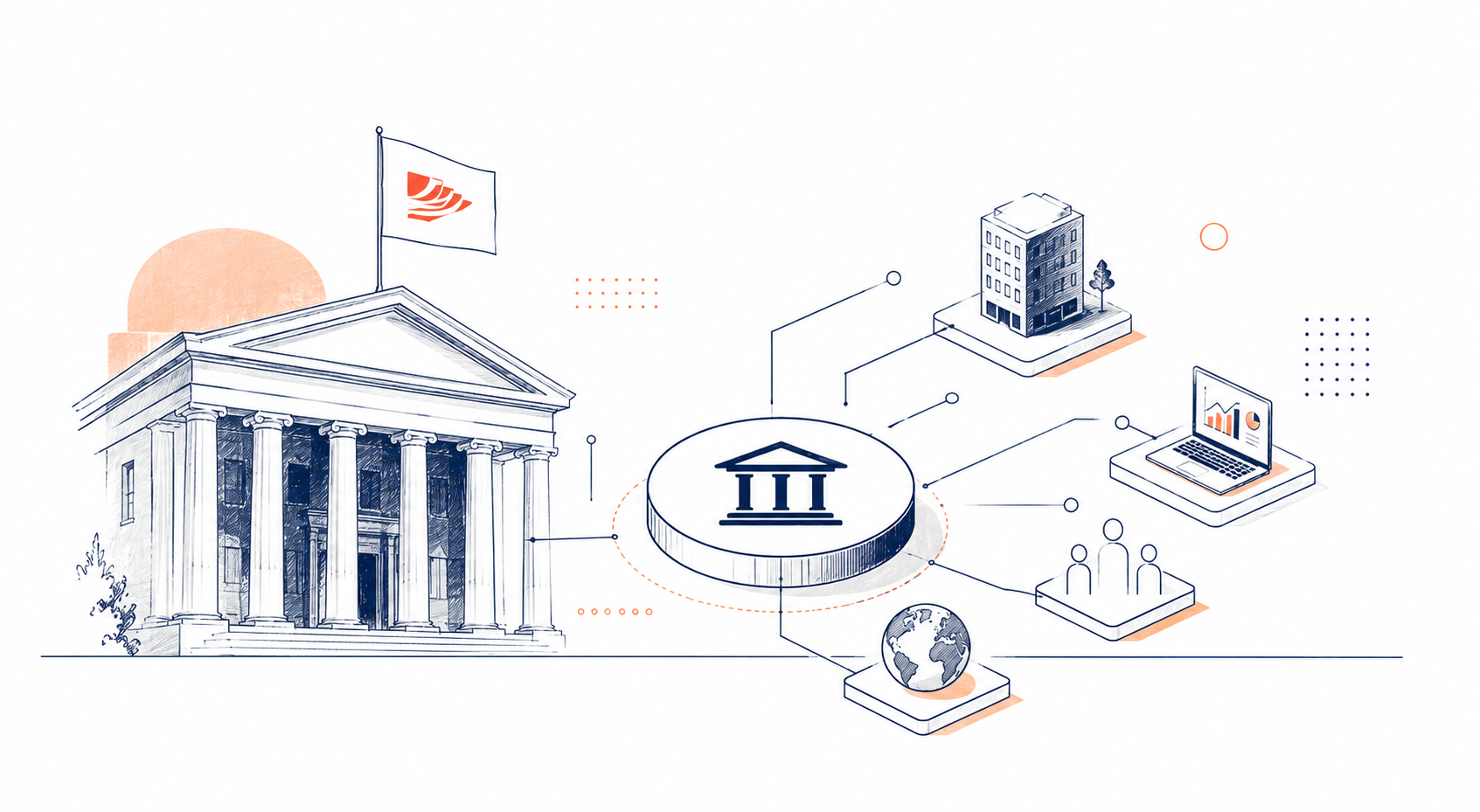
Wells Fargo’s new initiative will initially offer tokenized deposits in U.S. dollars and British pounds for corporate customers. Built on the bank’s own permissioned blockchain, the platform is designed to support cross-border payments, continuous settlement and programmable money, bringing capabilities traditionally associated with digital assets into conventional banking infrastructure.
Viewed in isolation, the announcement may look like another blockchain initiative.
Viewed alongside recent moves by JPMorgan, Citi, Project Agorá and other global financial institutions, however, it points to a broader pattern. Large banks are no longer simply demonstrating that tokenized deposits work. They are beginning to define how those deposits will be used in everyday financial operations.
Competition Is Entering a New Phase
The first stage of tokenization was about proving that bank deposits could move across blockchain infrastructure without losing their legal or regulatory characteristics.
Much of the industry’s attention focused on technology, interoperability and security.
That phase now appears to be giving way to something different.
As more banks introduce commercial services, competitive advantage is becoming less about the ability to tokenize deposits and more about settlement speed, integration with corporate treasury systems, round-the-clock availability and the new financial services that can be built on top of that infrastructure.
The technology is no longer the differentiator.
It is becoming the starting point.
Tokenized Deposits Are Beginning to Compete With Traditional Banking Services
That may be the most important shift of all.
Tokenized deposits were once presented as an innovation running alongside the existing banking system. They are now beginning to emerge as the next evolution of traditional banking products themselves.
For companies moving money across borders, the underlying technology is rarely the deciding factor. What matters is settling transactions faster, operating beyond conventional banking hours, automating payments and reducing operational costs.
If tokenized deposits can consistently deliver those advantages, they stop being innovation projects.
They become products that compete directly within banks’ own portfolios of financial services.
The Next Phase May No Longer Be About Tokenization
None of this suggests every bank will adopt the same model or that the transition will happen overnight.
Traditional and tokenized financial infrastructure are likely to coexist for years.
What is changing is the nature of the conversation.
The industry used to ask whether tokenized deposits could move beyond innovation labs.
That question is gradually becoming less relevant.
Wells Fargo’s announcement suggests the next competitive battle will not be between banks that embrace tokenization and those that reject it.
It will be between banks that can successfully turn the technology into services businesses actually want to use.