
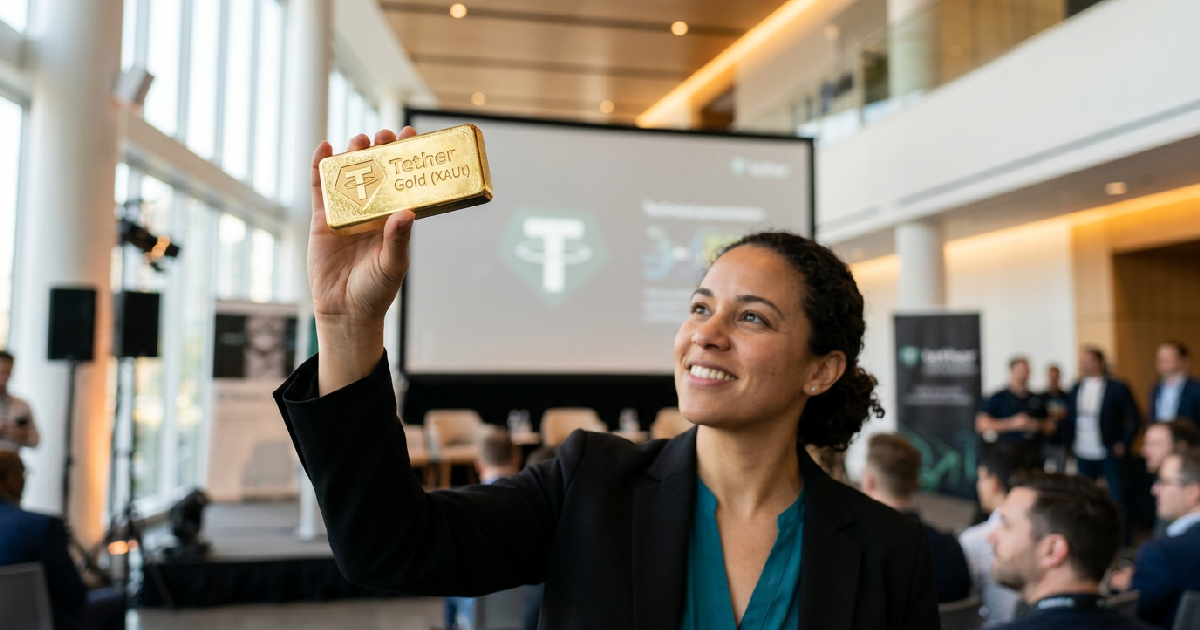

Tether operations has launched Alloy, a new synthetic dollar product backed by Tether Gold (XAUt), marking a departure from traditional fiat-backed stablecoin models. The company, which already maintains the dominant global stablecoin USDT, announced on July 6, 2026, that the new asset, designated as aUSDT, will be over-collateralized by liquid gold exposure rather than the usual mix of cash and Treasury bills.
This strategic pivot suggests that the world’s largest stablecoin issuer is looking to diversify its collateral base and provide users with a different risk profile. While USDT remains the primary liquidity engine for the crypto economy, Tether is now positioning itself as a provider of more complex, programmable financial instruments.
The mechanics of Alloy and the aUSDT synthetic dollar
The launch of Alloy allows holders of XAUt to mint aUSDT, effectively keeping their gold exposure while gaining a digital asset that moves in line with the U.S. dollar.
The design of Alloy relies on over-collateralization, a method common in decentralized finance (DeFi) but less frequent in centralized stablecoin issuance. Users interact with the platform by depositing Tether Gold as collateral. The system then issues aUSDT, a synthetic token designed to maintain the value of one dollar.
Because gold is a volatile commodity compared to the dollar, the system requires more gold value in reserve than the dollar value of tokens issued.
Key details
This structure creates a unique value proposition for long-term gold investors. It allows them to maintain their “long” position on the precious metal while generating a liquid dollar-denominated asset for trading or payments. It essentially turns a commodity into a functional currency without requiring the owner to sell the underlying asset.
However, this complexity brings it closer to the infrastructure of a bank or a derivatives desk than a simple currency peg.
The transition toward these types of assets comes as investors are increasingly looking for safety and transparency in digital markets. As market sentiment shifts amid changing macroeconomic signals, the ability to anchor digital value to physical commodities like gold becomes more attractive to institutional players who are weary of pure fiat exposure.
Shifting stablecoin design beyond traditional dollar reserves
For years, the stablecoin industry has been a race to prove the quality of cash reserves. Most major tokens are audited for their holdings in U.S. Treasury bills, bank deposits, and reverse repurchase agreements. Tether’s move into synthetic dollars represents a sophisticated evolution of this model.
It acknowledges that the future of digital finance might not just be about replicating the dollar, but about creating better versions of it backed by diverse assets.
By using tokenized gold as the foundation, Alloy addresses some of the systemic risks associated with the traditional banking system. While USDT is still subject to the health of the banks where its cash is held, Alloy relies on the price and physical existence of gold.
This “gold-backed dollar” concept is a digital callback to the historic gold standard, though it operates with the speed and programmability of the Ethereum network and other blockchains.
This launch is part of a broader trend where stablecoin issuers are becoming full-stack financial infrastructure companies. We are seeing a move away from the “one-size-fits-all” approach to digital dollars. Just as financial giants update filings to reflect shifting investor demands, Tether is expanding its palette to include commodity-linked tools that appeal to a more technically savvy user base.
Key details
Despite the technological appeal, Alloy introduces risks that are absent in traditional stablecoins. The primary concern is the collateral-price dynamic. If the price of gold were to crash suddenly, the value of the collateral backing aUSDT would drop. To prevent the system from becoming under-collateralized, Tether must employ liquidation mechanics.
If a user’s gold value falls below a certain threshold, their position may be automatically sold to protect the peg.
Investors must also account for the smart contract risk inherent in synthetic platforms. Unlike a bank deposit, which is legally defined, a synthetic dollar is only as good as the code that manages the collateral. Tether has emphasized that Alloy is designed for users who understand these interactions.
Market stress will be the true test for aUSDT; its performance during a period of extreme gold volatility will determine if it can stand alongside USDT as a reliable tool.
Comparing XAUt and aUSDT volatility profiles
It is important to distinguish between Tether Gold (XAUt) and the new aUSDT. XAUt is a direct representation of gold ownership; its price fluctuates exactly like the gold market. In contrast, aUSDT is a dollar peg. The innovation is the link between them. A user holds the gold, but spends the dollar.
This creates a psychological and financial safety net for those who believe in the long-term value of gold but need the short-term stability of the U.S. currency.
Broadening the scope of the Tether ecosystem
Tether has long been criticized for its lack of transparency regarding its USDT reserves, yet it remains the most liquid asset in the crypto space. The launch of Alloy seems to be an attempt to use that brand power to capture the growing “Real World Asset” (RWA) market.
By tokenizing gold and then using it as a base for a dollar product, they are creating a layered financial product that was previously only accessible to sophisticated hedge funds.
The company is effectively testing the elastic limits of its brand. If Alloy succeeds, it could pave the way for other synthetic products. One can imagine future “Alloys” backed by tokenized silver, oil, or even baskets of high-yield bonds.
This would transform Tether from a simple currency issuer into a decentralized central bank capable of minting various types of stable assets based on whatever collateral the market deems valuable.
As the regulatory landscape for digital assets becomes clearer, these sophisticated products will likely face increased scrutiny. Regulators in the U.S. and Europe have focused heavily on fiat-backed tokens, but synthetic dollars backed by commodities fall into a more ambiguous category. Whether they are treated as currencies, commodities, or derivatives remains a critical question for the industry’s legal experts in the coming months.
Future outlook for synthetic dollar instruments
The success of aUSDT will depend heavily on its adoption by decentralized exchanges and lending protocols. For a synthetic dollar to be useful, it must have deep liquidity. Tether plans to integrate Alloy into various DeFi ecosystems, encouraging traders to use aUSDT for margin trading and as a store of value within liquidity pools.
The programmability of the asset is its greatest strength, allowing for automated strategies that were not possible with traditional physical gold.
We are entering an era where the definition of a “stablecoin” is expanding. It is no longer just a digital dollar; it is a programmable claim on value.
If Tether can demonstrate that gold is a viable and stable foundation for a synthetic currency, we may see a significant shift in how crypto reserves are structured across the board. The era of plain dollars is far from over, but the era of the diversified digital reserve has certainly begun.