
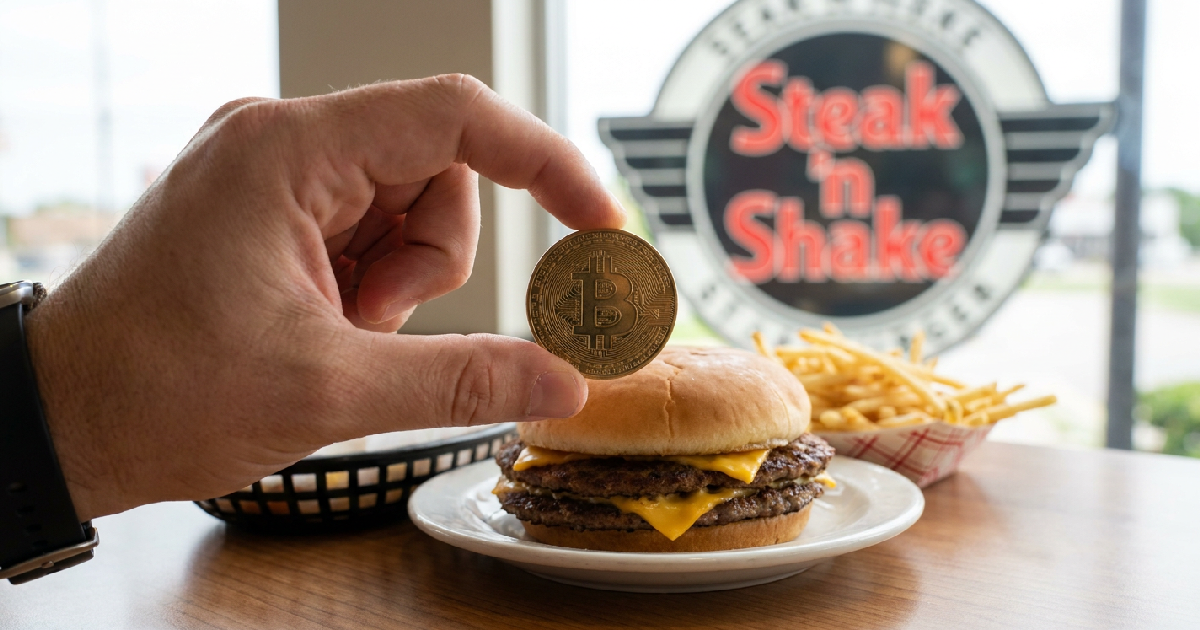

Steak ‘n Shake, the American fast-food chain, recently claimed a 16% jump in July same-store sales, partially attributing this significant growth to its adoption of Bitcoin payments. Yet, the company hasn’t released key data on how many customers actually paid with the cryptocurrency, leaving analysts to question the true impact of digital assets versus the publicity they generate.
This announcement from Steak ‘n Shake, a subsidiary of Biglari Holdings Inc., on July 10, 2026, thanked both loyal patrons and Bitcoin users for the strong performance. However, without transparent metrics, it’s difficult to separate Bitcoin’s direct financial contribution from its potential marketing allure.
Analyzing Steak n Shake’s July sales surge and Bitcoin
The burger chain’s report of 16% same-store sales growth in July builds on a comparable 16% increase from the prior year. Steak ‘n Shake has been vocal about its belief that Bitcoin payments offer substantial cost advantages over traditional credit card transactions.
Michael Boes, a Steak ‘n Shake executive, stated at the Bitcoin 2026 conference that Bitcoin transactions cost the company approximately 50% less to process. He projected annual savings of around $6 million if all credit card customers were to switch to Bitcoin.
Boes also noted that Steak ‘n Shake’s total customer count grew by roughly 2 million year-over-year following the Bitcoin rollout in May 2025. This customer increase, however, doesn’t directly indicate how many of these new patrons actually used Bitcoin for their purchases.
The company maintains that any savings from reduced transaction fees are being reinvested into healthier ingredients, a move that could appeal to a broader customer base. But crucial figures like Bitcoin order share, total spend, and verifiable aggregate fee savings remain undisclosed by the company.
Bitcoin’s impact amid broader company reforms
Steak ‘n Shake’s financial resurgence wasn’t solely tied to its foray into cryptocurrency. The company, under Sardar Biglari’s leadership, was already showing signs of recovery and strategic changes well before accepting Bitcoin.
Biglari Holdings reported a 10% domestic same-store sales growth and a 13% increase at franchise-partner restaurants for the first quarter ending March 31, 2026. These figures predate the July sales claim and suggest a broader turnaround strategy was already in motion.
Other operational shifts have also played a role in the company’s improved performance. Marketing expenses increased sharply, rising to $5.427 million in Q1 2026 from $3.232 million a year earlier, a nearly 68% jump. The company also shifted to 100% beef tallow, which saw food costs rise to 31.4% of net sales from 30.0%.
The physical footprint of Steak ‘n Shake also changed, with company-operated units decreasing from 146 to 128, while franchise-partner units increased. Interestingly, Biglari’s 2025 shareholder letter credited product quality, a point-of-sale overhaul, productivity, and the owner-operator model for 10.2% annual same-store sales growth, without any mention of Bitcoin.
The elusive metrics of true Bitcoin adoption
The core challenge in assessing Steak ‘n Shake’s claim lies in the absence of specific data points that would quantify Bitcoin’s direct payment impact. The chain has yet to disclose the number of Bitcoin orders, the total sales volume processed via BTC, or the actual aggregate fee savings realized.
Without these figures, it’s difficult for external observers to distinguish between customer interest driven by the novelty of paying with crypto and sustained, payment-driven adoption. The company’s own Bitcoin payment terms indicate that while Steak ‘n Shake adds no payment fee, customers might still incur wallet, network, conversion, or exchange-rate costs.
Social media discussions offer anecdotal evidence that Bitcoin acceptance can draw new customers. Some users on platforms like Reddit have noted that Bitcoin acceptance prompted their first visit to a Steak ‘n Shake. But these anecdotes don’t clarify whether those customers actually completed their purchases using Bitcoin or simply visited out of curiosity.
Promotional activities during July, such as