

Every blockchain project eventually collides with an uncompromising reality known as the scalability trilemma. When developers build a network, they are forced to balance three competing elements: decentralisation, security, and speed.
Altering the foundational code of a multi-billion-dollar network to make it faster is rarely the best solution. Complex upgrades take years of consensus-building and risk introducing vulnerabilities to protocols that secure enormous amounts of wealth.
Applications and developers relying on the network’s stability cannot afford the risk of a botched fundamental upgrade.
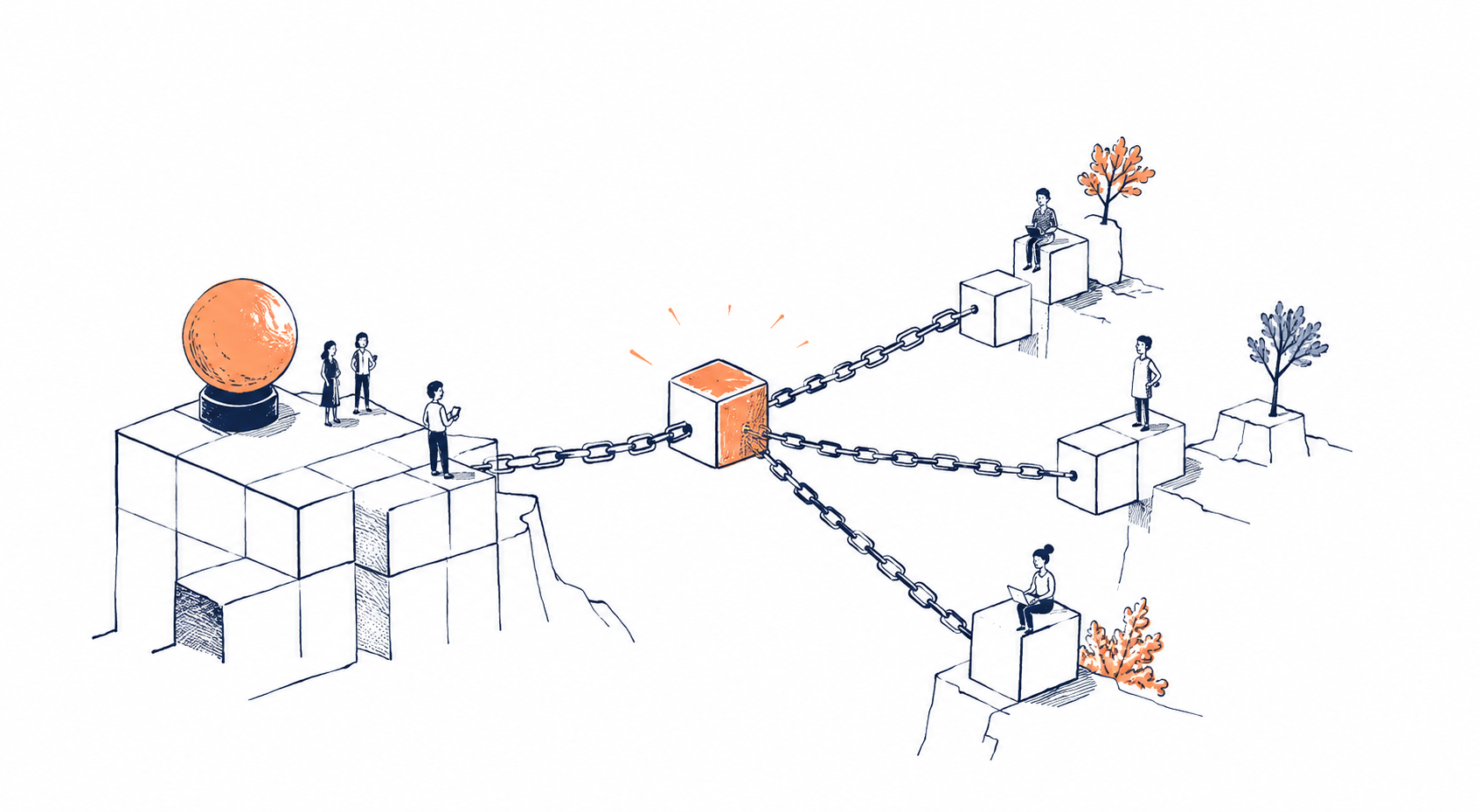
This architectural bottleneck gave rise to a pragmatic, structural workaround: blockchain sidechains. Rather than attempting to force a highly secure protocol to do everything at once, developers created entirely separate, parallel environments.
These parallel networks are designed to expand a blockchain’s utility, allowing specific applications to flourish without altering the delicate balance of the original protocol.
The deliberate choice to build parallel lanes rather than widen the motorway
To understand the strategic value of crypto sidechains, it is helpful to view the main blockchain as a heavily fortified, highly congested primary motorway. It is incredibly safe, meticulously monitored, and trusted by everyone, but moving a large volume of goods during rush hour is painfully slow and disproportionately expensive.
Instead of undertaking the monumental and disruptive task of tearing up the existing motorway to add more lanes, sidechains act as privately managed toll roads built running parallel to it.
These parallel lanes are designed with different priorities. They might have fewer security checks to allow for high-speed travel, or they might be tailor-made for specific types of cargo, like micro-payments for gaming or rapid trading for decentralised finance (DeFi).
The critical distinction is that the main motorway remains untouched. It continues to focus on absolute security and decentralisation, while the sidechain takes on the burden of speed, lower costs, or experimental features.
This separation of responsibilities allows developers to build and test functionalities that would be impossible or too costly to run on the mainnet. It essentially creates a sandbox environment that still maintains a tangible economic link to the original blockchain.
Locking, wrapping, and the mechanics of crossing the digital border
While a sidechain operates independently, its value is derived from its ability to interact with the main blockchain. Moving assets between these two distinct networks requires a highly specific, trust-based mechanism, as cryptocurrencies cannot simply be emailed or copied from one ledger to another.
This transition is managed through a process commonly referred to as a two-way peg, operated via digital checkpoints known as cross-chain bridges.
When a user wants to move their Bitcoin or Ethereum to a sidechain to take advantage of faster speeds or specific applications, the process generally follows a strict sequence:
- The Lock: The user sends their original assets to a specific smart contract address on the main blockchain. These assets are securely locked and temporarily taken out of circulation on the mainnet;
- The Mint: The bridge detects this locked deposit and communicates with the sidechain, instructing it to mint (create) an exactly equivalent amount of tokens on the parallel network;
- The Wrap: These newly minted tokens are often referred to as ‘wrapped tokens’ (such as Wrapped Bitcoin or wBTC). They are not the original asset, but rather a digital receipt that perfectly mirrors the value of the locked original.
The user can then deploy these wrapped tokens freely within the sidechain’s ecosystem — trading, gaming, or lending at a fraction of the cost. When they are ready to return to the mainnet, the process simply reverses.
The wrapped tokens on the sidechain are permanently destroyed (burned), which signals the smart contract on the main network to unlock and release the original assets back to the user’s primary wallet.
The original asset never actually ‘leaves’ the main blockchain; it simply sits in a digital vault while its proxy goes to work in the parallel universe.
Where absolute sovereignty makes sense: The Liquid and Ronin experiments
The true utility of blockchain sidechains becomes apparent when we look at how different ecosystems deploy them to solve highly specific, niche problems. Sidechains are rarely built to be general-purpose networks; their strength lies in their specialisation.
Within the Bitcoin ecosystem, the Liquid Network serves as a prime example of targeted utility. Bitcoin’s base layer is secure but intentionally slow, processing a new block roughly every ten minutes.
For everyday users, this is an acceptable wait, but for institutional traders or cryptocurrency exchanges moving large volumes of capital to capitalise on fleeting arbitrage opportunities, ten minutes is an eternity.
Liquid was constructed as a sidechain specifically for these institutional players. By moving Bitcoin onto the Liquid Network (creating L-BTC), users can execute near-instant, confidential transactions. It was not built to replace the Bitcoin network, but to provide a high-speed settlement layer for a specific demographic whose needs the mainnet could not accommodate.
In stark contrast, the Ethereum ecosystem saw the rise of the Ronin sidechain, famously built to support the blockchain game Axie Infinity.
During the game’s peak, millions of users were executing complex in-game transactions — breeding digital pets, buying items, and transferring micro-rewards. Pushing this sheer volume of tiny transactions through the Ethereum mainnet would have resulted in crippling congestion and ruinous network fees.
The developers built Ronin specifically to handle gaming micro-transactions. By creating their own sidechain, they dictated the rules, drastically reduced the costs, and provided a seamless experience for gamers, all while maintaining a bridge back to the liquidity of the Ethereum mainnet.
The vulnerability hidden in independence
At a glance, a reader might assume that sidechains and the rapidly growing sector of Layer 2 solutions (like Optimistic or ZK rollups) are essentially the same thing. Both aim to solve Web3 scalability and lower transaction costs. However, they possess a fundamental architectural difference that dictates their risk profile.
A Layer 2 network operates on top of the main blockchain. It processes transactions off-chain but regularly bundles the data and submits it back to the mainnet for final verification. Crucially, a Layer 2 network inherits the formidable security of the underlying blockchain.
Crypto sidechains do not inherit this security. They are entirely independent sovereign networks.
Because a sidechain sets its own rules to achieve higher speeds, it must supply its own security infrastructure. This often means relying on a smaller, more centralised group of validators to verify transactions.
This independence creates a unique paradox: to expand the utility of highly secure networks like Bitcoin or Ethereum, users must temporarily entrust their assets to a network with a vastly different, and often lower, security threshold.
This sovereignty makes sidechains incredibly flexible, but it also concentrates risk, particularly at the point of connection. Crypto bridges — the mechanisms that hold the massive vaults of locked mainnet assets — have historically been the prime targets for sophisticated cyber attacks.
If the smart contract governing the bridge contains a vulnerability, or if the sidechain’s smaller validator group is compromised, the original assets locked on the mainnet can be drained. If the vault is emptied, the wrapped tokens circulating on the sidechain instantly become worthless.
The distinction is critical for users and investors: choosing to use a sidechain means deliberately stepping outside the protective walls of the main network and accepting the security standards of the parallel road.
In the evolving architecture of the digital economy, the pursuit of scalability is no longer about finding a single technology to solve every problem. The future of Web3 infrastructure points clearly toward coexistence. While Layer 2 rollups will likely handle the bulk of general scaling needs by anchoring securely to mainnets, sidechains are not becoming obsolete.
They remain the undisputed engine for highly specialised, sovereign projects that require absolute control over their own rules, proving that sometimes, the best way to move forward is to build your own road.