
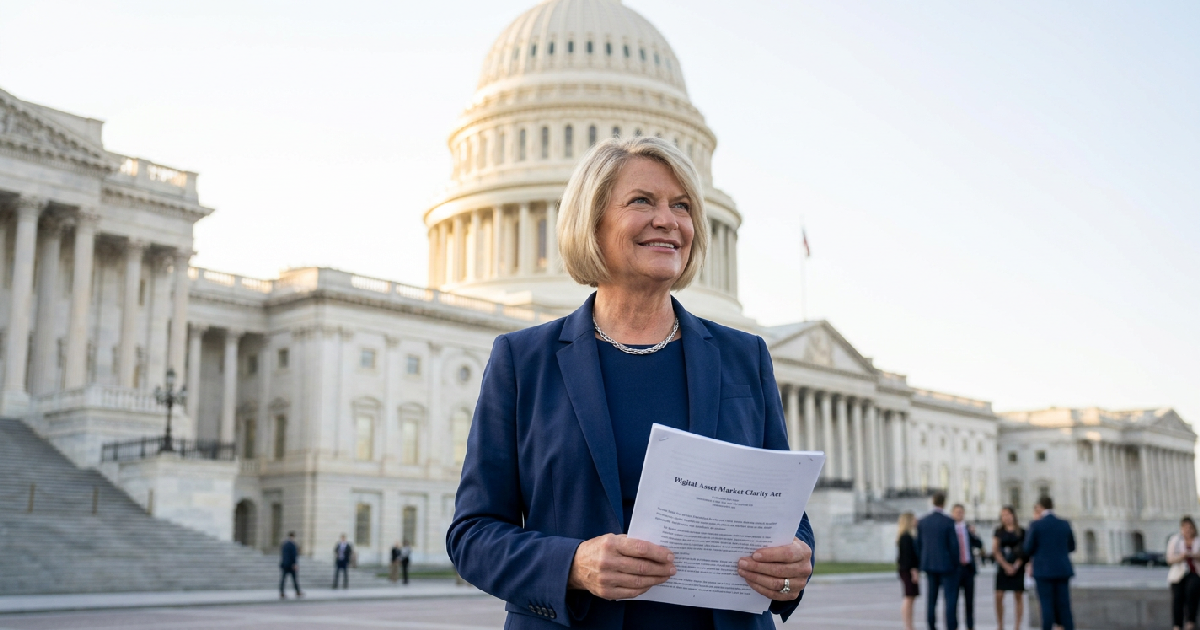

Senator Cynthia Lummis is seeking a United States Senate floor vote on the Digital Asset Market Clarity Act, known as the CLARITY Act, by July 2026.
Speaking on Fox Business’s “Mornings with Maria” on June 24, Senator Lummis confirmed that a final version of the legislative text is expected to be released for public review around the July 4th holiday period.
Senator Lummis targets July for legislative breakthrough
The lawmaker warned that a failure to secure a vote before the 2026 August recess could delay meaningful regulatory progress until at least 2030.
The push for a vote comes as Senate Majority Leader John Thune secured unanimous consent to adjourn the Senate for 19 days, with lawmakers scheduled to return on July 13. Representative Anna Paulina Luna confirmed the adjournment timeline on X, noting that no senators objected to the move before the holiday.
The schedule leaves supporters with approximately four weeks of active floor time to pass the bill before the traditional August break begin around August 8.
The CLARITY Act intends to provide a formal framework for digital asset innovation in the U.S. by defining jurisdictional boundaries between agencies. Senator Lummis has characterized the negotiation process as “arduous,” noting that lawmakers have dedicated “thousands of hours” to resolving complex cross-curriculum issues since last Labor Day.
Key details
The bill previously advanced through the Senate Banking Committee in May 2026 with a 15-9 vote, following a successful 294-134 bipartisan passage in the House in July 2025.
Securing a win in the Senate requires 60 votes to clear cloture, meaning Republican leadership must find at least seven Democratic crossovers to join the roughly 53 GOP members. While names like Senator Ruben Gallego and Senator Angela Alsobrooks are part of the broader discussion surrounding the bill, the path to a majority remains challenging.
Currently, market sentiment shifts as the CLARITY Act advances, though Polymarket traders have lowered the odds of passage to 48%, down from a 74% peak in May.
For many developers, the bill represents an end to what Senator Lummis calls “absurdity,” arguing that software creators should not need “an army of lawyers” to know if their code is legal. The Senator maintains that without this clarity, innovation will continue to move to offshore jurisdictions.
This concern echoes broader market anxieties, as crypto liquidations rise alongside macro economic shifts, highlighting the volatility that often accompanies regulatory ambiguity.
Addressing banking sector concerns and Jamie Dimon
A significant portion of the recent negotiations involved addressing technical criticisms from the traditional banking sector. Senator Lummis specifically noted that JPMorgan CEO Jamie Dimon is “mistaken” about the current bill and urged him to read the final text upon its July release.
She highlighted that the Act contains over 1,600 references to existing Anti-Money Laundering (AML) and Bank Secrecy Act requirements to ensure digital assets do not bypass national security safeguards.
Key revisions were reportedly made to Section 301 of the Act to address specific concerns raised by financial institutions. According to Senator Lummis, banks were worried that certain payments might resemble interest on a balance. The legislation was subsequently adjusted to allow for rewards that are not attached to a specific balance.
This granular focus on regulatory clarity and wallet adoption trends suggests that lawmakers are attempting to integrate digital assets into “normal financial rails.”
Key dates in the July legislative window
- July 4th Period: Expected release of the final CLARITY Act legislative text for public review.
- July 13, 2026: The United States Senate returns from its 19-day adjournment.
- July 17, 2026: House Financial Services Committee holds a field hearing in New York City titled “Building the Future of Finance: How the CLARITY Act Unlocks Innovation.”
- July 2026: Current target window for a Senate floor vote.
- August 8-10, 2026: Approximate start of the August congressional recess.
The stakes of a missed 2026 window
The urgency of the July push is largely driven by the upcoming election cycle and the limited days remaining on the legislative calendar. Galaxy Research currently puts the odds of the bill passing at 50-50, a decrease from early projections of 60-75%.
If the Senate does not act in July, the momentum generated by the House and the Senate Banking Committee could stall indefinitely. Senator Lummis has remained firm, stating that digital asset innovation “just moves somewhere else” when faced with delays.
Supporters are now looking toward the mid-month return as the final opportunity for the 2026 session. Chairman French Hill of the House Financial Services Committee is expected to maintain pressure through the New York field hearing, focusing on how the bill unlocks domestic investment.
For now, the crypto industry is watching the July 4th text release as a critical indicator of whether the CLARITY Act can successfully manage the divide between innovation and strict financial oversight.