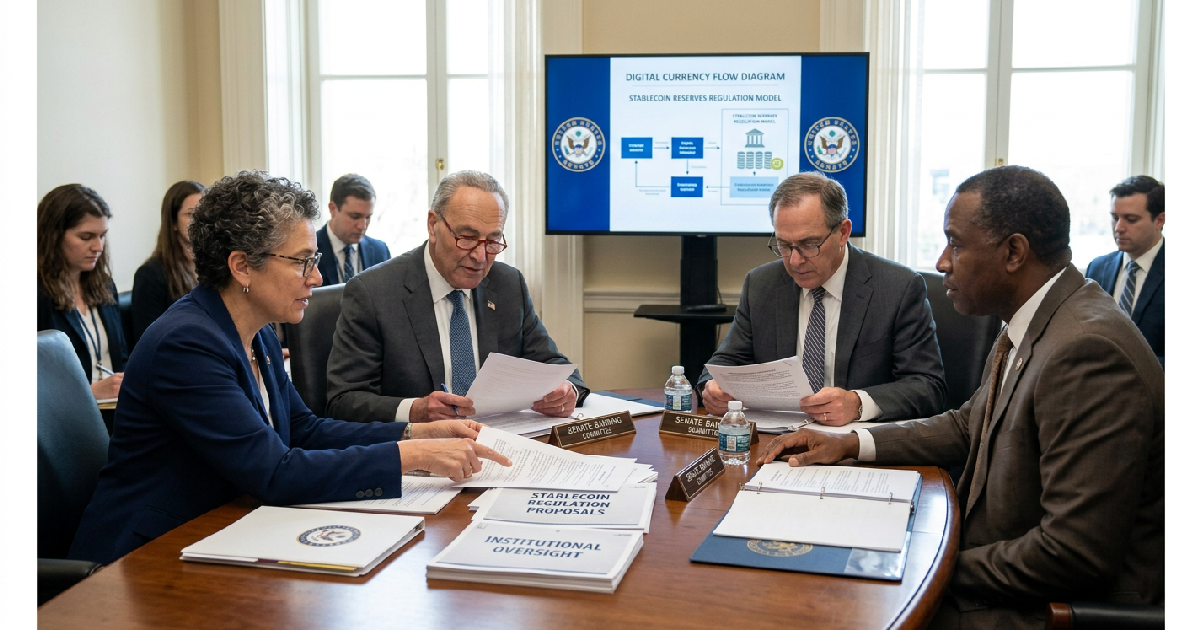
United States Senate lawmakers are reportedly making progress on a federal framework for digital assets as discussions surrounding stablecoin legislation gain traction on Capitol Hill. According to market analysts monitoring the legislative climate, proposed guidelines aim to provide the legal clarity necessary for large-scale banks and payment processors to integrate these tokens into their daily operations.
This shift toward what some call an “institutional phase” follows years of regulatory uncertainty that kept many traditional financial firms on the sidelines. As members of the Senate move toward a possible consensus on oversight, the conversation around digital dollars is moving away from speculative retail trading and toward a role as a permanent fixture in global payment infrastructure.
Seeking Universal Standards for Digital Currency Issuers
Recent legislative proposals reportedly focus on establishing strict reserve requirements to protect consumers and ensure market stability. Analysts suggest that any future federal rules likely would require issuers to back their tokens with high-quality liquid assets, which could include cash or government-backed securities. This approach would mirror the transparency required of traditional money-market funds and aims to prevent the types of liquidity crises seen in previous years.
By establishing these rules, lawmakers are signaling that regulated digital assets could serve as a reliable medium for instant settlement. And as
global liquidity surge expectations continue to influence how institutions allocate capital, a clear federal framework could establish stablecoins as a primary vehicle for moving value across the digital economy.
Building the Infrastructure for Regulated Payments
While the legislative process continues, several major financial entities are already testing blockchain-based settlements. These firms seek to bypass the delays and high costs inherent in legacy banking systems. Clearer federal rules are widely expected to give these organizations the confidence to move beyond small-scale pilots into broader commercial applications.
In fact, some businesses are already positioning themselves for a more structured regulatory environment. For instance,
Corpay and other global partners recently integrated stablecoin settlement solutions to offer their clients 24/7 liquidity. These initiatives suggest that market participants are building the necessary infrastructure even as the final details of federal oversight are being debated.
Navigating the Legislative Path Forward
The drive to regulate stablecoins frequently faces hurdles involving the balance of power between state and federal authorities. Disagreements over which agencies should hold primary enforcement power remain a point of contention among lawmakers. However, even with these debates, reports concerning the
Senate Banking Committee’s progress toward a vote indicate a higher level of legislative momentum than in previous sessions.
The long-term outlook for the sector involves the potential for these assets to function as a private-sector alternative to central bank digital currencies. If new regulations reach the president’s desk, the industry could see a wave of consolidation. Smaller startups might find it difficult to meet rigorous compliance and reserve reporting standards, potentially leaving the market to well-capitalized fintech companies and traditional banking institutions.
For now, the financial sector remains in a state of watchful optimism. The transition from a loosely regulated landscape to a structured, institutional environment appears to be accelerating. While the specific language of any final law remains subject to change, the trend toward federal oversight is effectively reshaping the American financial system.

 By Michael Fawn