
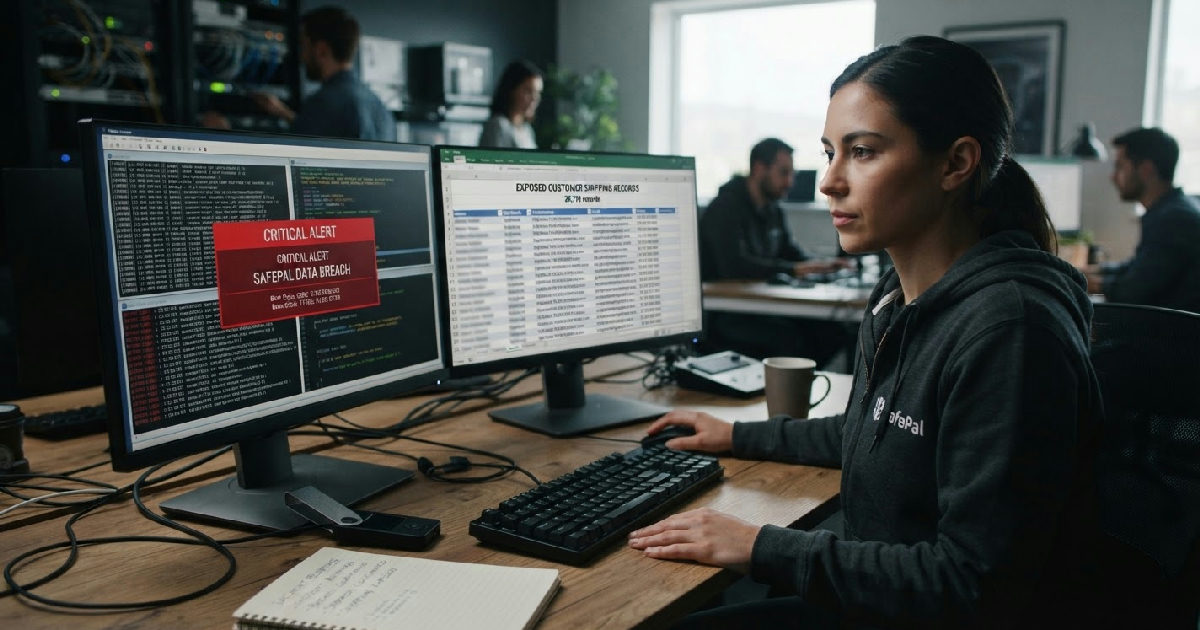

Cryptocurrency wallet provider SafePal confirmed on August 16, 2026, that a data breach exposed the personal order information of approximately 39,798 customers. An authorization flaw in an order-tracking plugin allowed unauthorized actors to access names, shipping addresses, and purchase details for orders placed between March 2, 2025, and April 11, 2026.
The incident did not compromise private keys, seed phrases, or wallet credentials, ensuring user funds remain cryptographically secure. The breach highlights a severe operational vulnerability in the hardware wallet sector, where secure physical devices rely on conventional commerce infrastructure that repeatedly fails to protect buyer identities.
Understanding the SafePal data breach order vulnerability
Attackers exploited the flaw by manipulating order numbers within the tracking system to view records belonging to other buyers. SafePal patched the vulnerability, removed dozens of associated phishing websites, and implemented strict data retention limits for future orders.
The breach originated from a specific authorization flaw within a plugin used for tracking customer shipments. Malicious actors systematically exposed the details of other buyers, scraping extensive personal information without needing administrative credentials.
Exposed data includes customer names, email addresses, phone numbers, shipping addresses, and detailed SafePal purchase records. Payment card numbers, bank account information, and government identification numbers were not stored in the compromised database.
A configuration error severely exacerbated the exposure. SafePal previously utilized an automated mechanism to delete hardware wallet order information every six months. A system failure prevented this cleanup process from executing between September 2025 and April 2026.
Because the automated deletion failed, records that should have been purged remained accessible in the active database. This retention failure directly extended the timeline of exposed orders, capturing customer data dating back to early 2025 instead of just recent buyers.
Evaluating the response timeline and escalation
SafePal faced immediate industry scrutiny over the gap between the first signs of unauthorized access and the official disclosure. The company received an initial phishing report consistent with the breach in May. Security teams treated the incident as an isolated case at the time.
Public complaints began surfacing weeks before SafePal formally acknowledged the vulnerability. On July 3, a Reddit user reported receiving a scam call from someone referencing their exact name, address, and past order details. The caller directed the victim to a fraudulent support website.
Another customer posted a Trustpilot review on July 4 detailing a similar impersonation attempt. Scammers claiming to be SafePal representatives contacted the buyer with their full account information. They attempted to convince the victim to request a replacement hardware wallet through a malicious domain.
SafePal finally escalated the issue in July, initiating a full review of its order-processing pipeline. Investigators confirmed the root authorization flaw during this audit. The company then individually emailed affected customers regarding the exposure on Sunday, August 16.
Assessing immediate threats to hardware wallet holders
While the cryptographic security of SafePal devices remains intact, the exposure of physical shipping addresses creates severe secondary risks. Attackers possess enough verified information to execute highly targeted impersonation campaigns. Buyers now face the persistent threat of sophisticated social engineering attacks.
Threat actors use stolen purchase histories to pose as official support staff offering firmware updates, refunds, or replacement hardware. These fraudulent communications direct victims to malicious websites designed to extract seed phrases. Hardware wallets cannot protect funds if a user willingly types their recovery phrase into a compromised interface.
SafePal reported that threat actors have already launched targeted campaigns using the stolen data. The company has identified and removed more than 30 fraudulent websites and phishing links directly tied to the stolen customer records. A threat actor is reportedly attempting to sell the complete dataset online.
To mitigate further damage, SafePal established a dedicated support channel and released a verification tool. Customers can enter their order number and shipping country to determine if their personal details were included in the compromised database.
Remediation steps and infrastructure overhaul
Following the discovery, SafePal implemented immediate access controls to secure the vulnerable plugin. The company engaged an independent third-party security firm to validate the patch and conduct a comprehensive audit of the entire order-processing environment.
Investigators also contacted external logistics and fulfillment partners to check for lateral movement. Security teams found no evidence that the unauthorized access extended beyond SafePal’s internal tracking system into third-party vendor networks.
The company radically altered its data retention policies to prevent future mass exposures. SafePal reduced the personal data storage window in its order-processing environment to a maximum of 90 days, subject only to overriding legal requirements.
SafePal is currently connecting customers who reported financial losses with on-chain asset-tracing specialists. The company explicitly stated this assistance does not represent an admission of liability or a formal commitment to financial compensation for stolen funds.
Analyzing systemic risks in Web3 commerce layers
The SafePal data breach exposes a structural weakness in the cryptocurrency security model. Users purchase military-grade cryptographic hardware to protect their assets, but the logistics of acquiring those devices require trusting conventional e-commerce platforms with sensitive physical coordinates.
This incident closely mirrors a recent exposure at Trezor, another major hardware wallet manufacturer. Just days before SafePal’s disclosure, Trezor confirmed that a breach at its shipping partner, ShipMonk, exposed names, phone numbers, and full shipping addresses for nearly 14,000 customers.
Ledger faced a similar crisis earlier when its third-party payment processor, Global-e, exposed customer names and contact information. These repeated failures demonstrate that the physical supply chain remains the most vulnerable attack vector for hardware wallet users.
Hardware providers are consistently failing to isolate product distribution from data accumulation. Until companies utilize encrypted drop-shipping, zero-knowledge order processing, or instant data destruction, buyers must treat their physical shipping addresses as a potential point of compromise.
Evaluating best practices for affected users
Hardware wallet buyers evaluating their security posture must adopt a zero-trust approach to unsolicited communications. SafePal reiterated that its representatives will never ask customers to provide seed phrases, private keys, or wallet passwords under any circumstances.
Security experts recommend routing future hardware wallet purchases through post office boxes, package lockers, or commercial addresses rather than residential locations. This isolates a buyer’s physical home from the transaction data, neutralizing the risk of physical extortion if a vendor database is breached.
Users should also utilize disposable email addresses and burner phone numbers during the checkout process. Minimizing the data footprint provided to cryptocurrency commerce platforms remains the most effective defense against inevitable supply chain leaks.
Affected individuals must remain vigilant for physical mail directing them to download mandatory firmware updates. The sheer volume of exposed data guarantees that targeted, multi-channel phishing attempts will continue for months after the initial vulnerability is closed.