
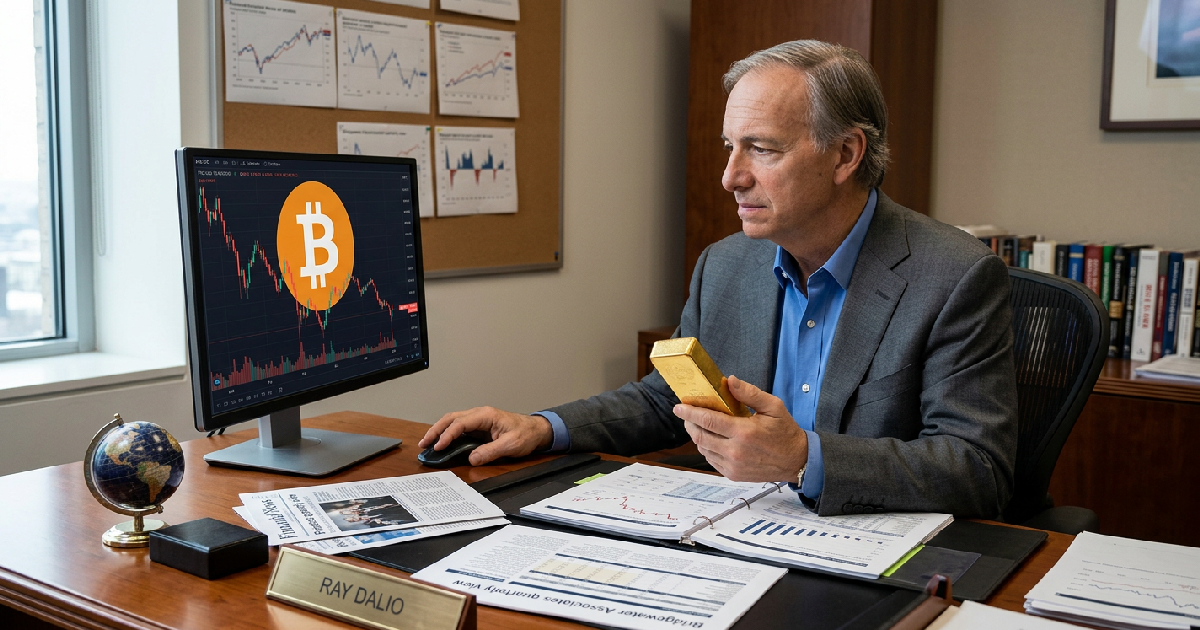

Ray Dalio, the billionaire founder of Bridgewater Associates, recently expressed continued skepticism regarding Bitcoin’s status as a reliable store of value, arguing the digital asset still fails to meet the criteria for a legitimate safe-haven investment. Speaking on the current state of global markets, Ray Dalio emphasized that while the cryptocurrency has gained traction among institutional investors, its price fluctuations and lack of a long-term historical track record during systemic crises prevent it from rivaling traditional assets like gold or sovereign bonds.
The veteran investor’s comments come as the digital asset market continues to mature following the approval of spot exchange-traded funds (ETFs). Despite a growing chorus of advocates on Wall Street, Ray Dalio maintains that the asset’s movements are often too extreme for most wealth preservation strategies. He noted that for an asset to truly serve as a “safe haven,” it must provide stability when other markets are in turmoil—a characteristic he believes Bitcoin has yet to demonstrate consistently over a full economic cycle.
For many market participants, the debate over Bitcoin’s utility is centered on its correlation with equity markets. When major indexes experience sharp declines, Bitcoin has frequently followed suit rather than acting as a clear hedge. This trend reinforces the view held by Ray Dalio that the asset often behaves more like a high-risk technology stock than “digital gold.” This serves as a reminder of the hurdles facing the sector, especially as Bitcoin faces technical resistance during periods of shifting market momentum.
Establishing the Case Against Digital Gold Status
Ray Dalio has long been a proponent of a diversified portfolio which typically includes commodities and inflation-linked bonds. His critique hinges on the idea that Bitcoin lacks the intrinsic utility and the millennia-old history associated with precious metals. While he has previously admitted to owning a small amount of the cryptocurrency as a speculative diversifier, he stopped short of endorsing it as a core pillar of a defensive investment strategy.
The founder of Bridgewater Associates also pointed toward the regulatory environment as a persistent headwind for the asset’s growth. Governments, he argues, have a vested interest in maintaining control over the monetary system. If Bitcoin were to become highly successful as a global currency or reserve asset, the likelihood of aggressive government intervention would reportedly increase, thereby undermining its perceived safety. This perspective aligns with broader concerns that global liquidity surges may boost scarce assets, yet the regulatory response to such growth remains a major unknown for large-scale capital allocators.
Volatility remains a barrier for institutional adoption
One of the primary metrics Ray Dalio uses to dismiss the safe-haven narrative is the asset’s frequent and unpredictable price swings. Traditional safe havens are sought for their ability to preserve purchasing power with a lower risk of sudden, deep drawdowns. Bitcoin, by contrast, is known for rapid shifts in valuation that can occur within very short timeframes. For pension funds and sovereign wealth funds, this level of unpredictability is often a deterrent for allocations meant to provide a floor during market crashes.
Furthermore, the physical and digital infrastructure surrounding the space remains under scrutiny. While security has improved, the risk of technical failures or custody breaches continues to weigh on the minds of conservative investors. These concerns are partly why security firms launch quantum-proof wallets as they attempt to stay ahead of future technological threats that could compromise the integrity of the network.
Comparison with traditional inflation hedges
In his analysis, Ray Dalio often compares the digital asset’s performance to gold during inflationary periods. While proponents argue that Bitcoin’s fixed supply makes it a strong inflation hedge, Ray Dalio suggests that the market’s psychological reaction to inflation often favors tangible assets over digital ones. In times of extreme geopolitical tension, he believes many investors will still gravitate toward assets they can physically hold or that have clear legal protections in established jurisdictions.
He also highlighted the evolution of the financial system, noting that central banks appear unlikely to hold Bitcoin as a major reserve asset in the immediate future. Unlike gold, which is a staple of central bank reserves globally, Bitcoin remains largely a private-sector phenomenon. Without the widespread backing of major state actors, Ray Dalio argues it cannot yet claim the same level of institutional permanence as the traditional assets he favors.
The future role of digital assets in the financial ecosystem
Despite his criticisms, Ray Dalio does not dismiss the technology behind Bitcoin entirely. He acknowledges that the world is moving toward a more digitized financial landscape, though he distinguishes between the potential of blockchain technology and the specific viability of Bitcoin as a monetary standard. He suggests that future stablecoins or central bank digital currencies (CBDCs) might eventually fill the role that enthusiasts currently claim for the cryptocurrency.
For now, the investment community remains divided. While some follow the lead of aggressive proponents who see every price dip as a buying opportunity, others follow the cautious path laid out by veteran investors. The stance takes a long-term view, reminding the market that the transition from a speculative asset to a global safe haven is a process that may take a considerable amount of time to prove its reliability.