
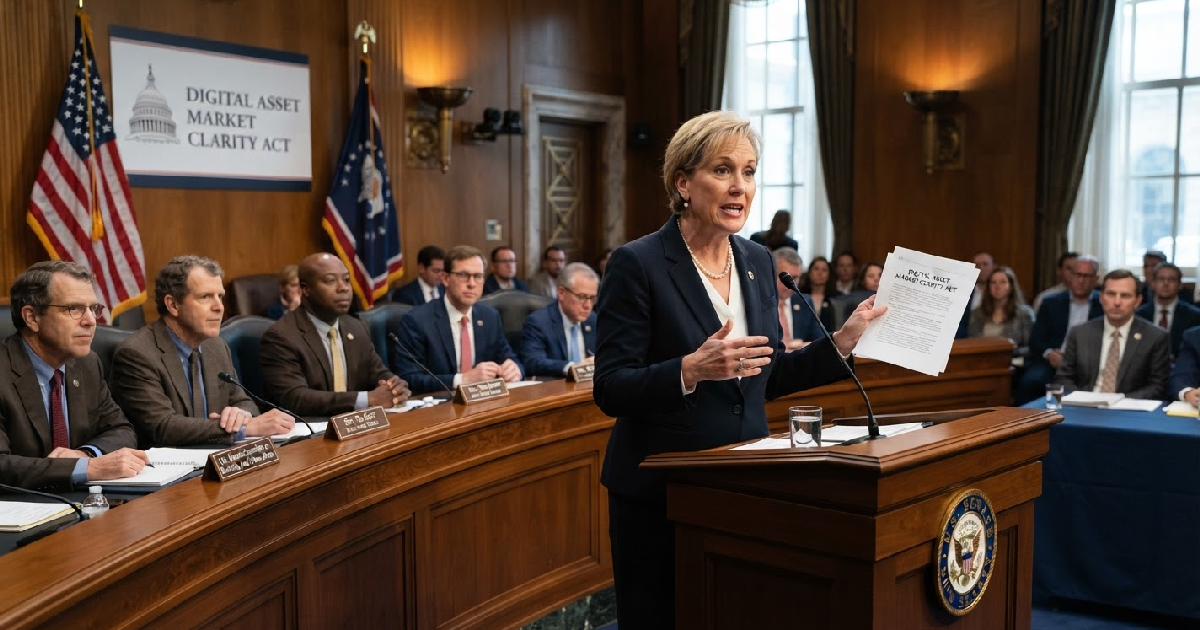

Senator Cynthia Lummis (R-WY), a staunch advocate for digital assets, is pushing the U.S. Senate to act swiftly on the Digital Asset Market Clarity Act (H.R. 3633) before the looming August recess. Speaking on Wednesday, Lummis accused Democratic lawmakers of intentionally delaying the critical crypto bill, asserting that its failure would rest squarely on their shoulders.
Her pointed remarks came as intense bipartisan negotiations continued into the night, aiming to establish a comprehensive regulatory framework for the U.S. cryptocurrency market. This legislative push underscores the high stakes involved for an industry currently navigating significant regulatory uncertainty.
The Political Battle for Regulatory Clarity
Senator Lummis, during an appearance on Fox Business, underscored the urgent need for a vote on the Digital Asset Market Clarity Act. She noted that discussions with Democratic lawmakers had stretched late into the previous night in an effort to move the bill forward.
Despite these efforts, Lummis indicated that some Democrats were “dragging their feet” on the legislation. She warned unequivocally that if the crypto bill doesn’t pass, it will be “because the Democrats kill it.”
The Wyoming Republican highlighted her extensive commitment to the process, stating she had “bent over backwards for 11 months” to address their concerns. Her comments reveal deep-seated frustration with the ongoing legislative deadlock.
Ethics Concerns and Presidential Concessions
A significant point of contention throughout negotiations has revolved around ethics provisions, particularly in light of former President Trump’s family crypto business ventures. While Democrats have criticized these ventures, the White House has consistently maintained there were no conflicts of interest.
Lummis revealed that President Trump had agreed to an ethics provision “no president has ever agreed to” previously. She described it as the “strongest set of ethics provisions in U.S. history.”
But Lummis claims Democrats still “want more,” with their latest proposal currently awaiting the President’s response. An updated version of the crypto Clarity Act, introduced in July, already bans government officials and their families from issuing or promoting crypto.
This ethics clause is a direct response to public scrutiny, aiming to bolster trust and prevent perceived conflicts of interest. Its inclusion highlights the significant political pressure surrounding digital asset legislation.
Industry Support Meets Banking Lobby Resistance
The crypto Clarity Act enjoys considerable backing from major financial institutions, which view regulatory certainty as crucial for market development. Firms like BlackRock, Fidelity, Franklin Templeton, Goldman Sachs, and SoFi have all publicly endorsed the bill.
These institutions, collectively managing trillions in assets, argue that a clear regulatory framework is essential for investor protection and for the U.S. to maintain competitiveness. BlackRock, operating a spot Bitcoin exchange-traded fund, has even called regulatory clarity a “direct business requirement.”
Law enforcement organizations, including the National Fraternal Order of Police, have also shifted their stance to support the bill. They now see it as a vital tool for combating illicit finance and ensuring digital asset intermediaries comply with sanctions frameworks.
Yet, the bill has faced significant resistance from the traditional banking lobby throughout much of 2026. Their primary concern centers on crypto companies offering clients the ability to earn stablecoin yield.
Banks, such as JPMorgan Chase, fear that this could lead to a “deposit flight” from traditional banking institutions. They argue that stablecoin issuers don’t face the same regulatory burdens or FDIC insurance obligations as regulated banks do.
This fundamental disagreement highlights a broader tension between traditional finance and the emerging digital asset ecosystem. The stablecoin yield debate has been a key factor in the bill’s prolonged deadlock.
The Vote Timeline for the Clarity Act
The timeline for a Senate vote on the crypto Clarity Act remains precarious, with the August recess scheduled to begin on August 8. The following outlines the current status of the vote:
- CONFIRMED: Senator Lummis stated on August 5, 2026, “I believe we will get a vote on the Clarity Act before August recess.”
- REPORTED: Lummis also said, “I don’t think we’ll be leaving on Friday, I think we’ll go into the weekend,” indicating a potential extension of the legislative session.
- REPORTED: Senate Majority Leader John Thune has reportedly reserved floor time for the crypto market structure bill.
- UNCERTAIN: Unresolved negotiations and a crowded legislative calendar, including nominations, funding talks, and sanctions legislation, leave the exact timing uncertain.
A bill requires 60 votes to overcome a filibuster in the Senate. With Republicans holding 53 seats, at least seven Democrats would need to cross the aisle to ensure its passage.
Prediction markets currently place the odds of the crypto Clarity Act becoming law in 2026 at a low 30%. This represents a sharp decline from over 80% in February, reflecting the growing political hurdles and continued legislative uncertainty.